

The Reblooming Daylily That Attracts Hummingbirds All Summer & Fall
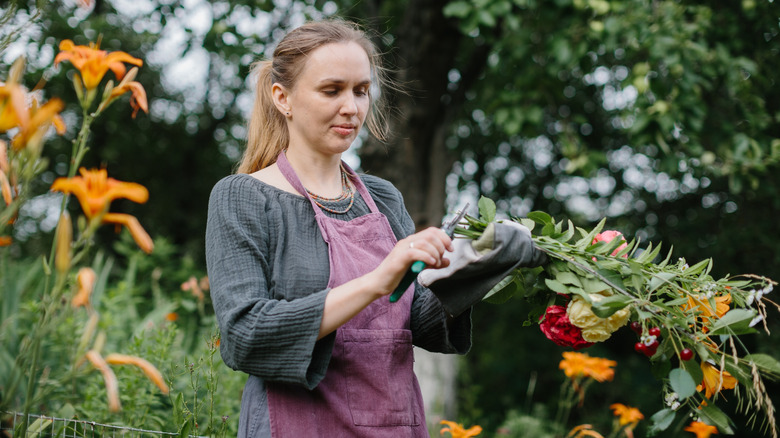
Perennials are often considered essential plants in the flower bed. But some perennials only bloom for a short time (looking at you, German irises and peonies). As a professional gardener, I seek out long-blooming varieties to keep beds looking vibrant. Daylilies (Hemerocallis) are a favorite low-maintenance perennial for providing weeks of color. They also attract pollinators, including butterflies, bees, and especially hummingbirds, who love their trumpet-shaped flowers full of nectar. One popular variety, 'Stella d'Oro,' is a reblooming powerhouse, producing golden yellow flowers in early summer and again later in the season.
Although the individual flowers on daylilies typically only bloom for a day before they start to fade (hence the name), each stem produces multiple buds, so a mature clump of daylilies can provide plenty of gorgeous color in the perennial garden. 'Stella d'Oro' isn't the only reblooming daylily out there, but it's one of the earliest-blooming daylily varieties, so it's prized by many gardeners for providing a burst of color before the rest of the garden starts to wake up.
The bloom times for this daylily may differ slightly depending on your zone and growing conditions, as well as weather. I have buds on my 'Stella d'Oro plants already in mid-May here in upstate New York (USDA Hardiness Zone 5a), that will probably open by early June. I've seen them continue blooming until the first week of July, and then start up again in late August, but in some places the re-blooming period may start a bit earlier. Regardless of start time, the rebloom show should last at least three or four weeks.
Growing Stella d'Oro, the most reliable daylily
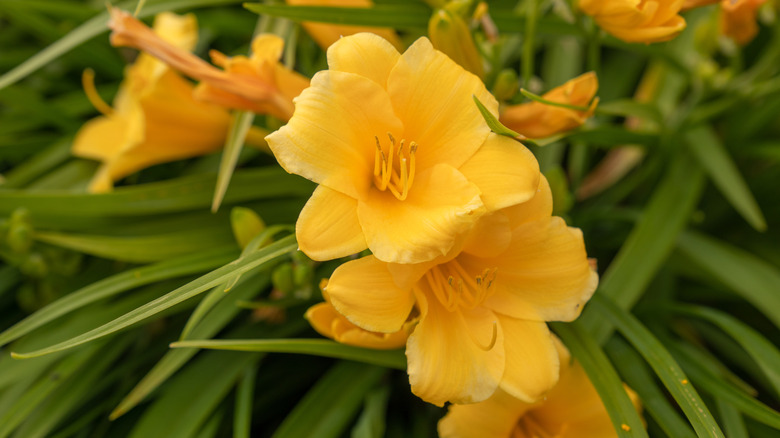
If you're new to growing daylilies, you can breathe a sigh of relief because these are some of the most fuss-free perennials in the garden. Cold hardy in Zones 2 through 9, they're perfect for areas with cold winters. Some gardeners like to plant them next to spring-flowering bulbs like hyacinths and muscari so the foliage comes in just as those early spring beauties are finishing up.
Daylilies are generally very adaptable plants that aren't fussy about soil. The 'Stella d'Oro' cultivar is a diploid daylily, as opposed to tetraploid, which tend to have larger flowers and less vigorous foliage. The diploid types are fairly drought-tolerant once they get established. Daylilies need a good amount of sun to bloom their best, but there's no need for fertilizer. Well-drained soil helps them thrive, but they will grow in clay soil, too. Water them every other day after planting for a couple of weeks to give them a good start.
Once the clumps get more than a foot wide, it's good to divide them every couple of years, which can be done in spring or fall. The green shoots of 'Stella d'Oro' foliage will often start to pop up in April, but you can divide the clumps gently before stems start to appear in May. Once the flowers have faded for the season (usually by late September), you can cut back the foliage and stems to keep the plants looking neat. They will quickly re-grow a smaller, tidier clump of foliage that will go dormant after late autumn's cold weather arrives.
What to plant alongside 'Stella d'Oro' daylilies
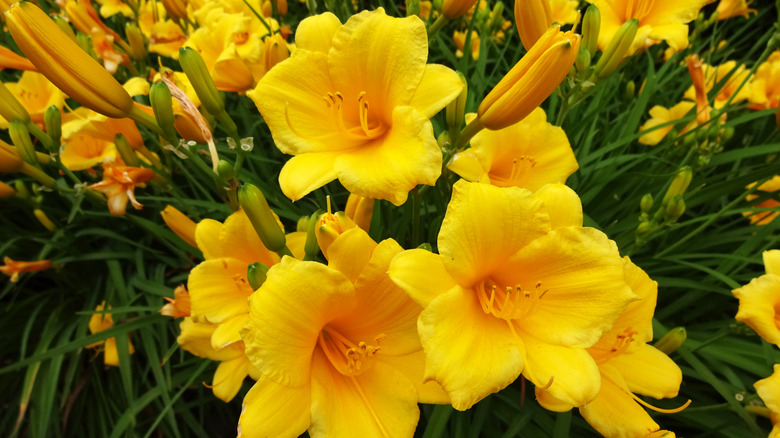
This flower's name means "star of gold" which is a perfect way to describe their sunny yellow petals with gently ruffled edges that overlap slightly. Though 'Stella d'Oro' flowers are on the smaller side and they're not as fancy as some bi-colored or diamond-dusted varieties, they're reliably vigorous. I like planting them near daffodils because their foliage appears just in time to camouflage fading daffodil leaves.
The bright golden yellow looks wonderful alongside late spring's bright colors, especially blues and purples, like false indigo (Baptisia asutralis), perennial salvia, veronica, flowering catmint (Nepeta spp.), and penstemon. Or try them with warmer colors like hot pink and magenta. Garden phlox (Phlox paniculata), dianthus, and coneflowers (Echinacea purpurea) are good go-tos for vibrant pink hues). All of these perennial pollinator magnets will make your garden a summer showcase of colorful activity full of buzzing bees, hovering butterflies, and graceful hummingbirds.
For the second round of blooms, I make sure to have some bold colors of cushion mums (Chrysanthemum x morifolium) and asters planted near my 'Stella d'Oro' day lilies, to create a slate of lovely late season color. For gorgeous companion mums, try 'Coppersmith' (bright rust orange), 'Mickey' (vermilion orange), or 'Rose Grenadine' (rosy pink). They also look magical with low-growing blue asters like 'Wood's Blue,' 'Wood's Purple,' or the slightly taller 'Eventide' (rich lavender with yellow centers). The late autumn cleanup and winter protection of your daylilies, mums, and asters can all be done at the same time, too, which is handy; prune them back to about 2 inches tall, and add some mulch to protect the roots.