

What To Do If You Find A Wasp's Nest Inside Your Home?
Spheksophobia, tough to spell and not exactly a word that enters a lot of conversations, is something that is actually fairly common in the U.S. It's the phobia of wasps, the intense and sometimes irrational sense of terror when seeing or even thinking of these winged, armed insects. Even if wasps don't send you running in the opposite direction with a high-pitched scream, when they enter your home, they bring with them a number of risks. How do you identify a wasp's nest in your home, and what should you do if you find one? The answer to dealing with the problem is actually quite simple — leave it alone and call in a professional.
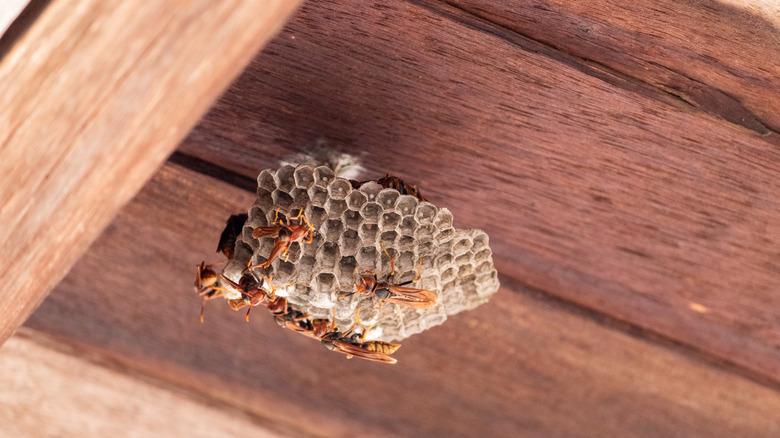
As wasps in the U.S. build their nests with chewed-up wood fibers, they will have the appearance of a papery pulp. They're not all the same, though. If you're dealing with paper wasps, you'll find a nest that has hexagonal cells with no covering — in other words, you can see into the cells. The other popular wasp in the country is the yellow jacket, the nest of which is enclosed. It's the same with the bald-faced hornet. Outside of the stinging risk, wasps can cause structural damage by chewing drywalls and other materials made with wooden fibers as they expand their nests. This is particularly true of yellowjackets, which are fairly common across the country.
What should you do if a wasp nest appears in your home?
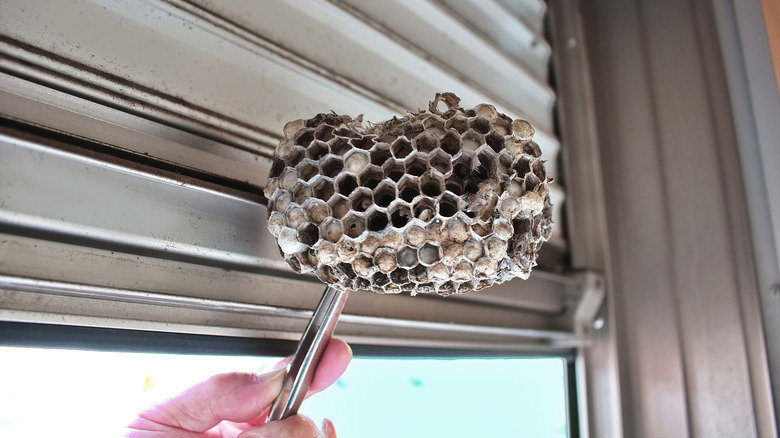
You are most likely to find a wasp nest under your roof eaves, in the attic, or within your walls. They also tend to take up residence inside sheds and under deck railings. If you do find one, it's best to call in a professional quickly, as even if you or your family isn't allergic to them, they can cause a great deal of pain when they sting. Unlike bees, they can sting multiple times, and so they present a significant risk. They are territorial insects, so even if you don't cause them any harm, they will see you as a threat and take up a defensive stance, which includes attacking any potential threats.
If you do locate a nest, it's best to not get involved, even if you've heard of the various DIY wasp nest removal hacks. Often these are ineffective at getting rid of the entire colony, and those that do remain become even more aggressive. You are better off calling in the professionals to remove a wasp nest. They will have the expertise and the right tools for the job. They ultimately know what works at effectively removing these insects from your home, for good. When looking for a wasp pest control company, make sure that they have the necessary qualifications. This includes a state-issued license for pesticide application. They will be able to talk you through the process and explain each of the steps they'll take. It's a far safer approach than trying to fix the wasp issue yourself.
Prevent wasps from entering your home in the first place
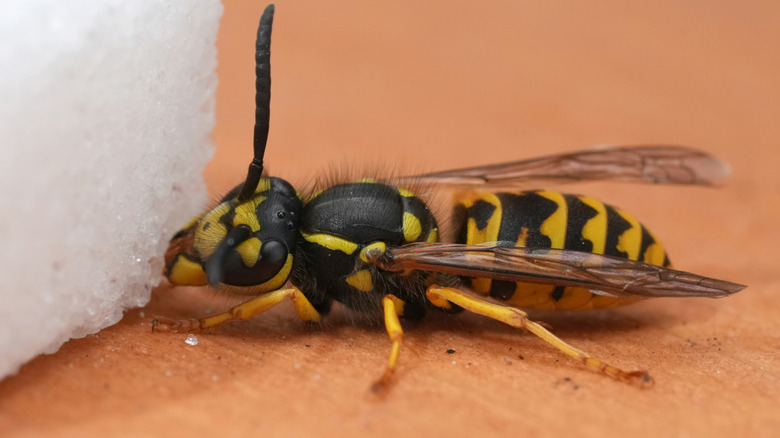
As with so many pest problems in your home, prevention is better than cure. To keep wasps out of walls, it's important that you block off any entry points before the queen wakes from hibernation to seek out a nesting site. This is usually during March. Take a walk around your home and look closely for any gaps or joins where they can enter. Don't forget to check the window seals as well as any window screens you may have. Some wasps, yellowjackets in particular, are attracted to left-over food. Make sure to keep your trash can covered, and if you spill any food or drink outside, make sure not to leave it too long before cleaning. As they forage, they'll be attracted to the food source and may decide that it's also a great place to set up camp.
It's the same with fruit and vegetables. If you have fruit trees in your yard or a vegetable garden, make sure not to leave any fallen produce for too long. As they ferment, the wasps may be attracted as they actively forage. Don't forget the compost during nesting season — they'll see this as food as well if you've added fruit or veggies to the pile. While wasps are an important part of our ecosystem, they have no place in our homes. With these wasp prevention tips, you'll be able to keep them at bay.