

Why You Never See This Distinctive 1980s Home Style Anymore

The 1980s in the U.S. were very similar in a lot of ways to the post-World War II era. The country was coming out of an economic downturn, social upheaval, and a shift in home design that reflected changing values. One of the iconic home design styles that seemed to pop everywhere in the '80s was the contemporary angular home. Similar in convention to the atomic ranch-style home of the mid-century, the contemporary angular home shied away from tradition with its asymmetry, extremely angled roof sections, wooden vertical or diagonal siding, high ceilings, and large walls of windows. As the country recovered from a recession, wealth began to return to the middle class and was reflected in their tastes for interesting homes with unique, avant-garde postmodern designs. This unique style was a way to signal wealth and achievement. But, it would soon be overshadowed by the McMansion style of the 1990s. Here's why those angular contemporary homes became popular, and how McMansions took their place.
The contemporary angular home of the 1980s used natural elements like wood (often cedar) and stone for the exterior, devoid of decorative features, and if it was painted, it often featured neutral colors. One issue with these homes was due to diagonal siding: This feature prevented water from draining properly and could cause leaks or rot. The interiors featured expansive living areas with cathedral ceilings, large kitchens, bigger bathrooms, huge master suites, and large, two-car garages. The '70s oil crisis had ended, and people weren't as stressed about the cost to heat and cool such large spaces. Owning a contemporary angular home in the 1980s was akin to owning a Mazda Miata; fun to look at, a true conversation starter, but not exactly practical in the long run.
Why homebuilders abandoned the 1980s contemporary angular home design
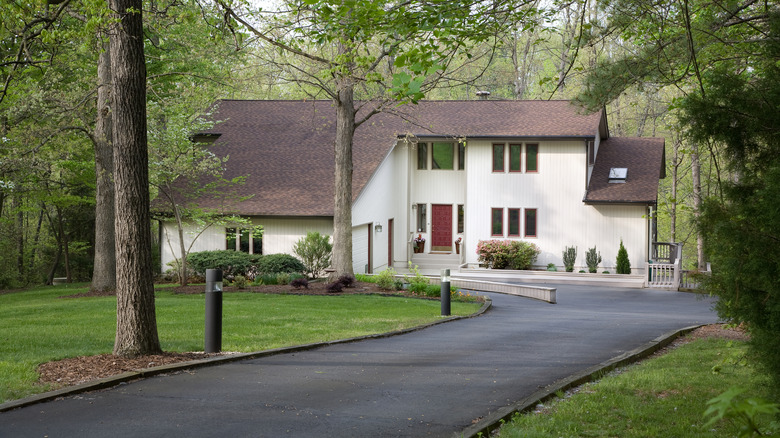
In the '80s, everything felt over-the-top: the Memphis Group out of Italy was the inspiration for many of the decade's designs, and the style that defined the era was all about taking risks. This mindset showed up in architecture with the use of unexpected, non-traditional shapes and features. The contemporary angular home was an example of builders taking risks with homes that didn't follow traditional tastes. Many buyers weren't afraid to incorporate Memphis design not only into their interiors, but their home's architectural style as well. The problem is that following a trend this way often comes with unexpected issues as well as risking being nothing more than a fad. You may still see these homes in affluent suburban and remote areas, where some people are taking them on as renovation projects.
By the early '90s, homeowners were likely discovering the drawbacks of vertical cedar siding and the unconventional look of a contemporary angular 1980s home. Plus, the ultra-modern, angular design was becoming a past fad, seen as an outdated sign of the post-recession era. Many younger boomers decided to move on to more conventional homes and stick to the tried-and-true rustic American look of a Federal-style facade. Homebuilders decided to follow the trend, and suburban neighborhoods started to fill up with more the more traditional, larger McMansions, characterized by features like pedimented doors, columns, shutters, and other nods to the rustic taste of early America. This became the popular architectural style for family homes through the 1990s. These McMansion-style homes were the culmination of the American dream for boomers. And the contemporary angular home of the '80s fell to the wayside, left to future buyers willing to make the necessary drainage and insulation upgrades to live in them comfortably.