

The Low-Maintenance Tree With Pink Blossoms That Attracts Hummingbirds To Your Yard
Pink flowers are enduringly popular with gardeners, as are the hummingbirds that so often visit them. It's fair to say that anyone who has the chance to combine the two in their backyard is going to leap on it. That's exactly what eastern redbuds (Cercis canadensis) deliver. These gorgeous trees turn up the drama outdoors by several notches, while being easy to care for rather than the diva their showy blooms may imply. Hummingbirds simply can't ignore the big pink flowers of eastern redbuds, especially since it's an early spring bloomer. Whether you have a spacious specimen garden or you've created a beautiful oasis of a cottage garden that's essential to local pollinators, eastern redbuds will feel right at home.
Some homeowners grow high-maintenance flowers that require time-consuming gardening routines to create the kind of show-stopping beauty that eastern redbuds deliver almost effortlessly. At the tail end of winter, the eastern redbud's bare branches grow dense with clusters of tiny, pea-like flowers, even before the leaves emerge. The flowering tree brings an ethereal aesthetic to landscapes, with the blooms ranging from rosy pink to soft purple. It's one of those native front yard trees that makes passersby stop and stare in wonder. Besides tempting adorable hummingbirds to visit, you will also see bees of all kinds buzzing around your eastern redbud, from honey bees and bumble bees to sneaky cuckoo bees. If you're cultivating a pollinator garden, this pretty pink tree is a must-have addition.
How to grow eastern redbuds to bring flocks of hummingbirds to your yard
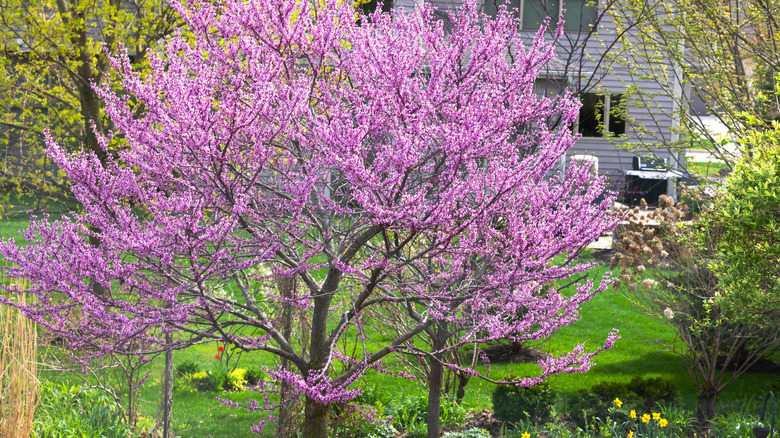
If you want to attract more pollinators, including hummingbirds, to your yard without too much work, then you should plant an eastern redbud. No matter whether you're cultivating a classic garden design style or something more contemporary, you won't regret adding this vibrant tree to your yard. It quietly does its thing without the major upkeep. Eastern redbuds thrive in USDA Plant Hardiness Zones 4 through 9, where they will grow between 15 and 30 feet tall and spread as wide as 35 feet. They're an optimally sized tree for small to medium-sized landscapes. These hardy trees bloom from March to May, after which time the heart-shaped leaves appear, staying on the tree until fall.
If you want as many blooms as possible for visiting hummingbirds, plant the tree in a full sun location. It needs at least six hours of bright sunlight, though it will tolerate partial shade for some of the day. Despite their showy appearance, eastern redbuds aren't persnickety about the type of soil they're planted in as long as you don't let it dry out too much or stay too soggy. These ornamental trees get stressed in periods of drought, so keep yours well watered, especially when it's establishing its root system. Give an eastern redbud the right care, and it will brighten your space and earn the hummingbird community's seal of approval. Looking for other beautiful flowering trees that will bring much-needed color to your yard — and attract even more hummers? A perfect companion for eastern redbuds is the flowering dogwood (Cornus florida), which thrives in Zones 5 to 9.