

What Is The 4-2-1 Rule For Mixing Concrete?
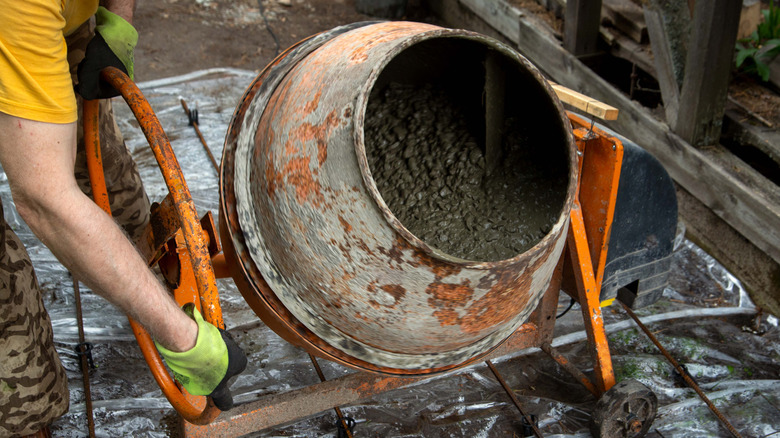
Most people take concrete for granted because it's everywhere. The most-used building material in the world often doesn't get a second thought until you're working on a backyard project and suddenly need to be aware of the difference between concrete and cement (and the dangers of confusing them) to mix a batch of your own. While the ready-mix you order from a plant has a complicated formula engineered to exact specifications, you can make your own concrete at home using a simple 4-2-1 formula.
You don't need any fancy equipment to mix a batch using this recipe, since the 4-2-1 formula is just a mixture of 4 parts aggregate, 2 parts sand, and 1 part cement. Sometimes referred to as a 1:2:4 ratio (just the same thing in reverse), the "parts" are based on volume, not weight. That means you can use whatever size of container you want, whether it's a bucket or a shovel load; if you need to make a larger batch, just multiply the ratio to make a bigger load.
In this formula, which is just for the dry ingredients, aggregate refers to crushed stone or gravel, which gives the concrete bulk and strength. Sand fills in the gaps and makes concrete easier to work with, and cement is the binder that reacts with water and keeps it all together. Water is a critical ingredient (too much weakens concrete), but it's not included in the formula because there are several factors that can influence how much you need.
Mixing concrete using the 4-2-1 rule and knowing when to adjust it

The 4-2-1 rule for mixing concrete works for all kinds of projects around the home and garden, like placing fence posts, making concrete pads for AC units, or even DIYing a concrete pad to elevate your backyard design and entertainment options. When you're mixing water in, it can be hard to tell how much to add, and factors like how clean your aggregate is and the humidity level of the sand can impact how much water is needed. Concrete needs water for the chemical reaction, but too much can make it weak, so the best approach is to add water in small amounts until your concrete mix is about the consistency of thick oatmeal. While you can make it thinner so it pours into molds, you don't want it to be too soupy.
As a general formula, the 4-2-1 rule is easy to remember, but it's important to know that using the same ratio for everything is one of the most common concrete mistakes to avoid. For example, when you're mixing concrete for a load-bearing project like a concrete driveway, you can change the formula by using more cement. When using different ratios of sand, cement, and aggregate, some other mixing ratios to consider include a 1:2:3 and a 1:3:3, as using a little less sand and a little more cement will make a stronger mix.