

Boomers Can't Stand These 11 Millennial Home Design Trends
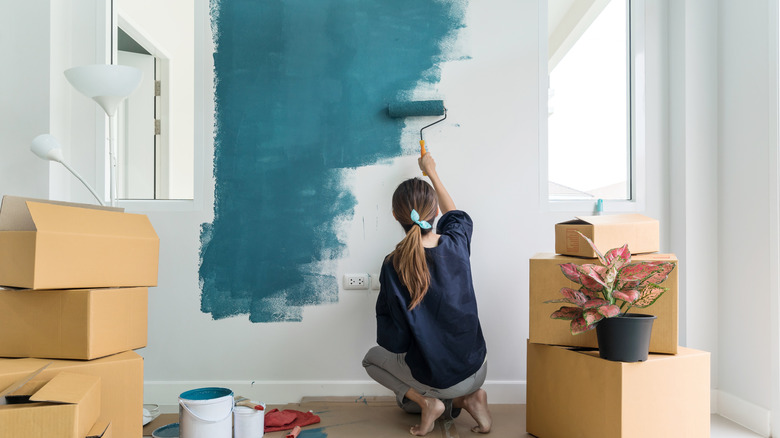
Millennials have been at the forefront of some of the most controversial design trends from the recent past. From millennial pink to millennial gray, both older and younger generations have become increasingly critical of these once-trendy choices. For years, millennials dominated the interior design market, and trends naturally reflected the tastes of this influential generation. However, as millennials have aged, many of their signature aesthetics have begun to feel impractical or even "cringe." While rejecting the traditional tastes of their boomer parents, millennials stripped away some of the sentimentality that earlier generations valued. To many boomers, these interiors felt cold, temporary, and overly trend-driven.
Professional designers have noticed this pushback from boomers and have highlighted a growing fatigue with millennial-forward home decor. From realtors to interior designers, we conducted exclusive interviews with top experts like Kathy Kuo, Alexei Morgado, Sain Rhodes, Blaz Korosec, and Erik Leland. They've provided their perspectives on which millennial trends are falling out of favor, and why many boomers never embraced them in the first place.
Low furniture
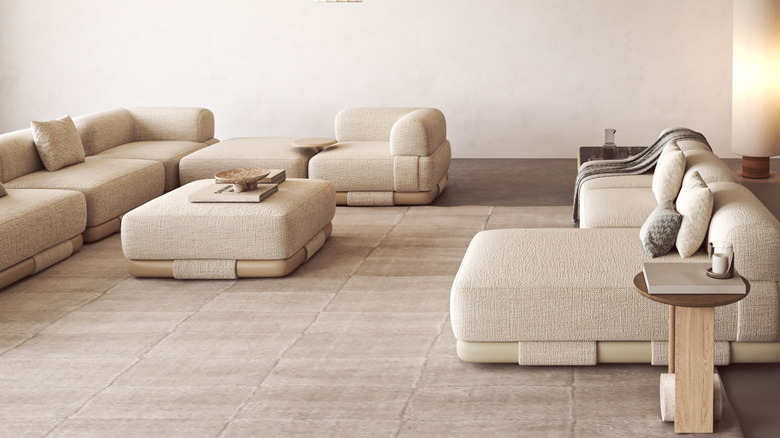
With the boomer generation, comfort is key. The rise of internet trends brought about some visually pleasing yet impractical ideas. For example, Kathy Kuo, designer and founder of Kathy Kuo Home, exclusively tells House Digest readers why boomers hate low furniture: "Streamlined sofas with tailored lines and low seats look effortlessly cool to a younger client, but they're deeply impractical for anyone with knee pain or back issues. Boomers often find this furniture uncomfortable and impossible to get in and out of gracefully." She also noted that furniture is meant to be used, and comfort should be valued higher than aesthetics.
If you love low-profile furniture, you don't have to abandon the millennial-inspired look entirely. Your space doesn't need to be filled exclusively with either high- or low-seated pieces. Instead, try pairing an elevated sofa with a low, modular accent chair to create balance and dimension. Incorporating lower accents allows you to maintain a stylish aesthetic without sacrificing comfort or functionality. The same approach can be applied to chunky and streamlined furniture, blending substantial statement pieces with lighter silhouettes for a space that feels well-balanced.
Brass hardware
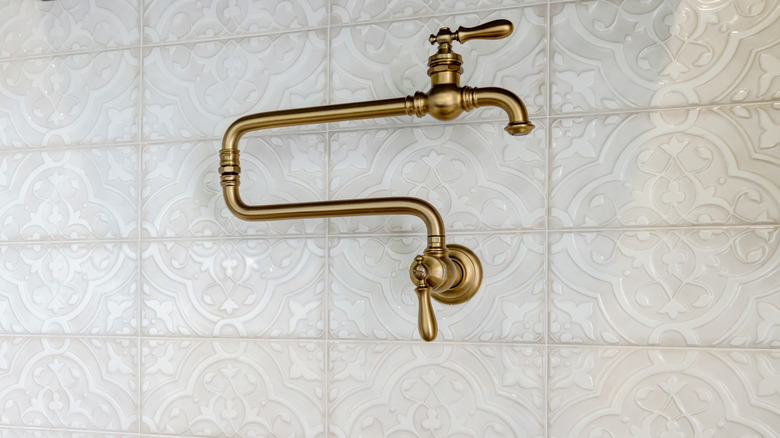
Somewhat surprisingly, millennials have fallen back into the warm hardware trend. Rather than rejecting the brass finishes associated with their parents' generation, many have embraced them as a way to add warmth and character to contemporary interiors, perhaps as a counterbalance to the cool-toned neutrals they've long gravitated toward. Kuo explains that "millennials have fully embraced warm metals like unlacquered brass and polished nickel that develop a beautiful patina over time. Boomers often associate brass hardware with the 1980s, and it doesn't tend to be their first choice for their home."
This is one case where boomers don't want to stay stuck in the past. However, the shift toward matte finishes and naturally aged patinas can make warm hardware feel far more refined than the glossy brass styles of decades prior. Millennials may be onto something with their appreciation for lived-in finishes, as the softer texture and understated sheen help these metals feel organic and contemporary rather than overly polished or tacky. If brass still feels too warm, you can try softer metallic finishes like brushed nickel, antique bronze, or muted champagne tones.
Invisible kitchens with paneled appliances
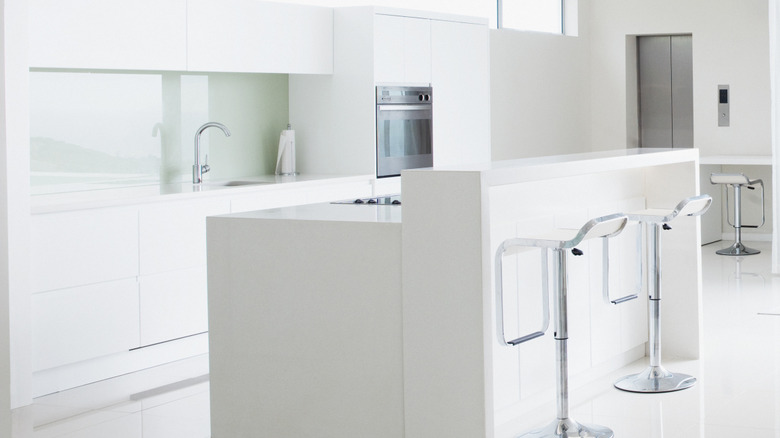
Hidden appliances are a millennial-approved luxury. Alexei Morgado, realtor, CEO, and founder of Lexawise, says in an exclusive interview, "It is also very common for boomer clients to be hesitant about the 'invisible kitchen' trend, where appliances and cabinets are hidden behind panels. While this is seen as a sign of sophistication by some millennials, many boomer clients find it more confusing to use." For millennials, modern interiors are often associated with minimalism — which isn't the case with boomers.
Boomers aren't the only ones with an aversion to invisible kitchens. Built-in kitchen designs are starting to go out of style. Gen Z has been increasingly embracing the unfitted kitchen trend, which sits in direct contrast to fully concealed, minimalist layouts. This approach draws inspiration from European kitchens where individuality and lived-in character take priority over seamlessness. Instead of hiding everything behind flush cabinetry, appliances are often left visible and deliberately mixed in, like freestanding ranges, open shelving, and pieces placed on countertops and tabletops. If you're still craving a tidier look, try more casual methods of concealing unsightly items like sink skirts or freestanding storage pieces.
Moody, more dramatic interiors
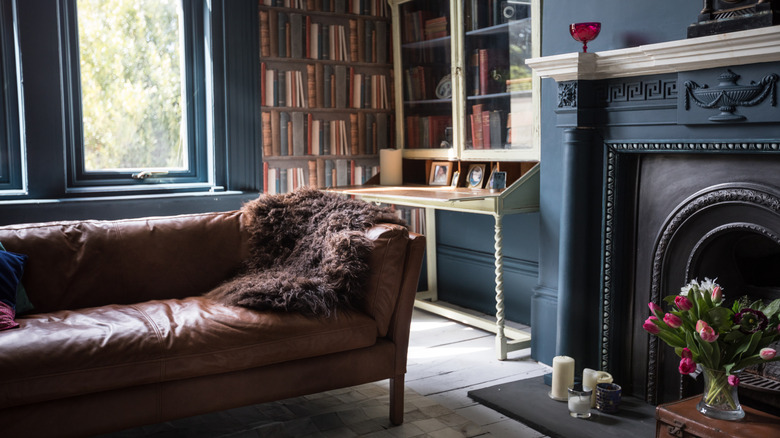
On the opposite side of the spectrum from millennial gray, this generation also loves deep, moody hues. Perhaps this was a rebellion against the idea that small spaces shouldn't be painted in dark tones, or perhaps it was simply a way to introduce depth and personality as a balance to the neutral craze. Morgado explains why boomers aren't on board: "Darker, more colorful interiors might not always appeal to baby boomers. While millennials may view a dramatic interior design as chic and full of character, some boomer clients see it as something that may need adjusting, with a layout that can feel too heavy or constrained."
Morgado also suggests that the problem doesn't lie in the colors themselves, but rather, being limited to such a specific design choice. If you love moody interiors, and want to channel this look, the 2026-approved way to incorporate dark, dramatic tones is to balance them with soft, natural colors. For example, try balancing burgundy with light, watery blues, or plum with warm neutrals or light green. From a home resale perspective, it's likely that you'll need to repaint before listing your home anyway. When the time comes, switching back to lighter, more neutral colors can increase appeal to a wider range of buyers.
Interior elements that look unfinished
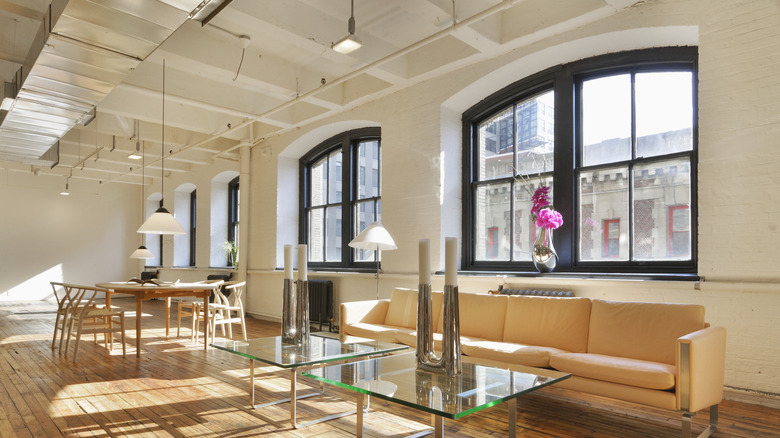
In contrast to the hidden kitchen trend that millennials love so much, they do also want to see certain perfectly imperfect elements throughout the home. Sain Rhodes, real estate expert at Clever Offers, exclusively tells House Digest why these millennial-approved details aren't big with boomers: "Elements such as exposed brick, visible piping and ductworks, exposed piping, and concrete flooring usually make my boomer clients uncomfortable; they see this design solution as something unfinished."
While boomers appreciate interiors with character, loft-style spaces can appear too industrial and cold for their taste. The millennial obsession with lofts could also be an economic factor, as converted industrial spaces have historically been a creative way to get more space at a lower premium. If your interior doesn't naturally have these unfinished elements, you shouldn't try to force an industrial look if it doesn't suit the architecture. However, if you do live in a space with features like exposed piping, brick walls, or original beams, embrace them and introduce subtle balance with cozy, layered textures.
Breakfast nooks instead of formal dining rooms
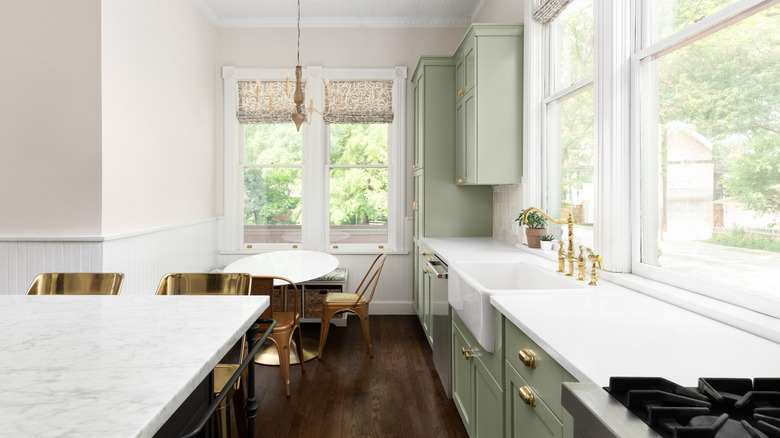
Boomers were used to having designated rooms for different occasions, whereas millennials popularized open floor plans for enhanced entertaining. Rhodes explains the divide between the generations, particularly in reference to dining areas, saying, "Formal dining rooms are another thing millennials abandoned, replacing them with breakfast nooks or kitchen islands. My older clients dislike such design solutions; they see dining rooms as places where they can gather together with their families during holidays and use their best dishes." Rhodes detailed a story about a boomer client who made it clear that she would rather give up a bedroom than a formal dining room.
There's a difference between open and broken floor plans, and broken is currently trending. Also known as a semi-open floor plan, this new approach combines the best of both worlds. Rather than having areas completely closed off by walls, elements like moveable pocket doors, room dividers, or shelving can create designated spaces while keeping the floor plan adaptable. This flexible concept can also be applied to dining areas by using partial partitions or furniture placement to create separation without sacrificing flow or natural light.
Microcement and tadelakt finishes
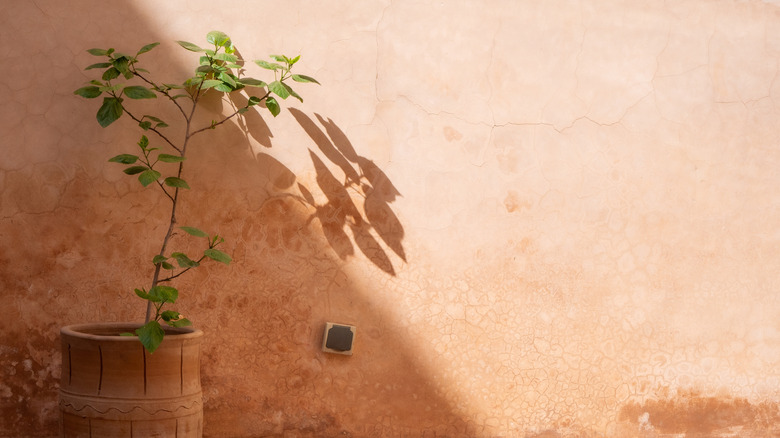
Millennials love textural, imperfect finishes like concrete, tadelakt, limewash, and beyond. Microcement offers the possibility of creating a thin layer of cement over an existing surface, making it an easy and versatile way to transform the look of a space without major structural work. Tadelakt has a similar effect, achieved by applying coats of mineral plaster followed by an oil-based soap, resulting in a weathered patina. Erik Leland, real estate broker at Realty First, exclusively tells our readers why boomers are hesitant about these trends, saying, "These are newer finishes that have shown up in higher-end remodels. Younger buyers find the finish to be sculptural and spa-like. Older buyers are unfamiliar with it and worry about durability and water resistance."
While these surfaces are durable when applied correctly, DIY variations can cause problems. Specialized coatings usually turn out best when applied by a professional who has experience in the specific kind of finish. If you're itching to do a DIY project that will give your home a similarly weathered effect, limewash paint is a creative way to transform your home without the risk of cracks and other defects. Plus, if a boomer wants to buy your home, limewash walls can be easily overpainted.
Floating vanities
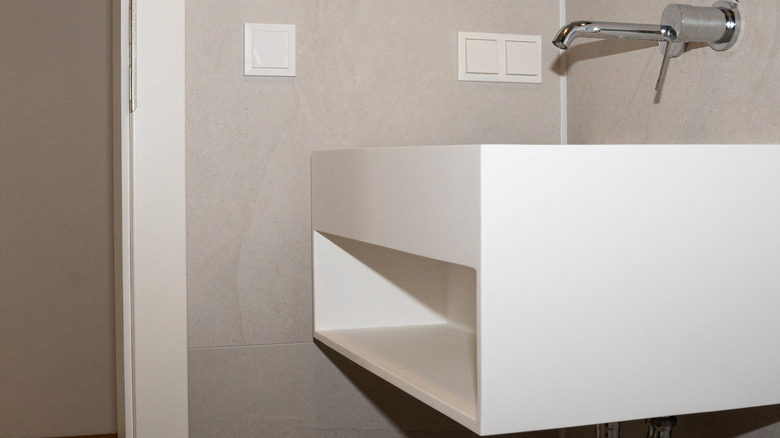
In another example of millennials prioritizing aesthetics while boomers lean toward function, floating vanities have sparked considerable debate. Leland expands on this phenomenon, sharing that "younger buyers like the luxury hotel style floating vanities. Older buyers worry about that loss of storage. You have to give up a lot of under-counter storage to achieve this look, so it can be a practical problem. Many older buyers are also skeptical of a wall-mounted vanity holding the weight of a stone countertop long-term."
True, a lack of storage is one of the big downsides you should know about before installing a floating vanity in your bathroom. However, that doesn't mean it should never be done. A guest bathroom is the perfect space to place a floating vanity, as it doesn't require as much storage as a primary bathroom or master suite. You can focus primarily on style in a powder room, allowing more flexibility when it comes to sacrificing utility for appearance. Plus, floating vanities can create the optical illusion of more floor area, ideal for tighter spaces like small powder baths.
Floating staircases without stair risers are a massive turn-off for safety-conscious boomer buyers
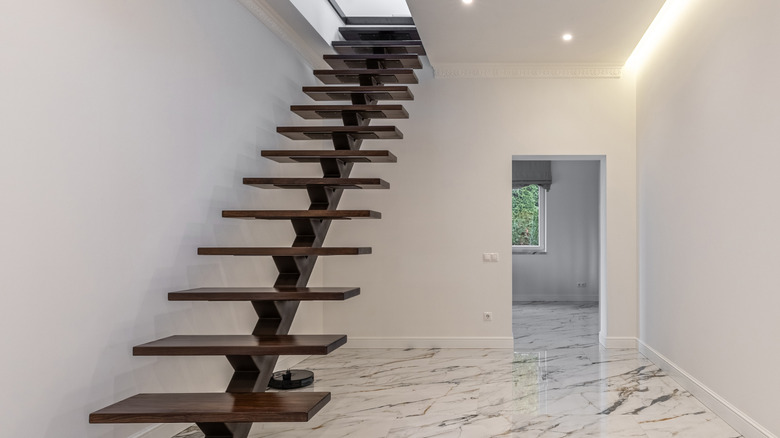
Staircases without railings might look sleek and streamlined, but an installation without risers can be a major turn-off to boomer buyers. Blaz Korosec, Realtor, founder and CFO at Investorade, gives House Digest exclusive insights into the issue with floating staircases. "Trust me when I say that the sleek, modern look of a 'treads only' floating staircase won't matter once an older buyer envisions climbing it 10-15 times a day for the next 20 years." Korosec notes that some insurance companies might even penalize you because of liability issues, and that the buyer's interest could decline up to 50%.
If you love the look of no railing or risers, there are several stair railing ideas to update your boring staircase and achieve a contemporary appearance risk-free. For example, consider cable railings or vertical slats. These airy options will still provide some security while looking sleek and minimalistic. For even more stability, bring your drywall upwards to partially close in the staircase for a practical yet visually pleasing approach.
Turning bedrooms into offices and Zoom rooms

Countless millennials embraced remote working during and after the pandemic, making home offices a priority among the working generation. However, retirees don't feel the same way about a home office being a necessity. Korosec says that "dedicating an entire room to an office or 'Zoom room' with no other function is another puzzler for many boomers reviewing floor plans. After all, they grew up and built their careers in an era before working from home was a thing."
One way to add extra functionality to a home office is by turning it into a multipurpose space that does double-duty as a small home library. To create the perfect book sanctuary, don't be afraid to add comfortable seating beyond just your desk chair. Opting for a sleeper couch can even give you some extra sleeping space for guests during the holidays. If you don't have your eye on resale, take inspiration from vintage studies or libraries with thoughtful built-ins and warm, wooden furniture. If you are looking to resell, focus on freestanding furniture pieces so that it's easy to style the room as a bedroom again when listing.
Bold, saturated paint colors on millwork and trim
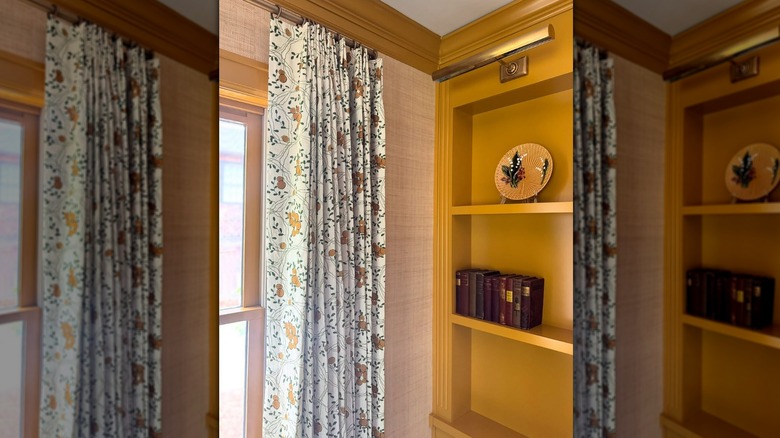
Certain home design choices might read as overly trendy to boomers, and brightly painted trim can fall into this category. Rhodes explains: "Painting doors and millwork in various saturated colors seems to be trendy now, however, it's not the trend that boomers appreciate. They instantly think that the previous homeowner has questionable taste and start thinking about repainting everything white or off-white in order to bring their home back to neutral." While paint might seem like a minor change, Rhodes believes that some older buyers can be immediately turned off by the eclectic visuals.
If you like this trend and want to incorporate it, choose colors that speak to you, rather than trying to copy inspiration images to a tee. When it comes to painting doors, trim, or millwork, select a shade that works in harmony with your existing decor. Instead of looking to trending color palettes, go with a hue that looks natural in your current space. And if you do go pretty bold, be prepared to potentially repaint when listing your home in the future — as dramatic design choices aren't always the best for resale, no matter what age buyers are.