

How To Fertilize Petunias And Extend Their Beautiful Blooms
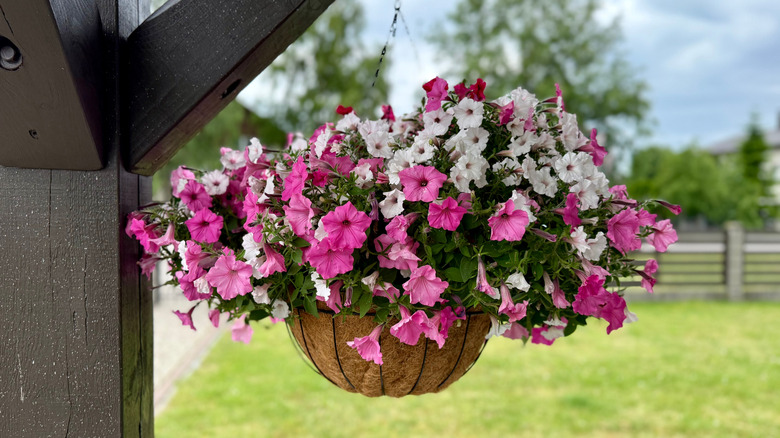
What people love about petunias is not only their beautiful blooms, but the fact that those blooms keep going from spring until first frost. You can receive a basket of petunias for Mother's Day and still be enjoying its blooms well past Labor Day. It's only fair to support your petunia blooms that give you such long-lasting pleasure. The best way to help them thrive is to understand how to fertilize them. Fertilizer needs vary between in-ground petunias and those grown in containers, but both need regular applications of an organic, balanced liquid fertilizer, with a few tweaks based on points in their growth cycle.
Petunias put significant energy into their constant bloom production and need nutrition to support those efforts. Lack of fertilizer can be one of the gardening mistakes that'll kill your petunias before you can enjoy them, or at least result in reduced blooms that may be subpar in size and color. Proper fertilization is one of the most important things you should know before planting petunias.
Fertilize petunias regularly to support sensational blooms
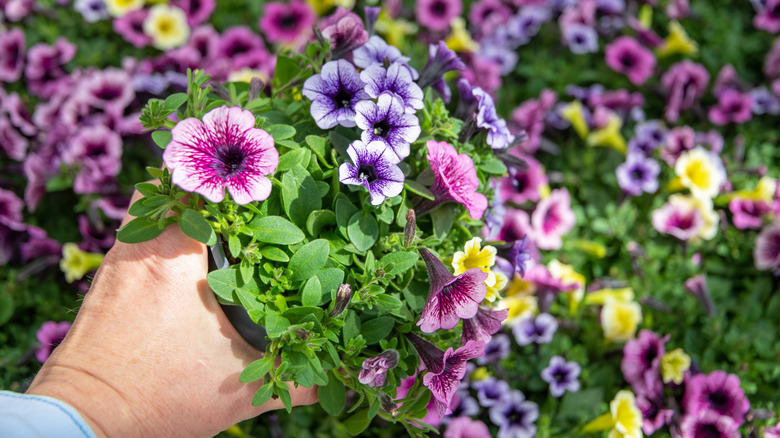
To fertilize petunias planted in the ground, integrate a balanced fertilizer into the soil as you plant. The University of Minnesota Extension recommends 8-8-8, 10-10-10, or 12-12-12 formulations, following label instructions. Consider straying from the balanced approach at specific times, likeusing a more nitrogen-rich fertilizer to support early growth in the spring, or applying a phosphorous-rich product during the height of blooming time in the summer. As mid-summer approaches, start applying a liquid fertilizer every three weeks.
Because petunias in containers are stuck in an environment with a finite amount of soil and no ability to send roots out in search of resources beyond the container, they especially need fertilizer. Follow label instructions as you mix a timed-release fertilizer into the soil when you first pot your petunias in a container. Apply fertilizer intended for flowering plants every two weeks, starting around mid-July.
Be sure you water your petunias when you fertilize to avoid fertilizer burn and give roots the best access to nutrients. Also consider amending soil with compost or other organic material. And since the aim of fertilization is lush blooms, don't forget deadheading, the essential gardening task that keeps petunias blooming all summer.