

3 Reasons That Prove The Early 2000s Were The Golden Age For Thrift Shopping
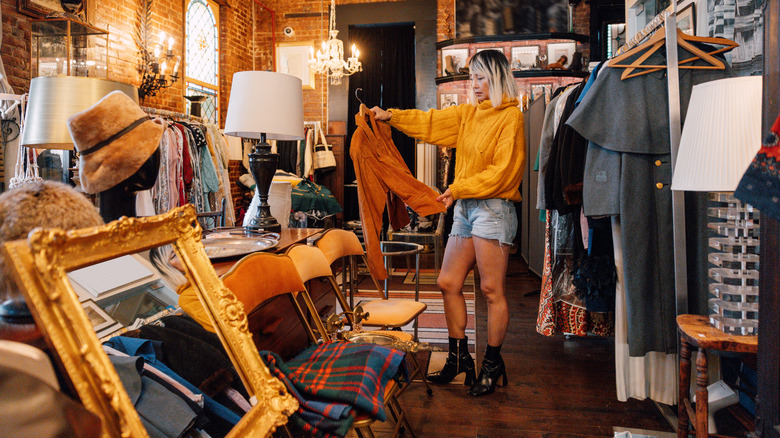
Thrifting secondhand items, like clothing and home goods, is increasingly popular these days. With sustainability and higher prices elsewhere on many people's minds, browsing the racks at your local thrift store has become more than a popular weekend activity; it's a necessity and better than paying full-price. However, veteran bargain hunters out there will likely remember a time when the treasures were vastly more abundant. Long before vintage shopping became so competitive, there was a specific window of time that stands out as the undeniably true golden age of thrift shopping: the early 2000s.
During this period, the landscape of secondhand stores like Goodwill or the Salvation Army was entirely different. Rather than being picked clean by professional resellers or marked way up, sometimes even near prices at regular retail stores, these shops were commonly overflowing with untapped potential. They contained a wonderfully chaotic mix of eras, a completely unfiltered treasure hunt where patience paid off and it was easier for anyone to stumble upon an incredible find (or two, or three). Those around then speak highly of the early aughts for thrifting thanks to a perfect storm of factors that made it easier to find a diamond in the rough.
Why the early 2000s was the ultimate thrift store experience
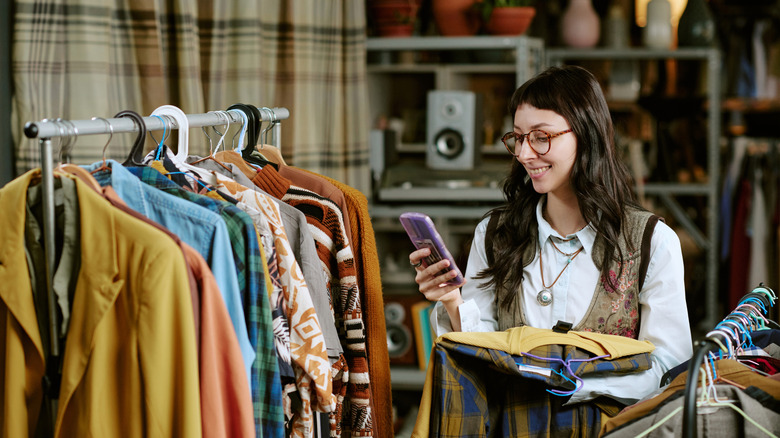
There are three big reasons why the early 2000s remains unmatched for thrifting. First, this era was before online resale platforms like Facebook Marketplace, Poshmark, or Depop. Today, anyone with a smartphone can instantly check an item's value, snatch it, and sell it again, marked up. Folks then could casually flip through racks; now, they're focused on how to spot valuable, high-end items at thrift stores.
Second, shoppers had access to a wider variety, which would've made it easier to find premium items at standard thrift store prices. While fast fashion and fast furniture existed at the time, they didn't have the same popularity and retail presence. This meant that in the early 2000s, people were still mostly donating well-made, long-lasting pieces from the past few years. That also meant that thrifters could find high-quality items for just a few bucks.
Finally, the sheer volume of vintage and premium items available back then was likely high. Donating to thrift stores was the easiest way to get rid of items, aside from throwing them away and since online reselling hadn't been invented yet. Thrift stores would usually just put a price tag on items according to their category, then put them on the shelf. Because of this, you never had to pay a hiked-up premium, even for some mint condition 1970s Pyrex, or know which vintage brands you should always buy at thrift stores. You just paid the standard thrift store rate, cementing that era's legacy of unprecedented value. The olden days of thrifting truly were the golden days of thrifting.