

That's Not Crabgrass: How To Remove This Long, Pesky Look-Alike From Your Garden
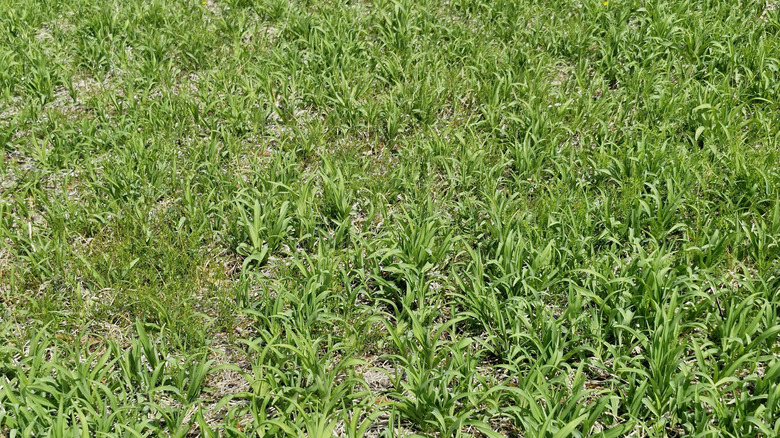
If you've spotted a low-spreading green weed starting to take over your lawn, your first instinct may be to assume it's a type of crabgrass. This pesky and invasive weed is often easy to identify and has two common types you've probably spotted around your yard: large (Digitaria sanguinalis) and smooth (Digitaria ischaemum). However, there are many crabgrass look-alikes, from quackgrass to dallisgrass.
If the weed in your yard is tall, and features an upward stem and leaves with a white stripe down the center, chances are you're probably dealing with Johnsongrass (Sorghum halepense). While it's easy to mistake Johnsongrass for crabgrass, these lawn weeds have many differences, which will matter when figuring out how to eliminate them from your yard.
Unlike crabgrass, which is an annual, Johnsongrass is a coarse perennial grass that grows in thick clumps, growing quickly in environments like vineyards, fields, and roadsides. Similar to crabgrass, this weed sprouts from a central "crown," but it can grow up to 6 or 7 feet tall, with leaves up to 2 feet long. Crabgrass tends to hover between the heights of 1 to 3 feet. The flowers of Johnsongrass are also tall and shaped like a triangle, and the leaves are sharp.
Like crabgrass, this weed can easily choke out native plants and become a nightmare for your garden, making its eradication an essential gardening chore. The best methods to remove Johnsongrass include prevention tactics, mechanical removal, and chemical control.
How to eradicate Johnsongrass from your lawn
Controlling Johnsongrass weeds, which are considered invasive in over 20 U.S. states, can be difficult, thanks to its intricate root system and ability to withstand many types of soil. Johnsongrass spreads via an underground rhizomatous root system, making it a detriment not just to native plants in lawns and gardens but also to fields and crops. It can also spread through wind, water, and wildlife like birds. Thus, mechanical control is usually the best method of removal.
While mowing may can help reduce seedlings, it's not effective against grown Johnsongrass. If your property's Johnsongrass is past its seedling stage, it's advised to manually pull the weed out of the ground, ideally right after you've noticed it in your yard and after a bout of rainy weather. Any remaining pieces or roots should also be dug up.
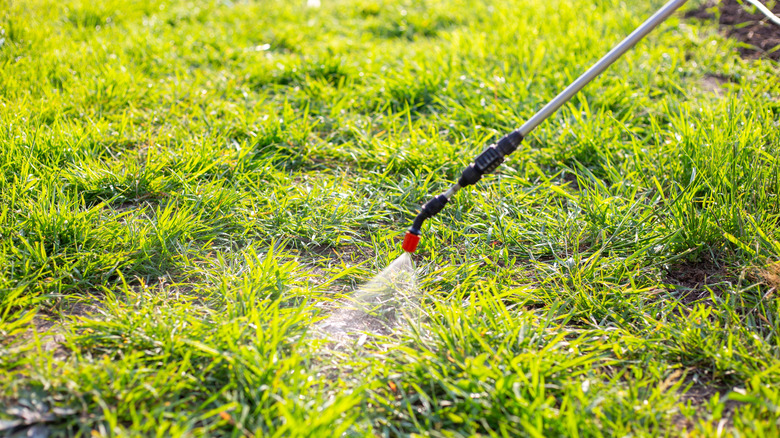
While some strains of Johnsongrass are resistant to certain herbicides, some will still help. One of the most recommended types of herbicide for Johnsongrass is glyphosate. You can also try killing this weed with a staple ingredient like vinegar and make your own spray. Combine 1 gallon of white vinegar with 1 cup of salt and 1 tablespoon of dish soap and apply to the weed. It's recommended to spray the weed with herbicide once it has reached 18 inches tall or its early flowering period, to better reach the root systems. Like crabgrass, you can also use weed torch to burn away Johnsongrass.
However, if you are dealing with an infestation that has taken over 30% of more of your lawn, it's probably better to contact a professional for removal.