

Boomers Can't Stand This Modern Kitchen Trend

New design "trends" are usually viewed through the lens of newer generations. Their needs, lifestyle preferences, and aesthetic choices define what's in and gets adopted, along with what's passe and retired for good. While many have vilified boomers and older generations for their adoration of ornate cabinetry or over-the-range appliances, which is why they make the list of outdated kitchen trends we're leaving in the past, the story isn't much different on the other side.
According to Cara Woodhouse, founder and principal designer of Cara Woodhouse Interiors, boomers aren't on board with the idea of concealing or hiding their kitchen. In an exclusive interview with House Digest, she notes, "One kitchen trend that many Boomer clients strongly resist is the highly concealed kitchen where everything disappears behind flat panel cabinetry and integrated appliances." And frankly, it isn't surprising. Boomers grew up showing off their crystal coupes and bone China sets; hiding every kitchen appliance behind a gliding pocket door for a pristine, understated, or minimalist look is unlikely to catch their fancy.
What baby boomers desire in place of hidden kitchens

If you aren't in the know, a 'concealed,' 'hidden,' or 'invisible kitchen' is the design dominating kitchens in 2026 that's making your space beautiful and functional. It mostly appeals to younger generations who would rather tuck away the least aesthetically pleasing aspects of their kitchen, like the range cooker or the blender, out of sight, behind cabinetry or doors. Those who prefer a pared-back, seamless aesthetic or a minimal-distraction zone also gravitate toward this trend. Movie stars like Anne Hathaway feature the 'invisible kitchen' trend in their homes. Boomers, by contrast, feel that such a design robs the kitchen of its heart. "While younger generations often love the sleekness of invisible kitchens, Boomers frequently feel that these spaces lack personality and warmth," elaborates Cara Woodhouse in her exclusive conversation with House Digest.
In her experience, boomers are still partial to kitchens that feel and function as kitchens, visibly. "They appreciate statement range hoods, detailed millwork, mixed materials, and spaces that feel inviting and lived in rather than overly futuristic," she adds. "They also tend to gravitate toward traditional natural woods and transitional kitchens because those materials feel familiar, enduring, and emotionally comforting." In short, they're coming at it from the space of nostalgia and familiarity, treating kitchens as this intimate space where cooking, chatter, and the ensuing chaos make the space come alive, as opposed to turning it into a sterile, streamlined area that could pass for a luxury showroom.
Making hidden kitchens palatable to baby boomers
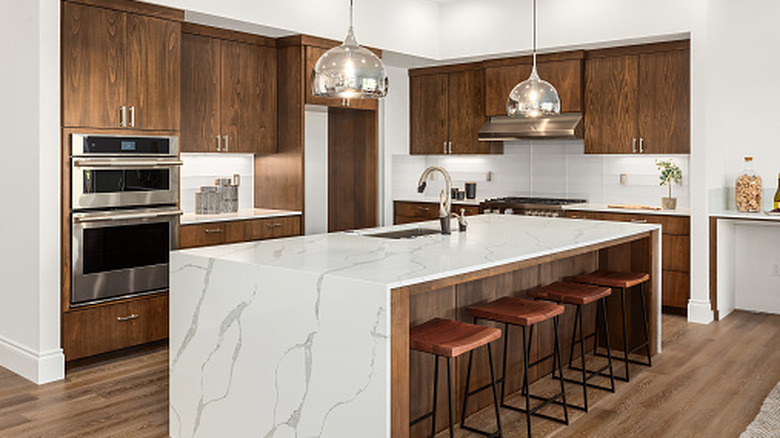
While it isn't uncommon for different generations to clash in their design choices, it does bring up the question: which of the two styles, hidden or out in the open, is sure to pass the test of time? During her exclusive interview with House Digest, Cara Woodhouse settles this point of contention by assuming an optimistic outlook. She states, "In my opinion, timeless kitchens are never overly trendy in either direction. The best kitchens blend warmth, functionality, and clean architectural lines without feeling too cold or overly ornate."
Given that, boomers can take heart and implement touches that soften the sleek minimalism of a modern kitchen and bring out its storied character. "One way to make modern minimalist kitchens more appealing to Boomers is by introducing warmth through texture and materiality," says Woodhouse. For that, you may tap into natural materials that age elegantly and organically with time, or develop a gorgeous patina. You may also bring in glass-fronted cabinets to contrast with the moodier elements of your kitchen. As for Woodhouse's design tips, she mentions mixing "sleek cabinetry with organic stone, rich woods, sculptural lighting, or vintage-inspired hardware to create a more layered and inviting atmosphere." In short, by introducing various traditional elements, you can make the concealed kitchen style work for you, should you choose it.