

15 Mistakes That Are Shortening The Lifespan Of Your Cut Flowers
A gorgeous vase of cut flowers can brighten up a whole room, but a bunch of fading blooms can bring it down just as fast. Whether you're cutting flowers from your own garden, buying them at the store, or getting them as a gift — it's not enough to simply place them in some water and call it good. In fact, this is a surefire recipe for a short vase life.
To keep your flowers looking fresh for longer, you need to focus on reducing bacteria buildup in the water, cutting stems correctly, and feeding them. Some of the most common mistakes involve not keeping the water clean — but you might also be inadvertently shortening the lifespan of your arrangements through poor placement. Other mistakes include cutting flowers at the wrong time of day, and mixing the wrong types together. To help you keep your bouquets looking beautiful for longer, we've explored 15 common mistakes that people make with cut flowers. You'll find placement tips to keep them from wilting, handling advice to keep their petals perky, arrangement mistakes to avoid, and more.
Overhandling your flowers can damage the blooms
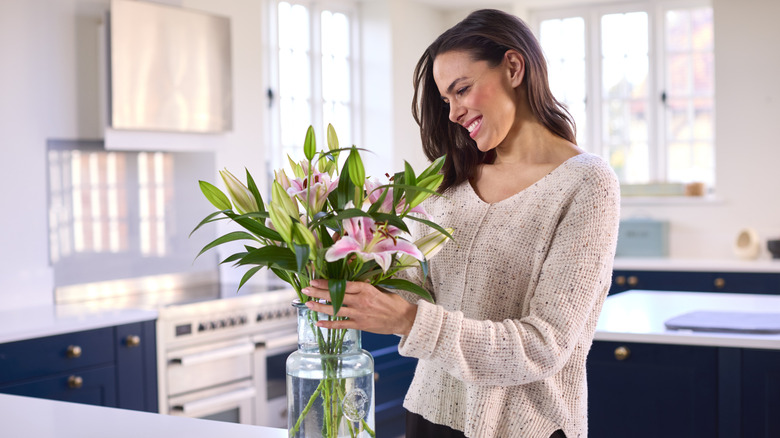
The first mistake to try and avoid is fussing over your flowers. By that, we mean constantly tweaking and re-arranging your bouquet. If you continually touch the petals, you can bruise them. What's more, as Rachel Cho, founder and CEO of Rachel Cho Floral Design, told Martha Stewart, "Overhandling can transfer oils that damage blooms." In both cases, you stand to diminish the lifespan of your flowers. Of course, there are times when you'll need to handle your flowers, like during water changes. But to encourage a longer display, there is a right way to go about it.
It's advised to create a cuff with your hand, using it to support the flowers by the stems. You should remove them as gently as you can, and avoid over-gripping. That's pretty much it! Provided that you avoid touching the petals during changes, and that you leave your flowers alone between water changes, you may be surprised at how much longer they start to last.
Using dull scissors or knives crushes your stems
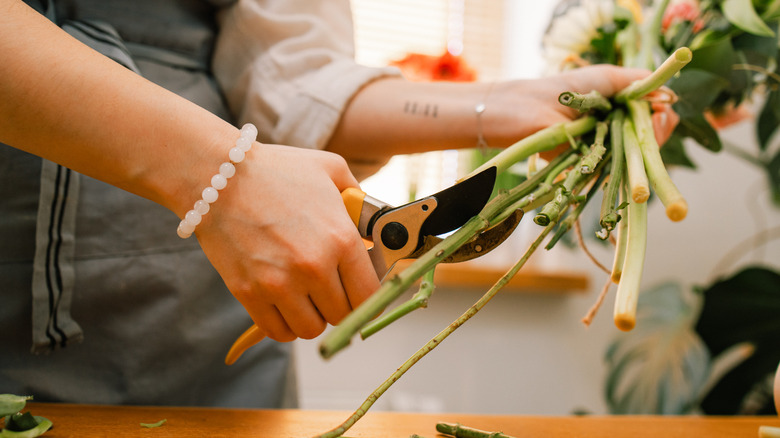
Have you ever been told that a dull knife is more dangerous than a sharp one? Sharper blades can efficiently slice through a given object, but dull ones tend to slip since they require more pressure to cut, leading to accidents. In the case of flowers, with a clean cut — from a sharp pair of scissors or a well-honed knife — the stems are better able to absorb water and nutrients. With dull blades, it's easy to accidentally crush the stem. Frayed edges are more likely to speed up decay, leading to premature bacterial formation.
If your blade is somewhat dull, try to sharpen it before using. It's best to use dedicated equipment for this, since not using proper sharpening tools can be dangerous and can also further damage your blade. As for which type of blade to use, you can use either scissors or a knife. If you have the choice, a sharp knife is generally the most-recommended tool, since scissors (unless very sharp) have a tendency to crush.
Dirty water and bacterial buildup will shorten your flowers' lifespan
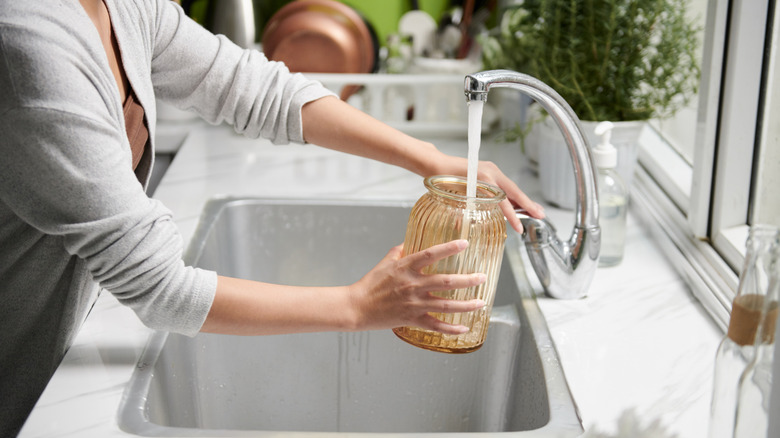
Cut flowers are inevitably destined to die and start decaying. The key to longer vase life is slowing down the decaying process as much as possible. If you don't keep the water fresh, bacteria will start to buildup as the flowers naturally break down. This bacteria accumulation can block flower stems, and impact how much water they can absorb.
So, how often should you change your vase water? Ideally, you should top it up daily with fresh water to keep your flowers hydrated, and aim to change the water completely every two or three days. It's also worth re-cutting the stems when you change the water, since the ends will start to decay. And if you leave your flowers out of water for too long, they may start to seal themselves. Trimming ensures that any seals or bacterial blockages are cut away, thus boosting your flowers' ability to soak up sustenance.
Not cleaning your vase between bouquets can lead to bacterial transfer
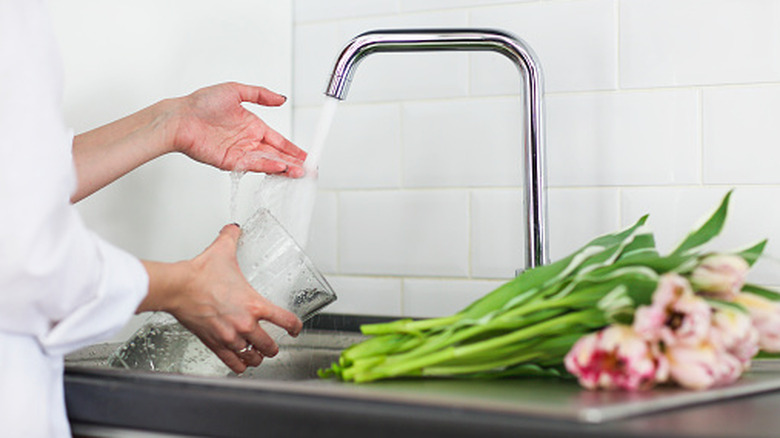
Whether you're spending your hard-earned money to buy them or investing valuable time to grow them, one of the simplest mistakes to avoid with cut flowers is not cleaning your vase properly between uses. As we've already discovered, bacterial buildup in the vase water can cause blockages in your flowers' stems, which will reduce their ability to take up nutrients and water. If you don't clean the vase thoroughly, bacteria from your last bouquet is sure to cling to the inside. When you come to top it up again for your next bunch, that bacteria can contaminate your flowers and put them on the back foot.
It's not enough to simply swill your vase out and leave it in a sunny windowsill to dry. Instead, you should scrub it thoroughly with soapy water. To completely disinfect it (which is ultimately the goal), mix up a solution of 1 part bleach to 10 parts water, and use that to give the vase a final once over. Rinse it out with lukewarm water, and then allow it to dry.
Incorrect feeding practices can do more harm than good
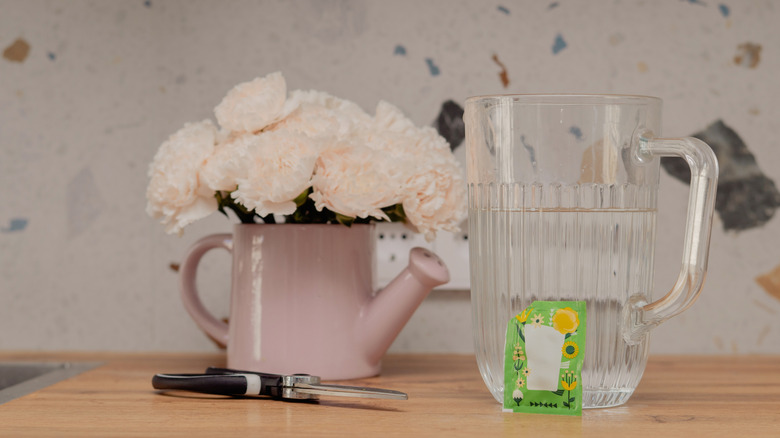
You might be wondering, are the packets of flower food that come with store-bought bouquets are really necessary? As it turns out, they really are. They contain a blend of essential ingredients that do more than just feed your flowers. As well as essential sugars, they usually contain a pH regulator to ensure your water is suitably balanced, plus a sterilizer to help prevent bacterial buildup. Just don't be tempted to dump it all into the vase and call it a job well done.
Instead, look for instructions on the flower food packet. If you find some, then follow them to the letter. If you overfeed your flowers, you could end up doing more harm than good, potentially shortening their lifespan. Of course, if you grew the flowers yourself, then it gets a little trickier. Researching online can help you to get the vase solution right for your specific plants. But as a general guide, the Illinois University Extension offers up a "home remedy" style solution that you could try. It suggests 3 parts of water to 1 part lemon-lime soda. This, it says, contains the sugar your flowers need to feed, while lowering the pH of the water. Tipping in a tablespoon of bleach per gallon of water can also help keep bacteria at bay.
Leaves submerged in water can rot and fuel bacterial growth
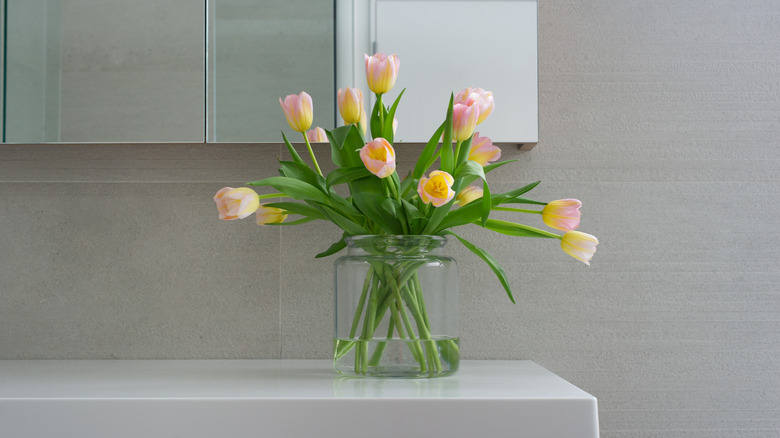
Another way to keep bacteria from fomenting discord in your vase is to ensure the leaves are properly trimmed. Any leaves that are allowed to touch the water will begin to rot much more quickly than those that are kept dry. When they do, they'll infuse the water with bacteria, thus expediting the wilting process for everything else in the vase. This makes trimming away the leaves an essential flower arrangement step that should never be skipped.
The general rule of thumb is to cut leaves away from the bottom half of the stem. To be sure, you could also place them in the vase and see for yourself which leaves are most likely to touch the water. Even "higher" leaves may eventually droop and go for a dip. Once you've made your initial trim, keep a beady eye on your bunch, and if you notice any leaves starting to droop or threatening to fall off, cut those away, too.
Placing your cut flowers in direct sunlight can speed up wilting
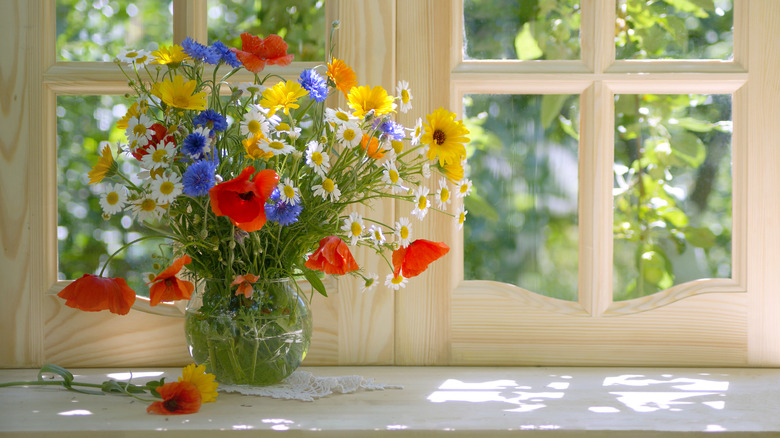
If you're struggling to keep your bouquets looking beautiful, then you could be placing your flowers in the wrong spot. There are several placement tips that can help extend their shelf life, but one of the most important is to ensure that the shelf doesn't sit in direct sunlight. This may sound counterintuitive, especially for flowers that need lots of sun when growing in the ground.
Unfortunately, once they're removed from the soil, the heat of the sun speeds up water loss — water that flowers need to keep them looking fresh. It also saps your flowers' energy faster than they're able to replace it. So, as tempting as it is to show-off your hard-grown flowers by positioning them in a bright, sunny spot, it's usually best to find somewhere cooler. If you can find a spot with indirect sunlight that's also away from any heat sources (more on that later), then they're likely to last longer.
Not using appropriate cuts for certain flowers
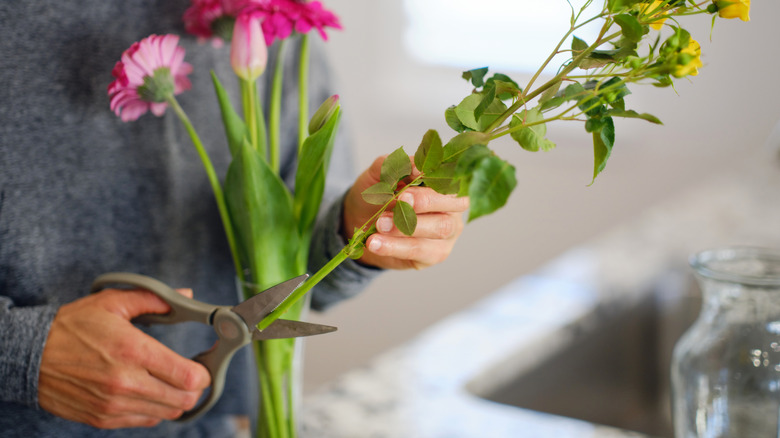
Most flowers need a sharp-angled cut at the base of the stem, which prevents flattened ends from "sealing" against the base of the vase. This, combined with a sharp, clean cut (plus further trims every few days), puts them in the best position to soak up water and nutrients. However, this is by no means a "one size fits all" approach, and treating it as such can be a costly mistake as far as the life of your cut flowers is concerned. Instead, the best method to cut your flowers depends on which blooms are in your bouquet.
For example, if you have woody-stemmed plants, like roses, then you'll need to take an extra step to set them up for success. A sharp-angled cut is still required to prevent them from flattening against the vase. But since woody plants are naturally less "absorbent" than softer-stemmed flowers, an additional, 2-inch, vertical "split" from the bottom of the stem is also advised. This exposes the vascular tissue inside, and helps maintain sufficient surface area for optimal water absorption.
Ripening fruit, dying flowers, and cigarette smoke could expedite wilting
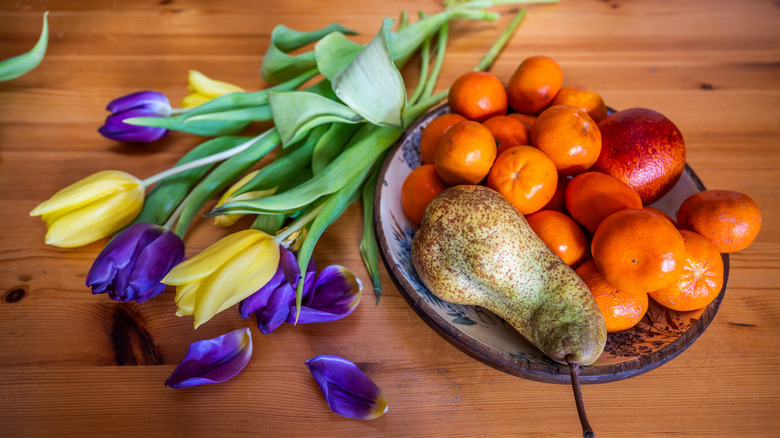
The kitchen table is a likely place to keep a bouquet of flowers. Just avoid the mistake of placing your flowers next to your fruit bowl. Ripening fruit (as well as other dying flowers) emits a gas called ethylene, which can cause premature aging. This sounds bad, but you can actually use it to your advantage in other scenarios, like helping to ripen fruit and vegetables for eating. But if your freshly-cut flowers find themselves enveloped in ethylene, they'll inevitably wilt more quickly.
Fortunately, it's an easy mistake to avoid: Just keep your fruit and flowers separate. Since flowers also emit the gas when they start decaying, you should also make a point of removing any spent blooms whenever you notice them. Oh, and if you smoke, beware that cigarette smoke also contains ethylene. If you smoke indoors, that's also likely to have an impact on your flowers' vase-life.
Nearby heaters and coolers may wick water away from the petals
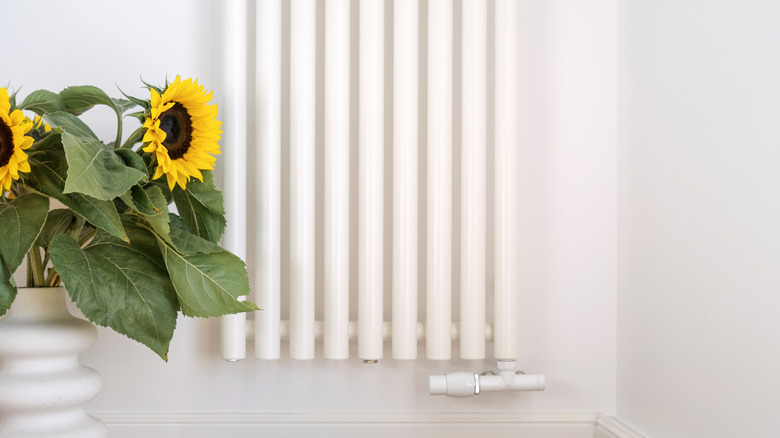
Like sunlight and ethylene, high temperatures from your home's heaters have a happy habit of speeding up the wilting process in cut flowers. Once they're removed from their root systems, excess heat induces an increase in metabolic rate, which basically means that the flowers use up more energy quicker. Even with a sharp knife and diligent feeding program, cut flowers simply cannot replace those stores as quickly as they can in the ground.
Instead, it's best to keep your flowers cool and away from any heaters. You also need to avoid keeping them too cold. Unfortunately, while flowers are a creative way to conceal your outdoor AC unit outdoors, doing the same indoors is rarely recommended. Whether it's coming from your heaters or your air conditioner, moving air can wick water away from the petals, potentially speeding up dehydration and petal loss.
Allowing your flowers to sit without water won't help them stay fresh
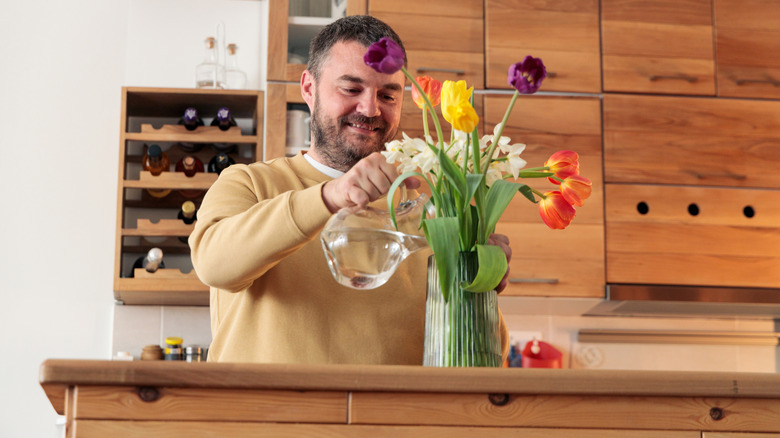
If you're reading this guide in the hope of giving your freshly-picked flowers the best chance, and you haven't given them a drink yet, then you've already made this mistake! Flowers need water as soon as they're pulled from the ground. This helps to ensure they stay fresh and in fine fettle, giving them a chance to on-board plenty of water before you take them indoors.
The Royal Horticultural Society suggests giving your flowers at least a few hours to acclimatize to their freedom from the ground. Before you pick them, ensure you have a clean bucket filled with water, and place your flowers in it as soon as they're picked. Put the bucket in a cool spot, and if you can, leave them there overnight. As we've discovered, the extra warmth of your house can cause them to run through their water stores much more quickly. Giving them a good, long drink beforehand ensures they're fully prepared for their future.
Not considering your flowers' vase life can impact longevity
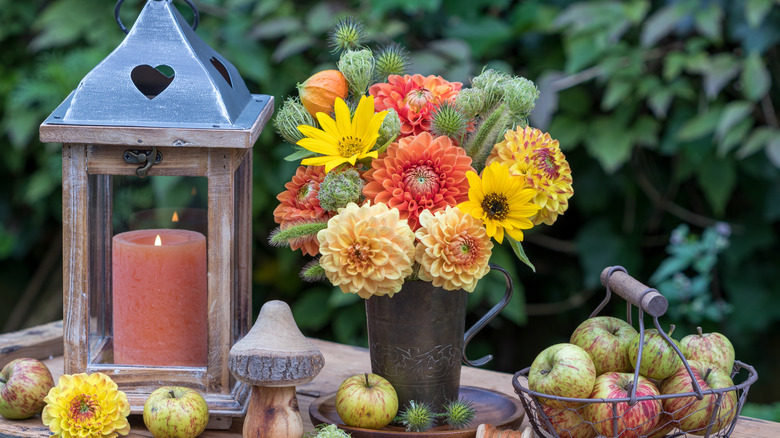
The main goal with this guide is to help you avoid the mistakes most likely to reduce your flowers' vase life. However, the unavoidable truth is that not all cut flowers share the same level of resilience. Chrysanthemums, for example, can last for weeks, provided that you keep them suitably fed and watered. Dahlias, on the other hand, despite being excellent flowers for a cut flower garden, may only last for a few days.
Of course, if your bouquet arrangement is made exclusively from one type of flower, then this can be manageable. You'll still need to monitor it, and remove individual flowers when they start to fade. But if you mix long-lasting flowers with shorter-lived blooms, then unless you're on top of things, you could end up shortening the lifespan of everything in the vase. As mentioned before, decaying flowers emit ethylene, which causes the other flowers nearby to wilt faster. Even if you do keep on top of removing fading blooms, you could end up "thinning out" your display and losing the variety that made it so attractive to start with.
Mixing certain flower types can lead to water toxicity
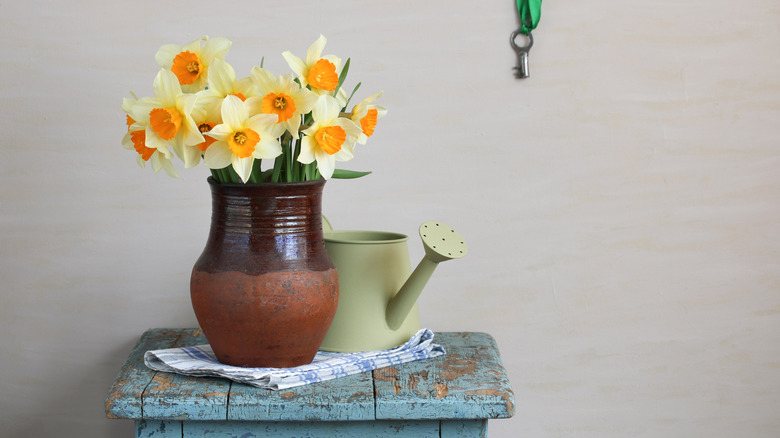
Another reason to be mindful of the flowers you place in your vase is that some can be toxic to others. It's why you should never add daffodils to a tulip bouquet. When cut, daffodils (Narcissus spp.) emit a poisonous sap, which shortens the life of other flowers like tulips. It's not the only flower to do this, either. Several milky-stemmed plants secrete a milky fluid called latex, which, like the sap from daffodils, clogs the vascular systems of other flowers.
Now, depending on the flowers you're hoping to use, you may be able to get around this. For example, the milky-stemmed plants from the Euphorbia genus can be "seared" by applying a flame to the base of the stem once cut. This stops them from contaminating the vase water with latex, thus prolonging the lifetime of their neighbors. But if you're determined to add daffodils to your bouquet, searing won't work. Generally speaking, if you want to ensure the longest possible display time, it's best to omit daffodils from your arrangement altogether.
Harvesting poor quality flowers will lead to a short-lived display
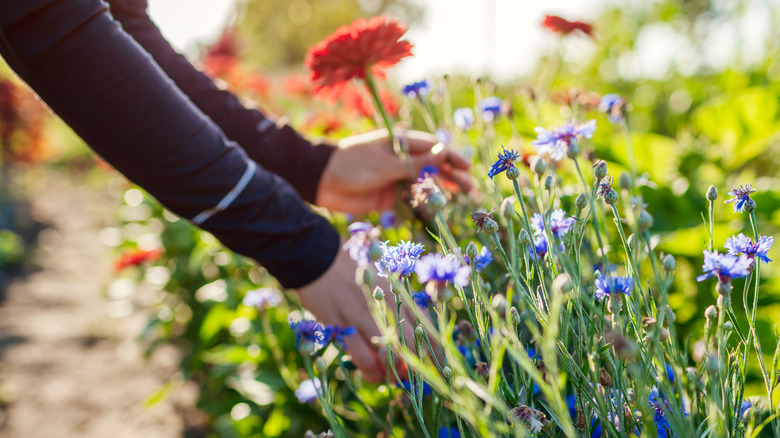
This largely applies to home-grown flowers, although it can still pay to be diligent when buying bunches from the store. Essentially, only the healthiest, most vigorous flowers should be chosen for display in your vase. It's nothing against the others. It's just that if you mix in older flowers to bulk out your bouquet, it's unlikely to look radiant for long.
Those lesser flowers will decay more quickly, leading to faster bacterial contamination of your vase water. They'll also emit decay-inducing ethylene gas, thus representing a double-threat. If you're picking your flowers from the garden, focus on the freshest, healthiest, most vibrant flowers. When you cut them, take some time to also deadhead spent or lackluster blooms — and you may find that your plant invests more energy into new flower buds. Thus giving you a ready supply to pick from when your first arrangement wilts.
Picking your flowers at the wrong time may reduce your chances of success
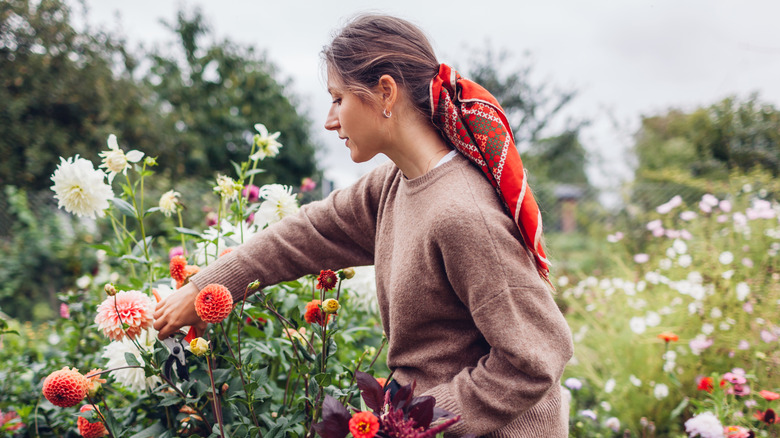
The final mistake to avoid that could easily shorten the lifespan of your cut flowers is picking them at the wrong time. In the middle of the day, when the sun's high and temperatures are at their peak, flowers will be naturally drier. This means that if you pick them, they're more likely to wilt quickly. One way to tell whether they're okay to pick is to test the stiffness of the stems. If the flowers are well hydrated, the stems should feel nice and sturdy. Later in the day, they may feel softer and easier to bend.
The best time to cut flowers from the garden is when temperatures are cooler. Morning is ideal, when the flowers have had all night to replenish their stores. For most flowers, you should also try to pick them when they're just starting to come into color. Those that have already hit peak color are more prone to fast wilting when brought inside. There are some exceptions to this rule, including roses and dahlias. If you pick these too early, when they're still tightly budded, they may struggle to develop if pulled from the ground.