

Hot, Sunny Days Can Wreak Havoc On Your Bird Feeder — Here's What To Do
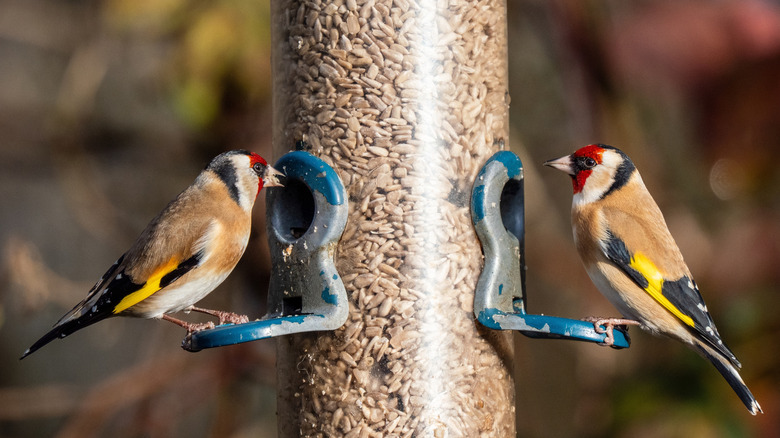
As the seasons transition to hot, sunny days, we can't forget about the creatures living outside on our properties. We aren't the only ones affected by the sun and heat, and we can help keep the wildlife in our backyards hydrated, healthy, and safe with just a few simple garden chores. If you have a bird feeder in your yard, it's time to start a consistent check-in on the contents of the feeder throughout the sunny season. In addition, where you place your bird feeder is vital to the safety of the birds. If the feeder is tilted at a certain angle near your home, specifically in the line of solar glare from the sun on your windows, birds can accidentally crash into the glass. To avoid this, it's vital to place your feeder at an appropriate distance from this hazard.
It may sound easy to just set up a bird feeder, toss in some birdseed, and forget about it. However, in the summertime that is simply not an option. In order to keep your backyard birds safe and healthy, position your feeder correctly and check on it regularly for spoiled contents. On that note, added humidity from the summertime can cause mold growth, which is another reason to keep an eye on the seed, suet, or other bird food you place inside. In addition to placing it at a safe spot and checking it for spoiled contents, it's recommended to regularly clean your backyard bird feeder, leaving a maximum of a few weeks between cleanings.
The safe way to set up a bird feeder in the summer
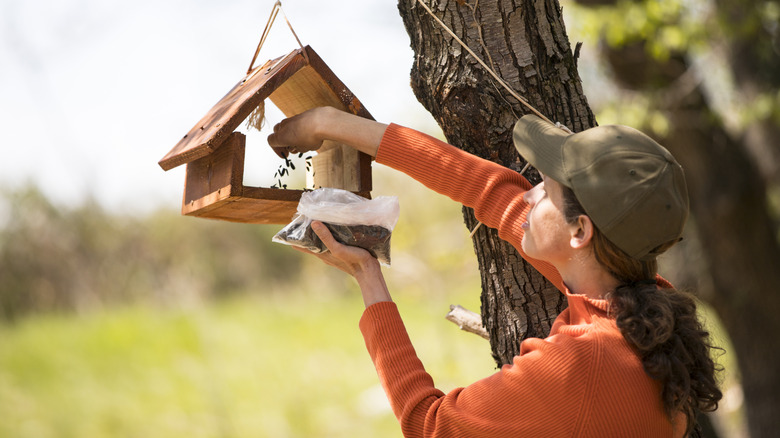
Window strikes, which is when a bird crashes into glass, kill about 150 million birds every year in the U.S. (via Audubon). We all love watching birds visit our yards, but in order to enjoy this sight, we need to make sure we are prioritizing their livelihood. While you can set up a feeder outside of a window, it's imperative to place it at least 3 feet away from the window itself. Birds flying towards your feeder might not recognize the glass while flying towards it and instead simply see the reflection of trees or your garden. The farther away you place your feeder from the window, the less likely your birds will collide with the glass trying to get to the feeder. If you've ever noticed the tragic tellings of a window strike near your bird feeder, including blood or a deceased bird, you absolutely should move your feeder farther away from the glass.
To set up an extra layer of protection for the birds approaching your feeder, you can purchase products like mesh bird screens, which cover your windows and help the birds recognize the impending wall. You can even make your own using twine or string.
Another common issue with bird feeders in the summertime is spoiled bird food. Some homeowners even advocate for taking down bird feeders in the summer, but experts say this is not necessary as long as you keep the feeders clean. Make sure the seeds inside are dry to avoid finding mold in the feeder. You can also prevent mold by consistently refilling the containers and scrubbing them thoroughly at least once every two weeks. You can clean your feeders with a simple soap and hot water solution.