

The Best Lawn Mower Setting To Use If You Have Kentucky Bluegrass
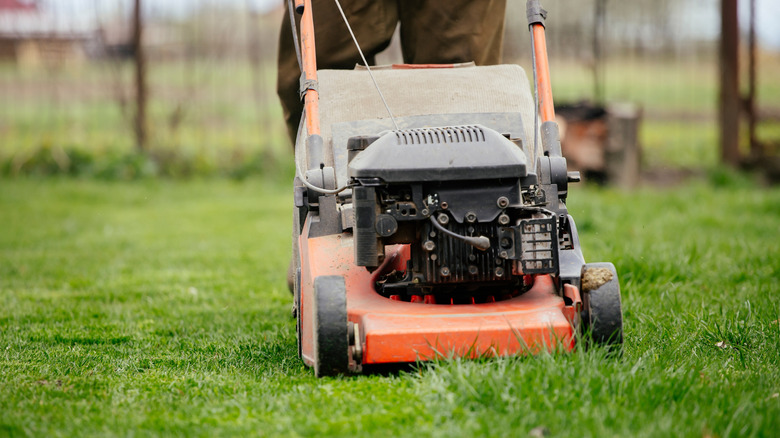
When you sow or sod cool-season grasses like Kentucky bluegrass, you hope to enjoy a dark green, dense, and neat lawn through most of the year, unless it's really hot in the season. But when, despite your best attempt at lawn care, you wind up with turf that looks brown and unkempt, it's wise to reconsider your mower's deck setting. The standard practice is to set it at an average height of 2 to 3 inches for most mows, but factors like cultivar or blend selection, whether it's the year's first or last mow, and season (if you aren't in a mild climate) may require different settings or adjustments through the year.
To keep your sunny lawn healthy and green, you must cut it at the right height. If the mowing deck is set too low, you may end up cutting your grass too short. This effectively reduces total leaf surface area, compromising its metabolic ability to produce food. Such turf struggles to spread or develop a deep root system and thins out, making space for pesky weeds like crabgrass and diseases to set in.
Change up mower settings in the summer
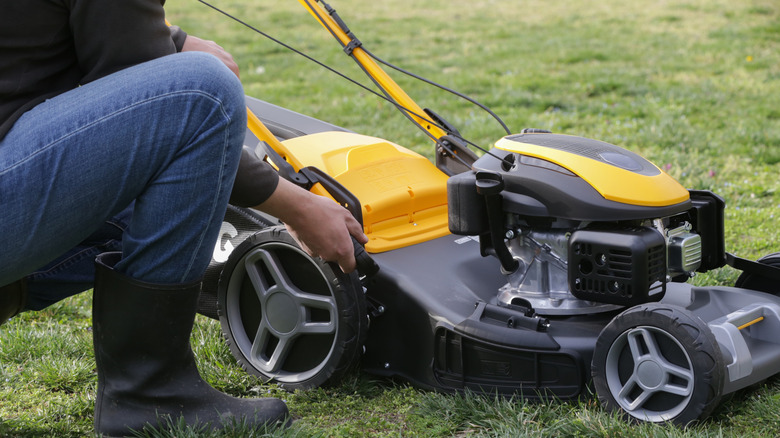
Being a cool-season grass, Kentucky bluegrass grows most actively during spring and fall when temperatures are mild, and thus, it should be maintained at 2 ½ or 3 inches in those months. However, it slows down during the summer, growing stressed from the heat or dry spells. So, during the hot season, trim to about 3 to 3 ½ inches, typically the mower's highest setting. Of course, you should still consult your owner's manual, as some mowers can also go up to 4 inches, giving your grass a floppy, flowing look. Over successive periods, such a highly-cut turf may mat also down, inviting in diseases.
Also note that the digits on the pull lever don't always translate to inches in height. If you can't locate the manual physically or online, lay the mower on a flat piece of land, like your driveway. Using a ruler, measure the blade's height from the ground, and adjust it accordingly. By following this crucial midsummer lawn mower tip, you can keep your grass healthy. Basically, when the grasses are taller, they can photosynthesize more and develop deeper roots, which enhances their drought tolerance. They are also able to better resist grubs and disease pressure. Moreover, taller blades shade the ground underneath, improving root insulation and blocking light access to weedy seedlings, reducing the need for pesticides or herbicides down the road.
Taking cultivar selection and time of the year into account
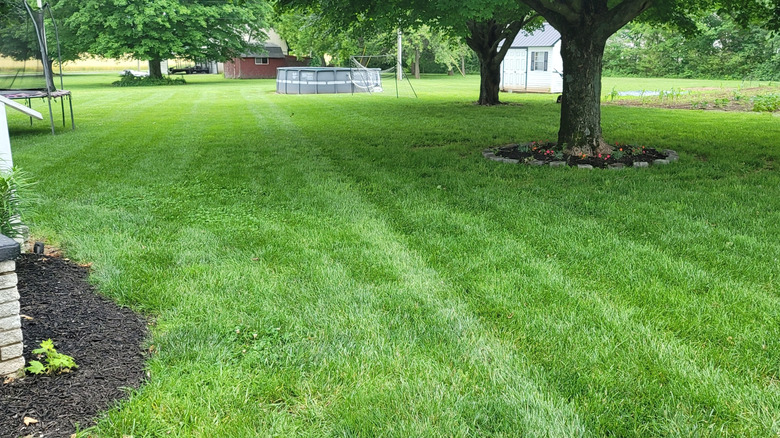
Other than the season, it's important to take note of timing. If it's the first mow of the growing season, you may want to set the deck a notch lower, say an additional ½ inch from the standard height in the spring. Doing so removes any debris or dead growth collected through the winter. As the grass is actively growing, it will soon bounce back to green. Follow the same routine for the last mow of the season in the fall. This is done to circumvent the problem of weeds or diseases that occur when grasses grow too tall and flop over.
Another thing to consider is grass selection. In recent years, some homeowners have moved to compact, disease-resistant hybrids or cultivars, which grow slowly and require fewer mowing sessions. For instance, 'Midnight' Kentucky bluegrass can be maintained at ¾ to 2 inches, so you must adjust your mower accordingly. In a similar vein, some lawns feature a blend of multiple selections — Kentucky bluegrass and perennial ryegrass are one such favored combination. In such cases, you may have to arrive at the middle ground for both grasses rather than following a hard rule. The best way forward is to use the 1/3 rule to keep your lawn stress-free all year. Basically, you wait until the grass is 4 ½ inches tall to cut it down to 3 inches, ensuring it has sufficient reserves to grow while you can go longer between sessions.