

It Was Everywhere In The '60s — Now You'd Be Lucky To Find It At A Thrift Store
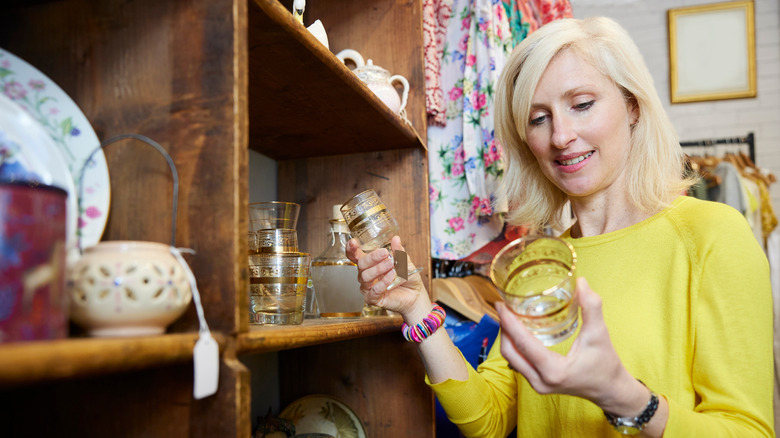
If you spend much time thrifting, you probably feel like you've seen it all. From antique to modern, mass-produced to handmade, if there's something you want, you'll eventually come across one secondhand at the thrift store. One that may take longer to find than you think, though, especially given its popularity in the 1960s, is carnival glass. There are tips and tricks for thrifting authentic carnival glass to make it a bit easier, but finding the perfect piece right away would be quite lucky.
The manufacturing of carnival glass began in the early 20th century. The process was affordable, making carnival glass a good alternative to art glass. Treated with metallic salts while the glass was hot, carnival glass has a signature iridescent sheen. Plus, it could be made in all kinds of colors and shapes. Today, there are over 60 unique shades of vintage carnival glass, according to collectors. Clear glass treated with the iridescent spray would become a marigold color, but anything added to the glass before the iridescence would change the color of the glass. To make the pieces, molten glass was poured into molds and pressed there to get the special shapes and designs before being removed and left to cool.
Carnival glass gained popularity in America after its invention, but over the next few decades, it lost some traction. In the 1950s, carnival glass was a game prize, earning it its name and leading to a resurgence of interest in the 1960s, especially from collectors. Today, it is still fairly valuable and sought after.
What makes carnival glass valuable?
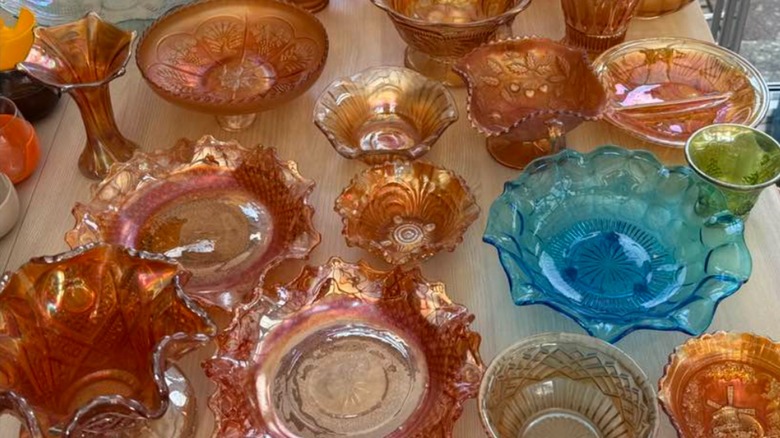
With its widespread popularity in the mid-century, you may wonder why carnival glass isn't filling the shelves of thrift stores today. After the boom in the early 1900s, carnival glass production slowed. This makes the pieces rarer, especially any pieces that have survived decades without chips or cracks. Along with the value that comes from scarcity, older carnival glass pieces are thought to have a special history surrounding them that collectors are willing to pay more to get.
How much more? Well, while some pieces and even whole sets can sell for under $50, items with particularly nice iridescence, quality, age, and condition can sell for hundreds or even thousands of dollars. The size and complexity of the piece can contribute, too. So, if you happen upon some of these shiny glasses while out thrifting, know that they're among the valuable glass pieces you should be looking for at thrift stores and estate sales.
If you do find yourself some nice carnival glass pieces, you can make good use of them. Displaying a variety of colors of carnival glass is a great way to add charm and life to your home. They look especially good in places that get a lot of direct light to reflect their shine. Be wary of eating or drinking from the glass, though, because the glass and the shiny finish are fragile, and some pieces are known to contain lead. If the style isn't for you, it may still be worth picking up carnival glass if you see it due to its value, so be sure to learn how to spot valuable, high-end items at thrift stores before you head out on your next shopping trip.