

'A Terrible Idea' — One Gardener's Tip For Planting Cucumbers That Isn't Worth It
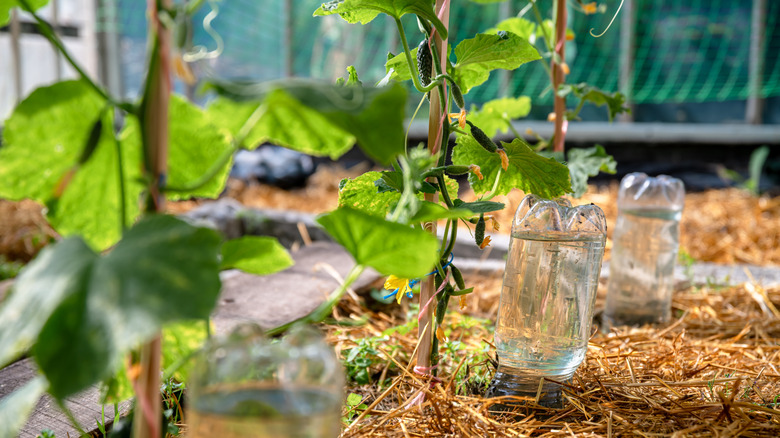
Cucumbers are notoriously heavy feeders, but they're also incredibly thirsty plants, and they need consistently moist soil throughout the growing season. Inconsistent or under-watering is one of the main reasons your cucumbers taste bitter or end up sad, small, and twisted. Because of that, gardeners have been finding ways to reduce the maintenance required to keep their cucumbers suitably watered for generations. Many people have turned to the seemingly simple, frugal, and ecologically sound idea of sinking a plastic bottle partially into the soil, cutting the base of the bottle, filling it with water, and letting the plant draw up water as it needs it. This sounds like an incredibly clever idea. Although it's been trending on social media recently, this is an old trick. I'm a master gardener with over 20 years of experience, and even I tried it many years ago, before we knew about the dangers of microplastics and plastic degradation.
The biggest problem with this so-called hack is that the bottles degrade with exposure to sunlight and contact with the soil, and they leach chemicals and microplastics into the soil. Most plastic water bottles today are made from PET (polyethylene terephthalate). It's known to leach over 150 chemicals as it breaks down, including heavy metals like antimony, as well as endocrine-disrupting compounds like bisphenol A or BPA. As the bottle breaks down, these chemicals leach into the surrounding soils, which is bad enough, but cucumbers take these submicron plastic particles up via their root surfaces. These contaminants can travel through the plant's vascular system via transpiration and can end up in the leaves, stems, and fruits.
The difference between burying the bottles and keeping them out of the soil
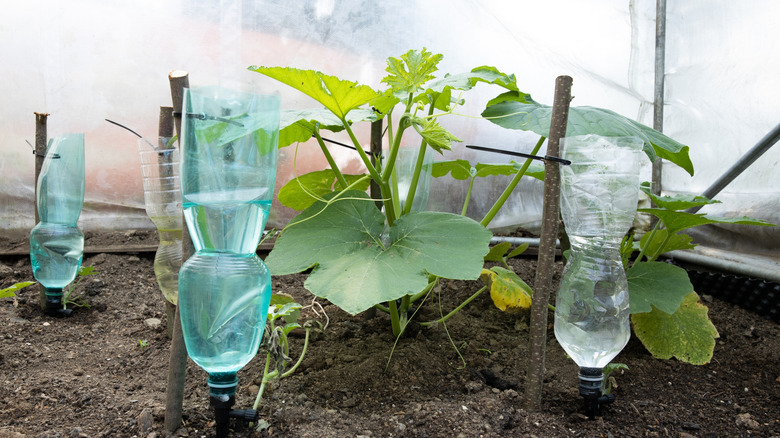
The only real difference between burying the bottles and using watering spikes to keep them out of the soil is that exposure to UV will speed up the degradation. Sunlight breaks down plastic much faster than soil alone does. When exposed to heat and UV, PET bottles leach their chemicals into the water inside the container, which then gets into the soil and then into your plants. They also fragment into microplastics rapidly.
This doesn't just affect the immediate surrounding soil and the plants. It can have far-reaching consequences, contaminating the deeper soil profile and even the groundwater. Whether you bury the bottles or stake them above the surface with watering spikes, you're still introducing chemical contamination into your growing beds, which can end up contaminating the cucumbers you eat.
Safe low-maintenance cucumber watering alternatives
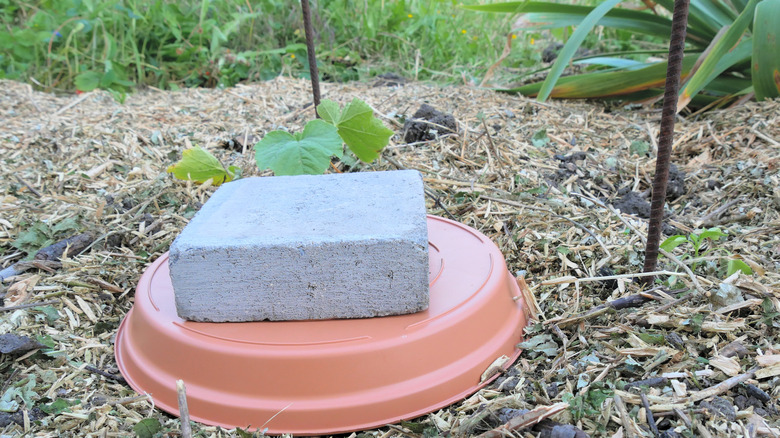
There are quite a few different hands-off ways to water plants like cucumbers. My favorite, and one I use successfully across most of my edible garden, is homemade ollas. You can buy ready-made ollas, too, but they're more costly. Ollas are unglazed terracotta vessels with a lid to stop animals from falling in and to stop evaporation. You bury them in the soil with just their necks above the soil line so that you can top them up. They're porous, so the water seeps slowly through the walls and into the surrounding soil. The water movement is directly related to the dryness of the soil around the olla. As the soil dries, it pulls more water from the terracotta. And you're not introducing anything toxic into the soil. Plus, terracotta is not going to break down with exposure to UV or the soil. If you're working on a budget, you can make your own ollas easily. If you already have old terracotta pots lying around, you have everything you need. You can also usually find unglazed terracotta pots fairly cheaply at yard sales and thrift stores.
Either look for ones with no drainage hole or cover the drainage hole with a saucer or a rock. Bury it between your cucumber plants, fill it with water, and cover the top with a saucer or something flat and inert that won't break down with exposure to sunlight. Another good option is to bury drip lines or a soaker hose at the same time as you plant your cucumber seedlings out, or under a thick layer of mulch, and run these to a timer or an exterior tap. This is another super-low maintenance watering technique that stops water and potentially contaminated soil particles from splashing up onto the plant. Plus, of course, watering under a layer of mulch lets water run slowly and deep, minimizing evaporation and runoff.