

Not Just Fertilizer: The Companion Plant That Can Help Your Lettuce Garden Thrive
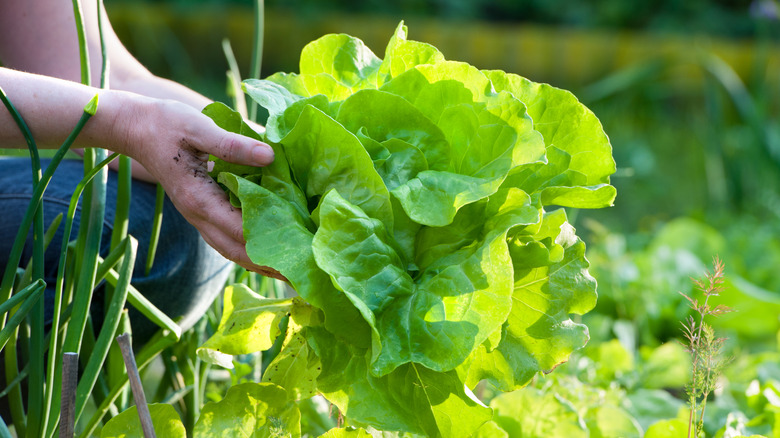
"Dig a $10 hole for a ten-cent plant." That's the advice from long-time horticulturist and professor Allan Armitage, who spent 30 years working at the Trial Gardens at the University of Georgia. His rule of thumb speaks to the importance of soil and the role it plays in the health of our plants. For home gardeners, whether it's compost tea or cover crops, there are many ways to achieve healthy garden soil without using fertilizer. Companion planting is one of the easiest ways to start, and when you're growing a lettuce garden, adding radishes helps ensure your lettuce thrives.
One of the benefits of growing radishes with lettuce is that you can use them as row markers, since radishes germinate faster than lettuce does. But there's another benefit of this approach that even fertilizers can't do: Radishes have long taproots that break up layers of compacted soil, opening the way for the lettuce roots and making it easier for water, air, and soil microbes to move around. Since the soil microbes cycle nutrients back to plants, and they're already thriving with the radishes by the time the lettuce comes along, your seedlings inherit a soil ecosystem that's ready to feed them. This is the kind of $10 hole Armitage was talking about, only you don't need fertilizers — which are expected to cost more than ever in 2026 – to get there.
Discover more benefits of planting radishes with lettuce
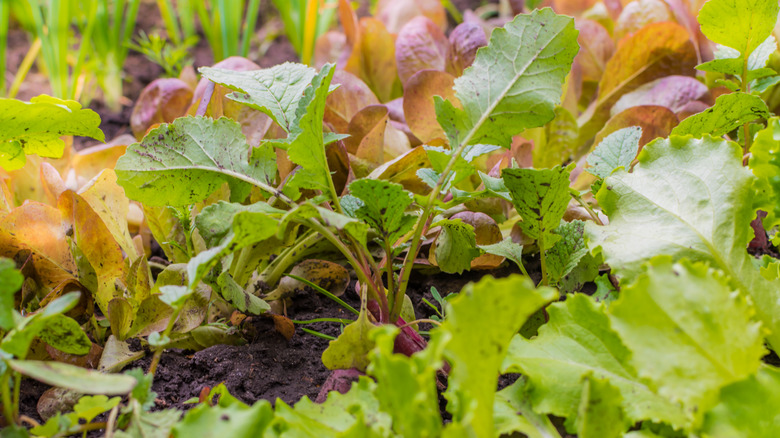
Whether you plant large forage radishes or the round red ones you see at the grocery store, radishes make an excellent companion plant for lettuce. Garden radishes mature in about 25 to 35 days, so they can be harvested before your lettuce crop needs the space. Beyond the soil work that radishes do, another benefit of companion planting radishes with lettuce is that they are a trap crop. Trap cropping is a type of companion planting that uses a plant that insects are attracted to as a sacrificial crop to keep insects away from the more valuable crop. This is surprisingly effective and well-researched with many different types of companion planting combinations, and works especially well with various species of flea beetles.
Flea beetles attack a variety of green, leafy vegetables, chewing tiny holes in the leaves. Since they're attracted to members of the brassica family, radishes are exactly the kind of plant flea beetles are looking for. But if you're going to use radishes as a trap crop, the approach is a little different than using it as a row marker. Instead of planting lettuce and radishes at the same time in the same bed, plant the trap crop two to four weeks ahead, which will give it time to mature. You also want there to be some distance between the two crops so the pests can't hop back and forth easily. Once trapped, you can manage pests with manual removal methods.