

What Does The Choke Symbol Mean On Your Lawn Mower?
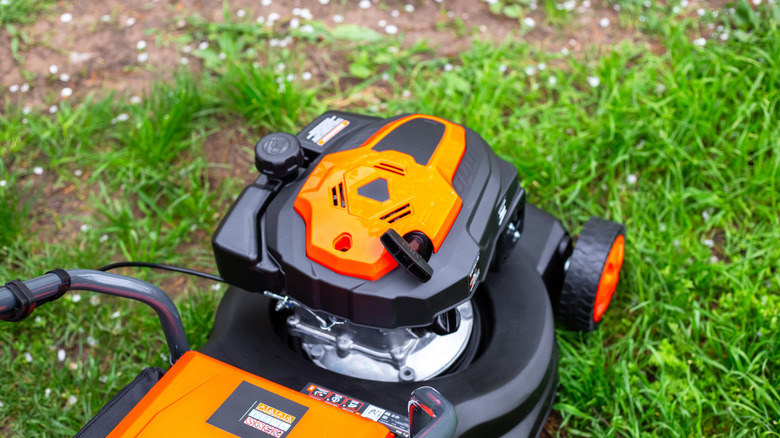
Gas lawn mowers, regardless if they're new or old, have plenty of confusing symbols and markings that most people overlook. Included amongst those is the choke symbol, which is usually found near the throttle or engine control of a gas-powered lawn mower. And while it can vary slightly in appearance depending on the brand, it usually looks similar and performs the same function across most machines. The symbol points to a setting that helps the mower start by changing how much air reaches the engine during startup.
When the engine is in a cold-start mode, airflow is restricted and more fuel is sent into the engine to help it start. This is important when a lawn mower hasn't been used for quite some time, like the start of spring, or when outdoor temperatures are lower, which could also be at the end of mowing season. So if you haven't used the mower in days, or even weeks or months, you'll usually need to engage the choke before starting it so the engine gets a richer fuel-air mixture and can ignite more easily. Waiting a long time between mows also might mean longer grass, which can cause damage to your mower. But with so many bells and whistles on your mower, knowing how this function operates can prevent hard starts, stalling, or flooding the engine with too much fuel.
How the choke helps cold lawn mower engines start

The fuel-mixture needed to power a gas lawn mower varies slightly depending on if the engine is cold or hot. The choke system uses a butterfly valve inside the carburetor to limit the amount of air entering the engine. Reduced airflow means a richer fuel mixture, which makes cold starts easier.
The choke should move back to the regular run position so the machine can operate normally as the engine warms up. However, if a choke stays on too long the engine will begin to run too rich with fuel and not enough air. It's important to be aware of warning signs of a mower running with the choke engaged. That can include, but is not limited to, sputtering, a strong smell of gasoline, dark exhaust smoke, difficulty starting, rough idling, and reduced engine performance. The engine can even stall from getting too much fuel and not enough air, and because warm engines usually restart without the choke, repeatedly using it on a warm mower can make starting harder instead of easier.
On cooler mornings, the choke may need to stay on longer before the engine smooths out. That can be an extra few seconds. Conversely, during hotter weather the mower may only need the choke briefly before it is ready to run normally. Gradually ease the choke off instead of snapping it straight into the run position to prevent stalling. Also, make sure you're using the best lawn mower for your yard.
Identifying choke symbols and controls between brands
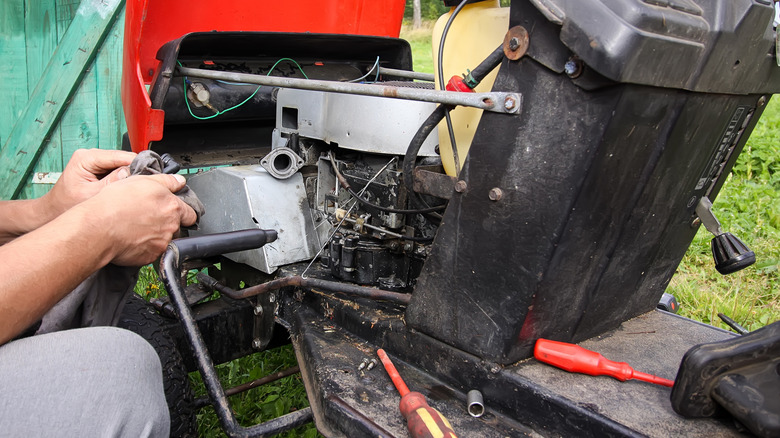
Finding the choke symbol on your mower will depend on the type of mower you have and the brand. However, there are usually ways to find it without referencing your owner's manual. Most walk-behind mowers have the choke on the throttle, while riding mowers may integrate it into the throttle lever, place it near the ignition, or use a separate engine-mounted control. Newer models may adjust the choke automatically.
The symbol itself also varies, as some brands use a simple horizontal line or partially closed circle. Others label the position with the word "choke" or "start." If your mower is older, this might be especially hard to find if years of debris or sun fading has made it more difficult to find. Old gasoline, dirty carburetors, clogged air filters, and worn spark plugs can all make cold starts more difficult. In many cases, homeowners assume the mower has a major engine issue when the real problem comes down to fuel, airflow, or basic maintenance. Even though the choke symbol looks small and unimportant, it plays a big role in how a gas mower starts and runs. And now that you're ready to mow, learn whether you should rake or leave your grass clippings.