

Use Old Roof Tiles To Create A Budget-Friendly Path Of Pavers
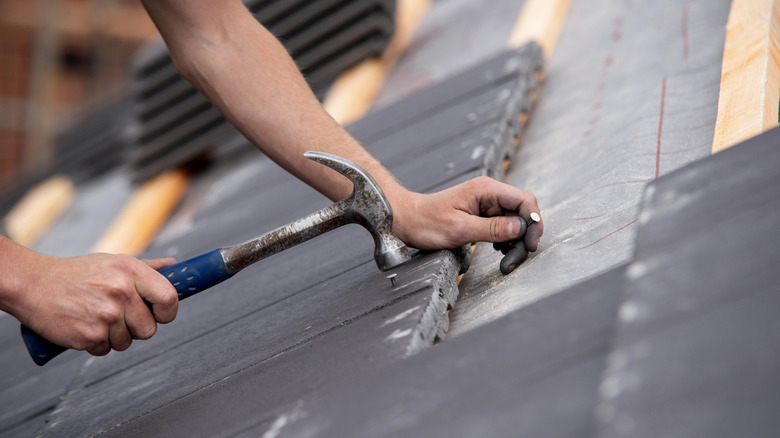
Pathways form the backbone of your garden, allowing you to access your patio, garden beds, or seating areas with ease. Without paths in the right places, you could end up working in a soggy bog. However, getting the layout right can take time, and some of the materials can be quite expensive. There are a number of budget-friendly DIY garden paths you can try, but if you want to experiment before committing or you need something simple for utility areas, then old roof tiles could be ideal. With this idea, the only thing you'll be spending is your time.
If you're just trying out different routes, there's no need to lay a base or install edging. If it works out how you expect, you might prefer to change up to flagstones, pavers, or bricks as a permanent feature. If you think you could improve things, all you have to do is lift the tiles and reposition them. In areas surrounding a shed, vegetable beds, or a greenhouse, where practicality is more important than appearance, you might just lay them and congratulate yourself on a job well done.
Before you start work, though, it's important to understand that the best roof for your home doesn't necessarily provide the right tiles for a path. Some may not be strong enough. Older tiles might contain dangerous asbestos. Let's take a closer look at what's likely to work for your yard.
The best old roof tiles for your pathways, and some to avoid
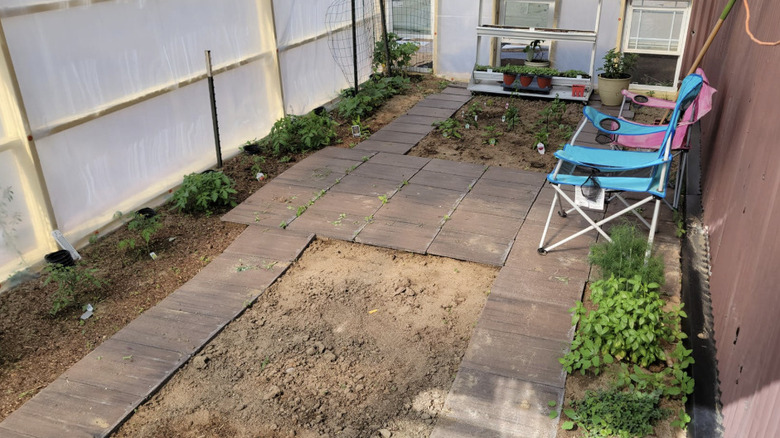
Obviously, you'll want tiles that are fairly flat. A slight lip might not bother you, but curved or Spanish-style versions would be almost impossible to walk on. Durability is equally important. The best tiles for a pathway that can withstand foot traffic and wheelbarrows full of compost or tools are concrete, which may mimic clay or slate but are much tougher. There are also synthetic roof tiles that can be similarly hard-wearing.
Slate and clay roof tiles might look beautiful on your roof, but both are too fragile for pathways. You could break them up, which would produce an attractive effect, but you'd need a base and a retaining border, which is a lot more work. Then there's the asbestos issue. While no longer added to roofing materials today because of the links to lung cancer and other health problems, it was used extensively during the 20th century. If your tiles are from that period, there's a chance they contain asbestos. The only way to be sure is to have them checked by a professional. Don't take risks. That stuff is potentially lethal.
You might also consider asphalt shingles. They could be a stopgap for when you need to tackle those garden tasks that are a must after heavy rain, but they can be slippery when wet, and chemicals used in their manufacture could leach into the soil so you wouldn't want to use them near vegetable beds.