

I'm A Forever Renter: Here's Why I'm Opting Out Of The American Dream

Being a forever renter used to be shameful. It was a sign of failure, an indication that you didn't manage to earn enough money and invest it wisely. If you had children, it meant leaving them without a home as an inheritance, something that meant so much to so many families. But I'm opting out of the American Dream of home ownership, and I'm not ashamed. The process of buying a home has become extremely difficult, and I've decided to stop being sad about it and instead see the upsides of my situation.
I'm a 30-something-year-old renter, and I'm not alone. In fact, this is quite representative of my generation. In 2025, first-time home buyers were at an all-time low in the United States, at just 21%, and the average age was 40 years, according to a report from the National Association of Realtors (NAR). "The share of first-time buyers in the market has contracted by 50% since 2007 — right before the Great Recession," said Jessica Lautz, deputy chief economist and vice president of research at NAR.
Part of the reason is a lack of affordable options, and that's out of my hands. Purchasing a home has become unnecessarily challenging, and it's showing no signs of getting any better. First there are bidding wars and high prices, then, there are high interest rates jacking up the price even further. A starter home or condo that used to go for $160,000 now sells for $300,000. Add a 6.5% interest rate on top, and I hardly see how it's worth it. While I could, technically, aggressively save and try to get into the market with a studio, that would be a downgrade from my current rental pad. So instead of lowering my living standards, I've changed my life goals.
Why owning a house isn't all that it seems

One of the things that made me change my mind is realizing just how expensive ownership is. People often say that when you own, you pretty much put money into your pockets each month, instead of putting it into your landlord's pockets. That's technically true, but you're also spending money you'll never get back, like property taxes or homeowner's association fees. You also need to pay for homeowner's insurance, remodels, paint jobs, and unexpected repairs. When you own a home, you're never really done with home repairs and renovations, and that costs a lot.
And I'm not just talking about houses. If you buy a small condo in hopes of lowering the costs, you'll still have to pay condo fees. Those can easily cost hundreds, if not thousands of dollars each month. And the better your spot, the higher the fees. Want a pool? A movie theater? An on-site gym? A doorman? Better pay up. Some of my homeowner friends spend nearly as much on fees and taxes as I do on rent.
And all of that money isn't something you can ever get back, even after you sell. So yes, of course, buying means building equity because you'll be able to get your mortgage principal back when you sell (more if the property value increases, but less if it falls), but it's not a zero-cost investment. If you'd like to build wealth, buying a house isn't the only way. Some financial experts recommend putting all of that money into a diversified investment portfolio instead of a house. Personally, I'm saving money for retirement. And with so many retirees opting to rent instead of owning a home, I know I'm not alone.
The freedom of being a forever renter
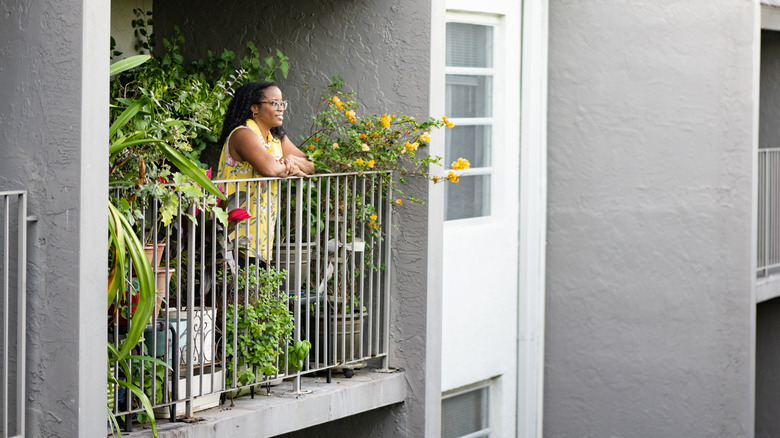
Once I decided to stop believing the myths about renting and plan my financial future outside of traditional American Dream home ownership, I realized that it opened a lot of doors for me. First of all, I'm not tied down to one place. I'm free to relocate for work, relationships, or just because I feel like it. I can move to another city, or simply try a different neighborhood. With a rental, you can also adapt your living space to your life changes. You can try living with a partner, for example, without weighing down your relationship with the financial and legal ties that come with a joint mortgage.
Financially, I feel free because my expenses each month are set. There's no surprise repair I need to pay for, and no worries about having to renegotiate my mortgage as interest rates change. Each month, the same amount of money comes out of my account, whether my AC unit breaks or water heater needs repairs. And if money ever gets tight, I know I can always downsize and pay less.
Plus, rentals are getting really good. Pools, tennis courts, dog parks, gyms — you name it. Those are maintained, clean, and can really add to your quality of life. Some complexes even invite food trucks and vendors for their tenants to enjoy. Of course, those types of luxury rentals aren't cheap. But buying something isn't either, and it's just not worth it for me.