

How To Fertilize Transplanted Hostas To Boost Root Growth
We may receive a commission on purchases made from links.
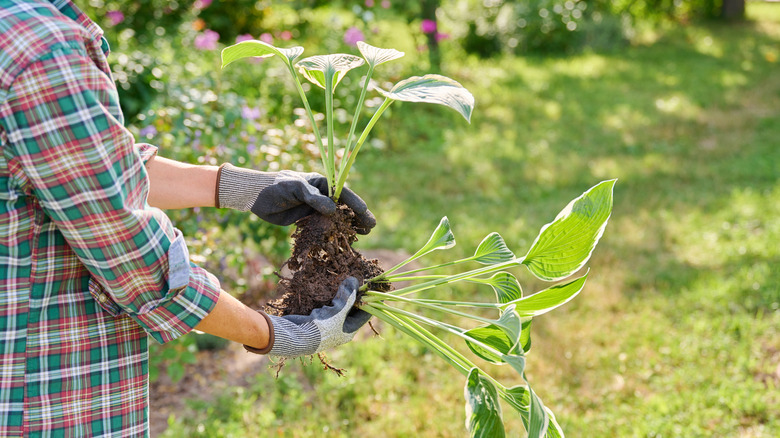
Hostas are a long-time favorite with gardeners, but they represent a significant investment. Whether you've purchased one of Costco's plant collections to get your garden ready for spring or you're working on dividing yours up in the fall, you want them to go in the ground ready for success. Since hosta transplants are vulnerable until their root systems become established, it's important to give them the right fertilizer at the right time to boost root growth that will support their large leaves.
Overall, hostas are low-maintenance plants that don't require much beyond regular fertilization. However, like many perennials, they should be divided every three to five years to keep them healthy and vigorous. You can transplant them in the spring or fall, but the rules for fertilizing are different. Spring transplants, which naturally put their energy into producing leaves, need a fertilizer that supports root growth and allows the roots to catch up with the green growth. That means giving them a fertilizer higher in phosphorus to support root development.
Transplanting in fall is a different story. Hostas are getting ready to go dormant in the fall, and fertilizing triggers growth that delays that process. That's why it's better to avoid feeding hosta transplants in autumn. Instead, work compost into the planting hole. Since compost is naturally time-released, once the hosta roots start growing in the spring, they will be able to get everything they need from the compost for a healthy start to the growing season.
The right way to fertilize a newly planted hosta
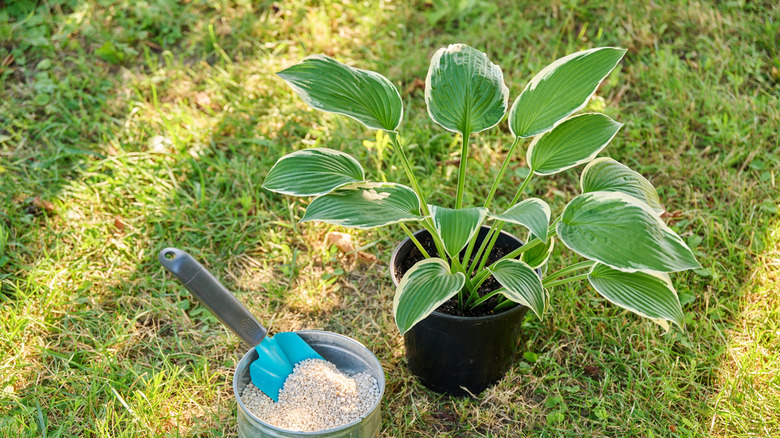
Since hostas like rich, well-drained soil, adding compost to your planting mix is a good idea during both spring and fall planting. For fall hosta transplants, that's all you need to do as far as fertilizer goes, but to transplant hostas in the spring like a gardening pro, you could also fertilize them using a starter fertilizer that supports root development, such as Espoma Organic Bio-Tone Starter Plus 4-3-3. This is a one-time fertilizer designed for use at transplanting. All you have to do is mix the granules into the root zone so they're available to the roots right away. You can also sprinkle some at the base of the plant, but avoid leaving fertilizer directly on the crown. It's also a good idea to water granular fertilizers in right away so the nutrients can get to the plant as quickly as possible.
When feeding a new hosta transplant, skip high-nitrogen blends. The goal is to build a strong root system, and high nitrogen fertilizers just encourage more leafy growth. This can needlessly stress the plant because it doesn't yet have the root system to support that kind of growth. Long-term, overfertilizing is one of the most common mistakes to avoid when growing hostas. Hostas generally don't need much fertilizer unless they're grown in poor soil, and once established, they typically don't require extra phosphorus, either.