

Everyone Had Them In The 70s: These Rugs Really Pop (And We're Here For It)
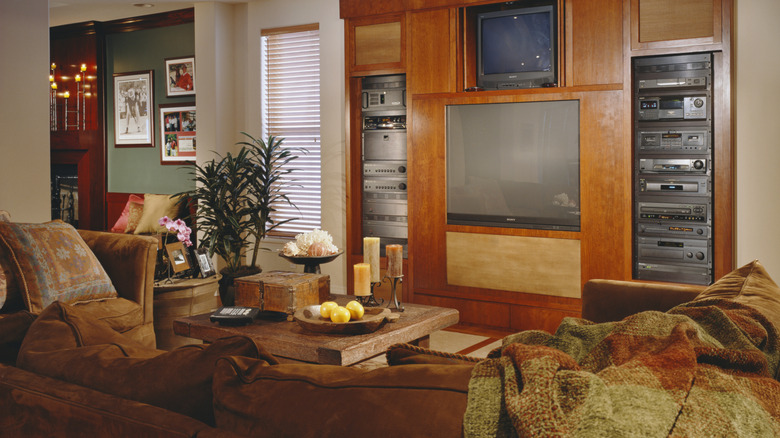
Of the many things that the 1970s fully committed to, rugs were certainly one of them — rugs with personality, that is. Remember, this was one of the weirdest decades for home design; we're talking shag rugs, geometric shapes, lots of oranges and brown tones, and, of course, lava lamps. With their bright and bold patterns, these carpets or rugs almost became the main character of the room. While minimalist interiors have dominated during the decades since, now, some of the rich colors of the '70s are back – and it seems, so are the loud rugs.
You may already have noticed that rugs that you thought were outdated are back on the rise. Some of these feature quintessential '70s aesthetics like zigzags, groovy curves, space-inspired abstract designs, or chevrons and diamond motifs, and they're popping up at retailers like Walmart, Wayfair, and Amazon. Many of these patterns channel the same burnt orange and bright tones of the '70s. But some options also feature more subdued versions of the color palette strongly associated with that era, such as the Satterlee Indoor Rug or Kirsti Rug from Wayfair. Colors such as mustard, green, chocolate brown, and orange are back in style – and incorporating a 1970s-style rug could be a funky way to incorporate these tones.
How to make a 1970s-style rug feel current
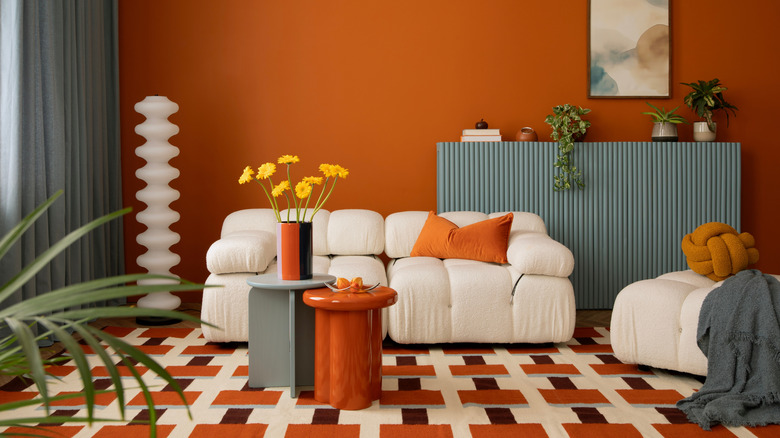
Quite possibly the easiest way to make a retro rug work in a modern home is by leaning into the contrast it creates. Back in the 1970s, it was all about maximalism, which saw people layering multiple bold prints together in a way that would probably overwhelm the modern eye. Today the suggestion is to choose one dominant graphic element (such as a rug) and let that anchor the room, instead of having it be in competition with other loud designs. While geometric rugs are a trend from the '70s that can look even cooler today, they usually need to be toned down with contemporary furniture, such as natural woods and streamlined designs so as to not look dated. What you want is to balance the louder colors, textures, and shapes out with a bit of modernity around it – no one wants to turn their room into a total homage to the 1970s.
If you're looking to experiment in your own space, smaller area rugs can be a safer option than going for a full wall-to-wall carpet or oversized, bold rug. Louder elements like checkerboard patterns, curved abstract motifs, and softer earth-toned geometrics can work really nicely on a small scale, referencing the era without overwhelming the entire space with it. Similarly, even shag rugs, which became a defining feature of 1970s homes, are being used more selectively today as statement pieces instead of full wall-to-wall carpeting. If you're after a thick rug, this highly-rated Bonifay Indoor Rug (also from Wayfair) combines a shag-style pile with a colorful geometric pattern. To sum up: While some of the newer retro-inspired rugs often tone down the louder colors that are historically associated with the grooviest decade, they're still a bold choice and will need careful planning to work well in a contemporary space.