

What To Do If You Find White Foam In Your Mulch
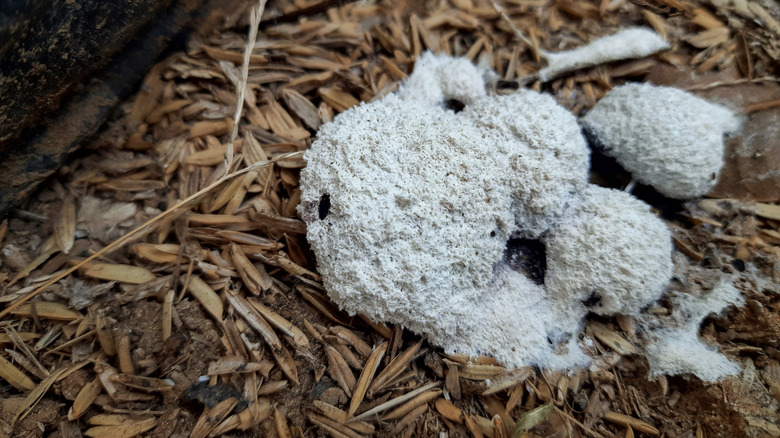
Spotting a strange white foamy-looking blob in your mulch might have you on alert. It could look similar to insulation foam, spilled paint, scrambled eggs, or even something that crawled out of a sci-fi movie overnight. However, it is not a serious gardening problem, so you have nothing to worry about. Finding these patches in your mulch is more of an eyesore than anything. That odd foaming growth is known as slime mold, and while it looks unpleasant or alarming, it's actually quite harmless to your mulch and surrounding grass or garden.
Slime mold appears usually during more warm, damp weather. You may find it in your mulch after a heavy rain or frequent watering. It thrives in moist, organic materials, feeding on decaying matter, bacteria, and fungi that are found within your mulch. Don't let slime mold keep you from using mulch, though. The organic materials are helpful for plant growth. Plus, finding the best type of mulch for your garden helps to protect your plants and control weeds.
It's worth noting that slime mold is not a fungus, but many people refer to it that way. It brings a unique group of organisms known as myxomycetes. The most common type you'll see in your mulch is known as "dog vomit slime mold"(Fuligo septica) because of its foamy, blobby appearance. It may start out as a yellow, orange, or cream-colored foam, but eventually looks more white and powdery as it dries. The good news is that slime mold is not dangerous to you or your healthy plants. And it doesn't attack roots, flowers, or shrubs.
Steps to take when slime mold appears in mulch
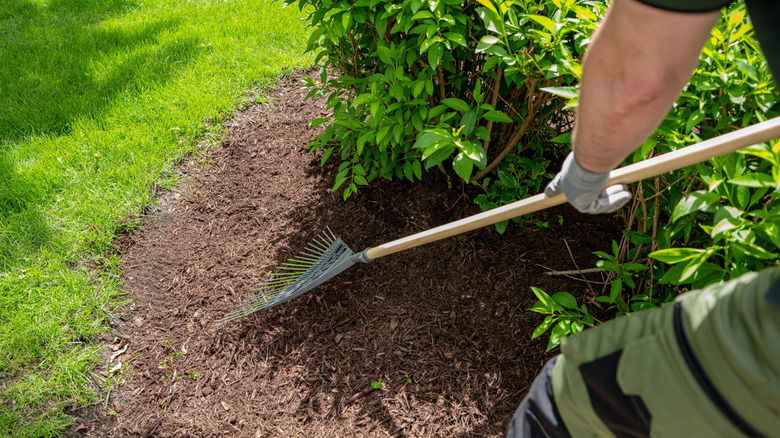
In most cases, you don't need to do anything to fix it. The mold will usually dry up and go away on its own within a few days, especially when the weather becomes hotter. If you don't mind how it looks, then you can just leave it alone. However, there are ways to get rid of the unsightly dog vomit fungus in your yard if you don't like the look of it. One solution is by taking a rake and turning over the mulch. This action breaks up the slime mold patches and helps the area to dry out quickly in the sun. You can also scoop the affected mulch out with a shovel, and get rid of it with your other yard waste.
You can use these same methods to take care of unwanted slime mold in your grass along with removing it from mulch. Reducing any excess moisture in the area is another way to help prevent the slime mold from coming back into your mulch. When you overwater garden beds or don't have good drainage from the mulch, it gets compacted. Then, the damp conditions make it easy for slime mold to appear. You can fluff up the mulch occasionally with a rake to improve airflow and allow moisture to evaporate more easily. Thinning out thicker mulch layers allows it to dry out faster, making it less likely to develop slime mold.