

5 Of The Most Common Problems With LG Refrigerators

According to the U.S. Department of Energy, a refrigerator is expected to last about 12 years on average, and most would want their appliance to last at least this long given the hundreds or thousands of dollars required to purchase a new model. A long lifespan is only possible, however, if you buy a quality unit that's built to last years without issues. Logic assumes that the upfront investment you make is a reflection of how reliable a product is, but this isn't a classic case of getting what you pay for. If this was true, individuals dropping thousands on a high-end LG fridge wouldn't come to regret their decision within a few months of purchase.
That's not to say that all products from this brand are a dud, but there are specific refrigerators you'll want to avoid based on customer reviews. Many LG fridges have a history of malfunctioning within a few months of purchase, while some others degrade quietly as the time goes by, and because of this, there are a few common issues you should be aware of before you drop some serious cash on a unit. For instance, LG fridges are notorious for having compressor-related problems, which often translates into the interiors not cooling well or evenly. Worse, no amount of repairs or costly replacements seem to work as a permanent solution for this particular issue. We dug through customer reviews on user-focused platforms, LG's website, legal articles, and expert quotes to pinpoint the five most common problems with these refrigerators.
Users report issues with both standard and linear compressors
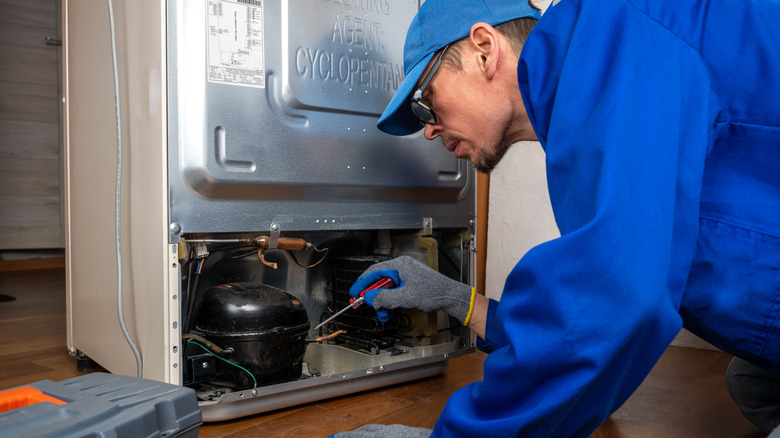
A device that consumes electricity but doesn't cool is one of the most prominent issues plaguing LG refrigerators. This is usually attributed to a problematic compressor. Responsible for compressing your fridge's refrigerant and channeling it throughout the appliance, a malfunctioning compressor will hamper its cooling efficiency and increase its noise levels. Sadly, many customers have been affected by LG fridge's sub-par cooling. In fact, this problem is so common, it landed on our list of unreliable appliance brands you should avoid at all costs. LG offers a five year warranty (parts and labor) on regular compressors and 10 (only parts are covered) on linear ones, but people started noticing a breakdown within a few months or years of purchasing the device.
Tired of dealing with melting ice and spoiled food on a regular basis, customers reached out to the brand. When that didn't help or provide satisfactory results, a lot of them paid for expensive repairs (some had to bear the costs for several repairs in a single year) and splurged for new parts in hopes that their refrigerator will start functioning as normal. When even that didn't work, some frustrated users dumped their old models and bought new ones for their homes, while others filed class action lawsuits against the brand for their faulty compressors — both linear (in 2024) and standard (in 2020) — on French, side-by-side, and bottom freezer refrigerators. This is one the most compelling reasons why homeowners should think twice before buying an LG fridge. Both lawsuits are now settled, with the manufacturer agreeing to extend the warranty on compressors and compensate individuals ($50 to $3,500) who had to pay for repairs or replacements out of their pocket.
The craft ice maker jams, freezes over, or leaks water
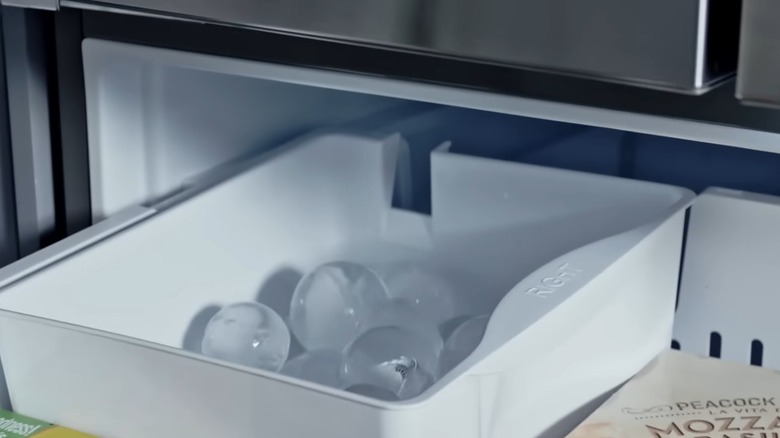
LG introduced a craft ice maker in its premium models to differentiate them from other refrigerators being sold at a similar price point. Located near the ceiling of the freezers, it was meant to equip a high-end fridge with dual ice makers: one basic, and the other producing three or six pieces of slow-melting ice spheres. However, numerous customers have complained about the craft ice maker not dispensing ice, getting clogged, freezing over, or leaking water all over the freezer, which eventually overflows out the door and puddles on the ground. Some even grumbled about the clicking, banging, and grinding noises being emitted. Many of these issues started happening within a few months of usage, and they aggravated so many users that it led to another class action lawsuit against the company. With that said, it was dismissed prematurely, with LG not acknowledging the problem or taking responsibility for its manufacturing defect.
As for the models within warranty, the brand agreed to replace the faulty ice makers given the severity of the issues customers were facing. Unfortunately, the initial replacements weren't any better and started acting up after a few months of installation. As a result, they had to be replaced again, with individuals paying extra for the extended warranty or the repairs. And again. And again. One aggrieved customer wrote in their review of of the 30 cu. ft. Smart InstaView Door-in-Door Refrigerator with Craft Ice on LG's website, "We purchased this refrigerator 4 years ago and have had the craft ice maker replaced every 6 months." To top it off, some people started experiencing issues with their regular ice maker as well.
The water and ice dispenser can be a source of headaches
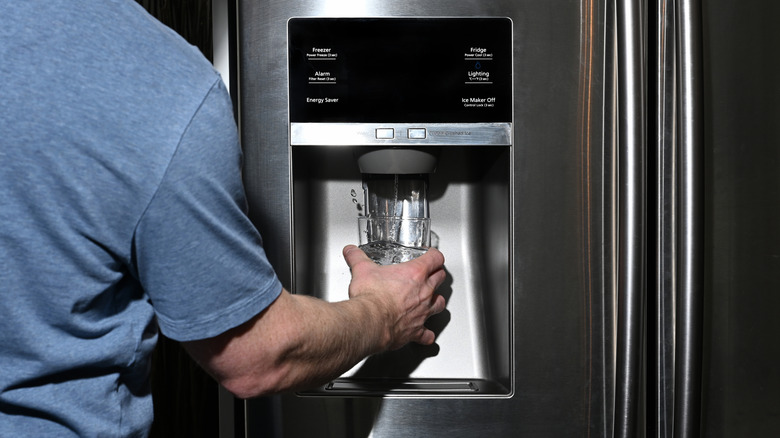
It might be nice to imagine putting a glass beneath the water and ice dispenser on your fridge's door and it filling up quickly, but what do you do when it stops working, it refuses to produce more than a trickle, you have to constantly wipe up splashes on account of the water pressure being too strong, or the water dispenses continuously? As for the ice, users share that the dispenser doesn't produce more than a cup in one go. These are a few problems consumers reportedly face with LG refrigerators' water and ice dispensers.
A handful even complained about the water and ice tasting horrible and not being fit for consumption, even after they change the filter or reconfigure the water line. A lot of individuals shared that the dispensed water and ice feature unhealthy amounts of white sediment at the bottom. While a few noted that it may be calcium carbonate deposits showing up as a side effect of hard water, people with soft water lines have also complained about the powdery sediment. Further, some reviewers mention that the sediment gives off a vinegar-ish odor, so they're divided on it being purely calcium carbonate. Though some report this issue got resolved after they changed the filter on their dispenser, others didn't have any luck with this solution. Moreover, they venture that the issue stems from LG's water line and in-built filter.
Frost buildup in French door models is common

Known for being sleek and stylish, LG French door models cost thousands of dollars. Unfortunately, they might not be worth the investment, as frost buildup is a common issue plaguing this series of LG refrigerators. According to users, this is a problem in both the freezer and other areas of the appliance, like in the crisper drawer. Moreover, if ice forms behind the rear panel and the evaporator fan keeps coming in contact with it, your fridge will start making loud grinding noises. Users who faced this problem were either told to fend for themselves and watch a few YouTube videos to fix the issue or were sent technicians who couldn't patch up the device.
Though significant, you can mostly troubleshoot this problem yourself. Per the manufacturer, the best fix for frost buildup is to manually defrost your appliance. This means unplugging the unit, emptying its shelves and drawers, and leaving its doors wide open for at least eight hours. That being said, it isn't a long-term solution, especially if frost builds up again after you plug in your fridge. In such scenarios, you want to take a look at the door's seal and ensure the gasket around it hasn't flattened. If the door doesn't shut all the way, cool air will move out and lead to frosting. Ice encasing the vents and walls would be a dead giveaway of this. But if that doesn't work and there's no refrigerant leak (an oil-like substance) in sight, you might have to replace the heating element and move the defrost sensor. This may not be a permanent fix, but it could increase your device's lifespan a little.
Customers face issues getting LG to honor its brand warranty

LG offers a one year warranty (from the date of purchase) on all of its refrigerators. During this period, both labor costs and internal and functional parts are covered. Core components, including the condenser, dryer, evaporator, connecting tube, and standard compressor, are covered for five years (parts and labor are included), whereas a linear or inverter compressor is under warranty for 10 (only parts). Despite this coverage, purchasers feel that warranty is an illusion when it comes to LG refrigerators. This is mainly because of the issues they face while trying to connect with human customer service agents when their appliance starts malfunctioning. Even if they manage to bypass the AI service bot and reach a human agent, their experience is far from good.
Numerous people have mentioned that they feel the agents are simply repeating a script over and over. Even if you're willing to spend considerable time speaking with them hoping for a resolution, prepare to be underwhelmed. Many customers were informed that the brand doesn't have an authorized repair company in their area, so they were on their own for all repairs and replacements. As for customers who had confirmed technician bookings for their refrigerators after repeated calls, they had to wait days for a repair person to come to their house and look at their appliance. Sometimes, bookings were rescheduled or canceled without further interaction from the company. After all this, there's no guarantee whether the brand will pay for repairs or replacements — even for problems that are widely circulated (like the compressor giving out within a few months or years).