

What's The Average Lifespan Of A Bird Bath?
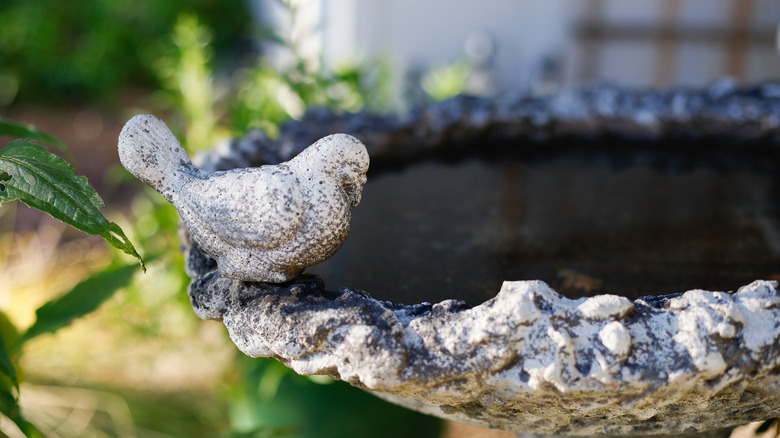
Attracting birds into your backyard lets you enjoy the wonders of your local wildlife and can help with pest control in the area. In addition to installing bird feeders, you can encourage birds to visit your yard with a bird bath, which provides a source of water for drinking and bathing. Whether you buy one or decide to make a charming DIY bird bath yourself, you'll probably want one that can stand the test of time. Most bird baths can last for years, but the average lifespan depends heavily on its material and the climate where you live.
Natural granite bird baths will typically last the longest, with a lifespan of over 25 years when they're properly maintained. Cast stone will generally last 10 to 20 years, while a concrete bird bath has a lifespan of between five to 12 years. However, even though these bird bath materials are generally the most durable, they will be more prone to cracking if you live in a climate with harsh winters. For example, an unsealed concrete bird bath in an area with extreme snow is likely to crack within 2 to 4 years.
Plastic and fiberglass are other common bird bath materials. These bird baths are usually cheaper, but they can also become brittle, crack, or fade sooner due to sun exposure. That being said, some recycled plastic bird baths are durable enough to last for 15 to 20 years. Generally, a bird bath will last longer when it's made with weather-resistant materials or features that can help to lengthen their lifespan. If you're shopping for a bird bath, think about your climate and whether you need an option that can withstand extreme cold or heat. Depending on whether you live in a milder climate or somewhere with more extreme winters or summers, you could shop for bird baths with a frost-resistant glaze or a UV-resistant finish.
Other factors that impact your bird bath's lifespan
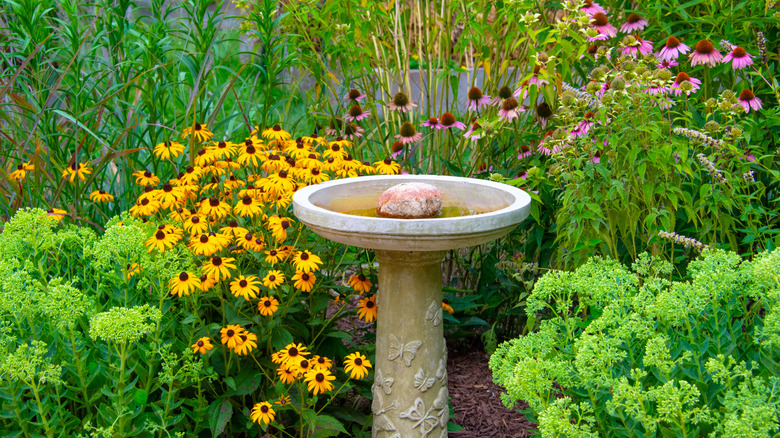
Beyond the material, the simplest way to extend the life of your bird bath is with proper maintenance. You can keep algae out of your bird bath by cleaning it two or three times a week, ensuring the water is safe for birds to drink or bathe in. When you refill your bird bath, be sure to dump out the old, stagnant water and any debris before adding fresh water.
Winterizing your bird bath will also help it withstand cold temperatures and last longer. For example, leaving frozen water in a concrete bird bath could cause the material to crack or render it unusable for birds. Before winter temperatures arrive, think about an anti-freezing method, like putting something in your bird bath to prevent it from freezing. A few common options to consider are a heater or de-icer, dark rocks, or even a rubber duck.
In addition to the material and routine maintenance, the spot in your yard where you put the bird bath can also impact how long it lasts. Direct sun exposure can weaken some materials. Putting your bird bath in a shady location will not only protect it from the sun, but it could also lower the chances of algae growth. While you should still plan to clean out and refill your bird bath regularly, a shady spot could cut down on some of the maintenance requirements.