

Ditch Pesticides: There's A Beautiful Berry Bush That Can Help Deter Ticks
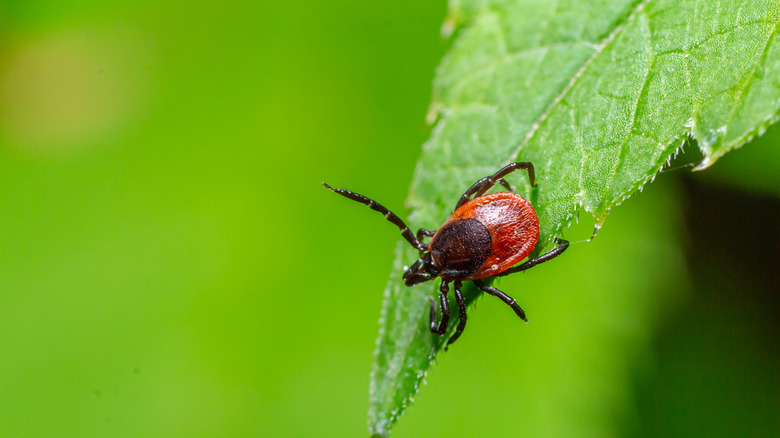
Ticks aren't just a nuisance in the yard — they can also pose a risk for a variety of different health problems. Therefore, if you spend a lot of time in your yard and live in a high tick population area, you may wish to employ as many methods of protecting yourself from ticks as you can. That includes planting this beautiful berry bush that contains tick-repelling compounds.
Also known as the American mulberry or sour-bush, the American beautyberry (Callicarpa americana) is an eye-catching shrub that displays pollinator-friendly flowers in the spring and summer that eventually give way to colorful berries. Scientists have found that specific compounds produced by the plant, known as callicarpenal, intermedeol, and spathulenol, can deter blood-sucking pests such as ticks. However, planting an American beautyberry bush alone may not be enough to achieve these effects. Instead, in traditional uses of this plant, the leaves themselves are crushed and placed nearby or rubbed onto clothes to repel bugs. In scientific studies, the plant's compounds were isolated and tested.
While you still may wish to apply EPA-approved repellents, such as products containing DEET, an American beautybush can provide backup support, especially if you harvest and use the leaves — and it looks good in your yard while doing it. It's also easy to grow and great for wildlife, making it a perfect plant for beginner gardeners looking to add functional beauty to their garden.
How to grow American beautyberry
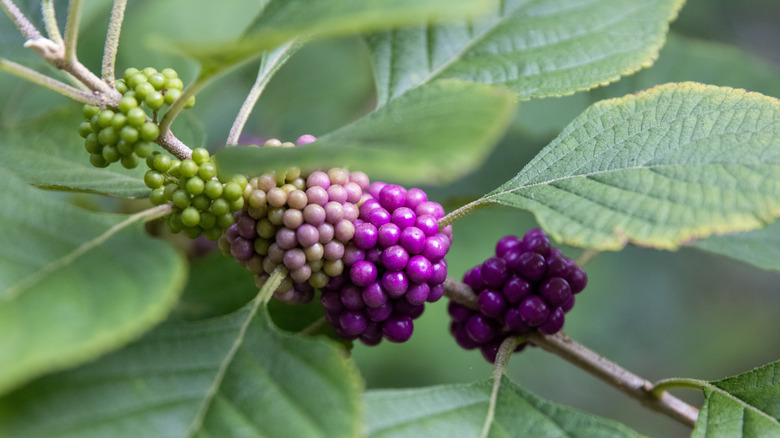
American beautyberry bushes are native to the central and southeastern regions of the United States, so they're adapted to the conditions there. Learning how to replicate their wild environment and provide optimal care will give you the best chance at succeeding with this low-maintenance plant. USDA growing zones are one place to start, because this bush is a perennial that is only winter-hardy in zones 6 through 9. However, it can be grown in a container as well, which gives you the flexibility to overwinter indoors if you're below this range.
As for where to grow an American beautyberry bush, choose somewhere with the right sunlight and soil requirements for this eye-catching and fragrant bush. It grows best in full sun or partial shade; it needs direct sunlight for at least two hours of the day. For shadier spots in your yard, you may wish to opt for a different plant to help keep ticks out of your yard. The American beautyberry bush also does best when it has well-draining soil.
Aside from this, however, it's relatively hardy. It can handle drought and dry soil as well as wet soil, which makes it good for beginners who may not have perfected their watering routine just yet. It's also not picky about soil types or pH. To produce flowers, berries, and tick-repelling leaves for years to come, the only maintenance it needs is a late winter pruning.