

What's The Average Lifespan Of A Toilet Seat?
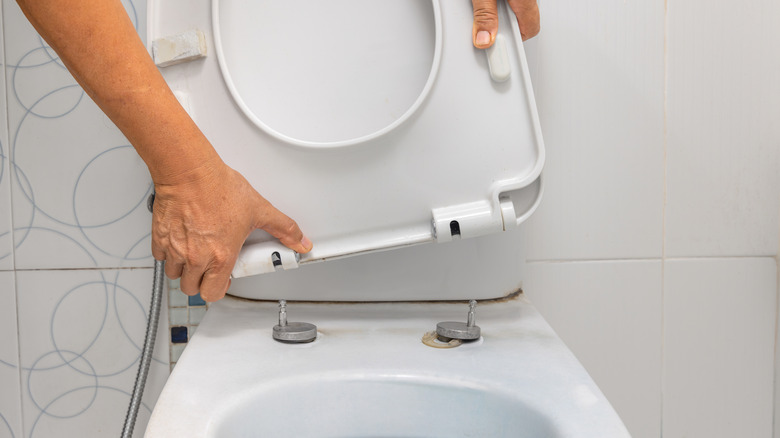
Your toilet seat is one of the most frequently used fixtures in your home. It's also something you likely don't think much about until it becomes loose or cracked. While the porcelain toilet itself can last for decades, the attached seat has a much shorter lifespan. Most toilet seats only last between five and 10 years, but it depends on the material, quality, cleaning habits, and how often they're used.
Basic plastic seats are an affordable option, but with frequent daily use, they become discolored and develop cracks. Bacterial buildup also creates stains over time that call for a replacement seat. You can ditch your plastic seat for a more unique option, such as a wood or MDF seat, both of which feel sturdier. However, they are more vulnerable to moisture damage if water sits on the surface. Purchasing a high-end solid-wood or premium soft-close seat may help, as these can sometimes last 10 years or more when properly maintained. Urea-formaldehyde resin seats are another inexpensive option, but exposure to sunlight can cause yellowing within a year, and their surfaces scratch very easily.
How often you use your toilet seat also matters. A seat in a busy family bathroom will experience more wear and tear than one in a guest bathroom. Repeated slamming of the lid, shifting weight on the hinges, and constant exposure to humidity all shorten the seat's lifespan over time. If you have hard water, it can also contribute to your seat's deterioration by leaving stains and mineral buildup behind around the hardware.
Simple ways to help your toilet seat last longer
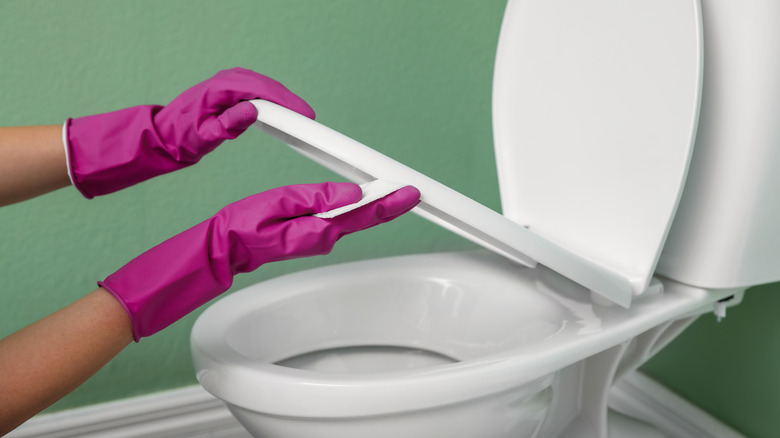
Routine maintenance can help extend the life of your toilet seat. Tighten loose hinges before they begin to wobble too much to prevent cracks or costly repairs. Some newer toilet seats have quick-release mechanisms that make it easier to deep-clean around the hinges – one of the best toilet cleaning hacks to make your bathroom sparkle — where grime and moisture can accumulate. It's also a good idea to dry the seat once it's been cleaned off so that excess water doesn't sit. This is particularly useful for wooden seats so they don't warp.
How often you clean your toilet seat and the way you clean it matter, too. Harsher chemicals or abrasive scrubbing can disinfect effectively, but they can also damage the finish or weaken the material. To properly clean the seat, use warm water and mild dish soap, and wipe everything down with a soft cloth. You can also remove the seat from the bolts to get a deeper clean.
Eventually, even a well-maintained toilet seat will need replacing. If you see cracks, stains, peeling on the finish, and loose or broken hinges, those are clear signs it's time for a new one. Beyond appearance, cracked or peeling seats can also become more difficult to clean as bacteria can settle in the damaged spots. As a general rule, replace a more heavily used toilet seat every five years. Monitor any less-used, higher-quality seats for replacement up to 10 years.