

How To Deadhead Daylilies For Nonstop Blooms
We may receive a commission on purchases made from links.
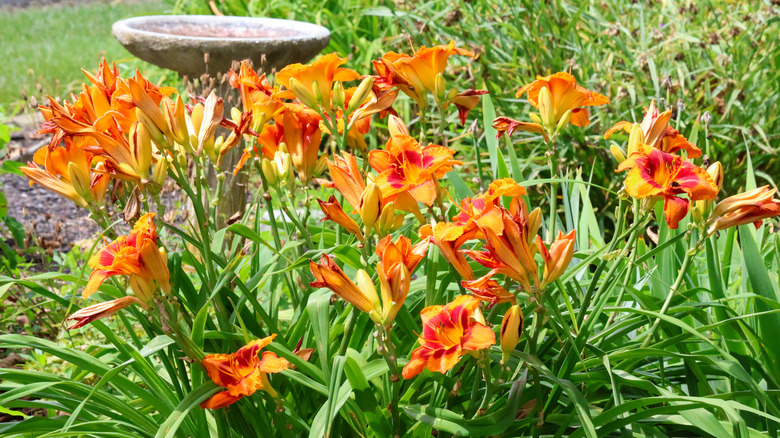
If you've ever grown daylilies (Hemerocallis spp.) in your garden, then you've likely noticed just how low-maintenance they are. The reputation is born of centuries of gardeners' experiences, after all. You can plant them and admire the blooms, then forget all about them until next summer. However, these hardy perennials — which grow in USDA Hardiness Zones 3 through 9, depending on the variety — actually do like a little attention. Specifically, if you want more of those stunning flowers, they respond very well to deadheading. In fact, daylilies are the perfect pair for your spring bulbs. Their long flowering season means they continue the interest after the tulips and daffodils have faded.
Deadheading in the garden is a must for some flowering plants. It's an important way to keep certain species blooming throughout their growing season. Deadheading seems like a simple task on the surface: once a flower shrivels or goes limp, you pinch or snip it off. In almost all cases, it's important to remove the spent blooms before they start forming seeds. That way, the plant doesn't waste resources producing seeds and can instead focus on growing more flowers. Plus, visually, dead flowers stand out like a sore thumb among bright, fresh blossoms. Your plant — and wider garden — looks nicer without a bunch of dying blooms. Daylilies are perennials you should deadhead for blooms that keep coming, especially if tidy garden beds matter to you. As the common name implies, the flowers only last a day.
There's a right and wrong way to deadhead daylilies
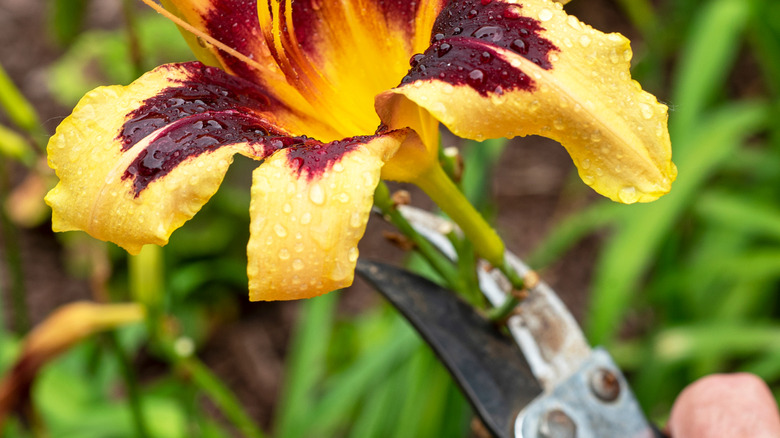
While deadheading essentially consists of just snipping spent blooms, it's not quite so simple for daylilies. Overly enthusiastic gardeners are prone to making pruning mistakes. The error of greatest concern is removing the flower stalk too early. The stalk, also called the scape, has a series of buds that bloom one after another over a few days or weeks. If you remove the stalk, all of those unopened buds — and, later, those stunning daylily blooms — disappear with it. Instead, only remove individual spent flowers, leaving the other buds on the stalk to develop as usual. Only once every bud on the stalk has flowered and faded should you prune off the bare scape. Make your cut near the base of the stalk to keep the entire plant tidy.
You don't need to deadhead your daylily patch every day. That would be excessive, even for a plant that blooms so abundantly in most gardens. Check your plants every few days during the blooming season, which run from early spring through fall, depending on the variety and your location. If you find a spent blossom, cut it off with small, sharp, sterile pruners, such as Fiskars Flower Pruning Scissors, or pinch it off with a gloved hand. Dying daylily blooms turn mushy after rain or humid weather — it's a good time to clean up. After deadheading daylilies, your plants will look much fuller, and the fresh flowers will stand out even more.