

The Fragrant, Fast-Growing Privacy Plant For A Secluded Backyard
We may receive a commission on purchases made from links.
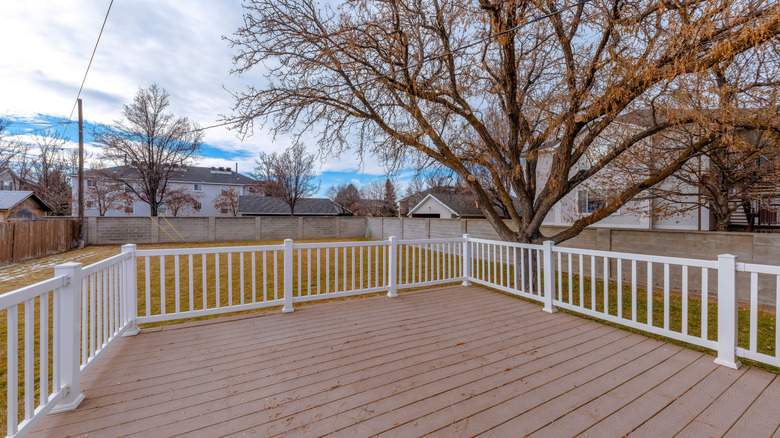
Privacy is a key feature that many homeowners are looking for in their backyards, but it can be hard to decide how they want that privacy to look. Fences can be bulky and enclose an area too much, making your outdoor spaces feel cramped. A boundary of tall flowering shrubs looks beautiful, but it isn't worth growing in your yard if it's just going to attract pests or spread aggressively. Luckily, you don't have to compromise on privacy or beauty when you select the right plant for the job. If you're looking for permanent, fast-growing, and attractive greenery — with lots of other benefits to boot — lilacs (Syringa vulgaris) fit the bill.
Like most plants, lilacs start life small. However, at maturity, they are large bushes up to 20 feet tall, a process that takes 4 or 5 years. In reality, most lilacs in home gardens will grow between 8 and 15 feet tall, and you control their growth easily with pruning. This stunning perennial isn't just great for creating privacy and an abundance of cut flowers. The flowers also have a lovely aroma, which will waft through your newly secluded backyard. Lilac blooms attract a wide array of pollinators, from hummingbirds to butterflies, diversifying the local ecosystem. As with any new plant, everything you need to know before planting lilacs falls into two main garden activities: site selection and ongoing maintenance. These hardy shrubs thrive in USDA Plant Hardiness Zones 3 to 7 and are relatively easygoing.
Creating a privacy hedge from abundantly blooming lilacs
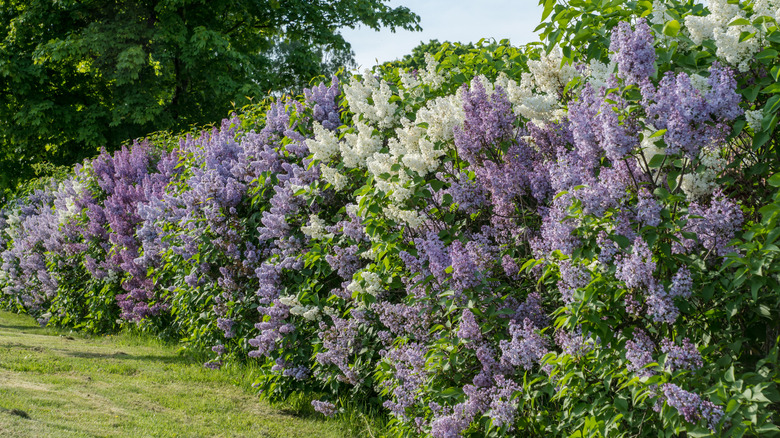
One of the best things about using lilacs for privacy, aside from their fragrant blossoms, is that they're easy to take care of. Spacing is an important consideration when planting lilacs in smaller spaces — like a suburban backyard — or in a dense row, like a hedge. Survey your backyard in preparation for planting, and choose a location in full sun that accommodates 6 to 12 feet of space per plant. Lilacs will survive in partial shade, but the more sun they receive, the better they'll do. Don't worry if there is some empty space between your transplant shrubs — they'll fill the gaps quickly.
The next thing you'll want to consider is soil quality. Lilacs love rich, slightly alkaline soil. However, they're not big fans of fertilizer. If your soil needs a boost, mix some compost into the planting hole. If you insist on feeding your plants, apply some Gardenwise All-Purpose Slow-Release Granular Plant Food for Outdoor Trees and Shrubs once per year, ideally in the early spring.
When it comes to finally putting your lilacs in the ground, all you need to do is dig a series of holes that are slightly larger than the root ball of your saplings. Pop the plants into the holes, 2 or 3 inches below the surface, and cover the roots with soil. Prune your plants by removing dead wood each year immediately after they are done flowering. Long-term, avoid the mistakes everyone makes when growing lilacs: shading them, overfertilizing them, and choosing the wrong time to prune them. You should, for example, only cut away the dead wood each year, right after flowering finishes.