

The Big-Leafed Plant That Could Replace Hostas — It's Fuss-Free And Full Shade-Tolerant
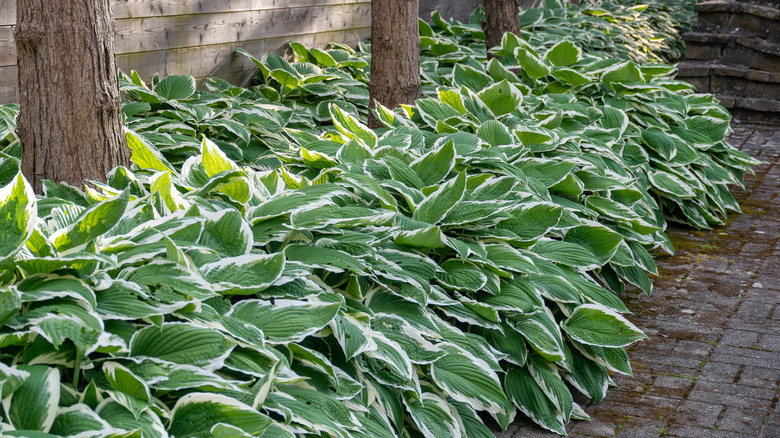
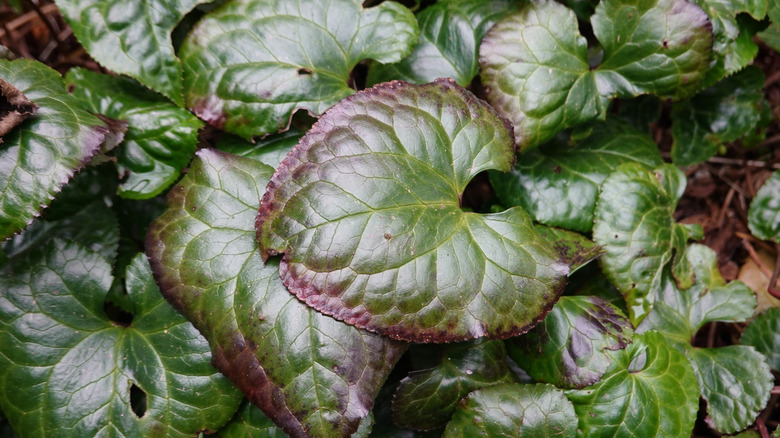
A little known plant with showstopping foliage could become the star of your gorgeous, healthy shade garden and even serve as a stunning hosta alternative. This herbaceous perennial is a relative newcomer to North America, having been brought here from China just 30 years ago. Say hello to Beesia and its oversized leaves that reach about 4 inches across.
Although you will often see the botanical name Beesia deltophylla applied to much of the Beesia sold in the United States, any Beesia you're seeing is most likely its sister plant Beesia calthifolia, as the deltophylla species is extremely rare and displays only 15 "teeth" along each edge of its foliage, while the calthifolia species boasts 50 teeth.
In addition to its glossy, deep green foliage that shows tinges of red later in the growing season, Beesia sends out stalks with small, white flowers in late spring. If you do replace hostas because they are failing to grow, Beesia is a candidate for the list of best plants to grow in partial shade to transform your yard and garden. Reaching a height of up to 18 inches, this plant also thrives in full shade, and deer and rabbits usually stay away. Above all, the plant could not be easier to care for and requires no fuss.
Try Beesia for its stunning foliage and easy maintenance
Beesia is cold-hardy in USDA zones 6 to 9. Transplant from nursery pots in well-draining soil that is rich in organic material and evenly moist. Place in a spot with partial to full shade. Water regularly, especially in summer.
In lieu of fertilizer, you can apply compost or leaf mold as an organic topdressing. Beesia doesn't need pruning, but you can remove any unsightly leaves and deadhead dried blooms. Propagate Beesia by dividing, using cuttings, or layering. Seeds may be hard to come by, and the plant is challenging to grow from seed. No significant pests or disease issues plague Beesia. You can use Beesia as a ground cover, as you would hostas, and you'll find them slow to spread.