

Everyone Had It In The '60s & '70s — Now You'd Be Lucky To Snag It At A Thrift Store
We may receive a commission on purchases made from links.
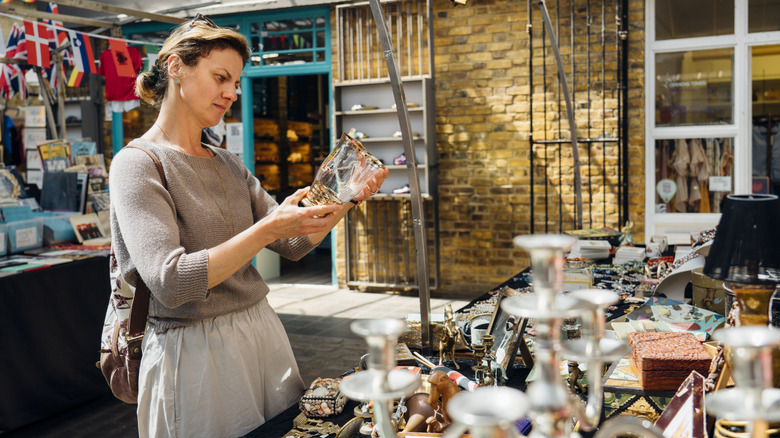
Thrift shops and flea markets can be great places to search for different types of objects: from porcelain to stoneware to vintage textiles. But, one of the prettiest types of objects you can thrift is glass, and colored glassware, in cobalt, green, or smoked gray-black glass, conveys a sense of history while meshing well with the warm neutrals of many modern interior spaces. Amber is one of the most popular colors for glassware from the 1960s and '70s, and it's still prized by today's thrift shoppers, so you'd be lucky to snag some pieces in this hue.
Amber glass has properties beyond its luxe look that make it desirable, like the ability to block out UV light, which explains its enduring usefulness in containing preserved food or liquids that can break down in strong light. This same property is why amber-colored glass has historically been used to store medicines and in scientific labs. Even though many vintage amber glass bottles wouldn't be safe enough to store consumables in due to the use of lead in their production, you can still use them decoratively for an apothecary aesthetic that's equal parts moody and charming.
While there are many reasons to love this tone of glassware, its value lies more in aesthetic interest than in fetching a high price. Glasses, pitchers, bowls, and decorative centerpiece glassware made in amber from this time period is widely available, and it's typically re-sold for less than $50 per piece or set. Nevertheless, this colored glass is desirable, beautiful, and versatile.
What to look for in thrifted amber glassware
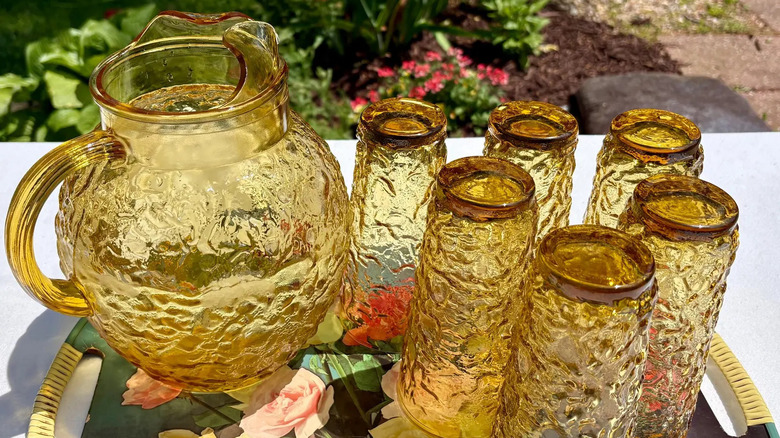
When you're on the hunt for colored glassware in the thrift store, giving it a close inspection can tell you more about how to use it and where it came from. Some key clues may help you tell 1960s or '70s amber-colored pitchers or vases from those of earlier periods. Look at the bases of larger pieces for the work of companies like Indiana Glass, Anchor Hocking, and Libbey, which produced much of the amber glassware bought in the 1960s and '70s. Another recurring name is "Tiara," a brand that marketed glassware for resale during home parties.
Collectors of '60s and '70s amber-colored glass often look for drinkware sets or other collections made for entertaining guests, including more obscure forms like sherbet bowls. Sought-after glass sets feature "crinkled" glass for the interesting texture they bring to the table. You may come across a popular crinkle pattern known as Lido Milano in thrift stores or on resale websites.
The handles of amber-colored pitchers or vases can be another indicator: applied crystal handles (which are often clear in contrast with the colored glass) were popular in the 1960s, and may help place a piece within that decade. Knowing the time period the glass is from serves a practical purpose. If you're not reasonably certain that drinkware, jars, or pitchers were made before regulations curbed the use of lead in glass manufacturing, your vintage glass may not be safe to drink from.
How to style amber glass in your home
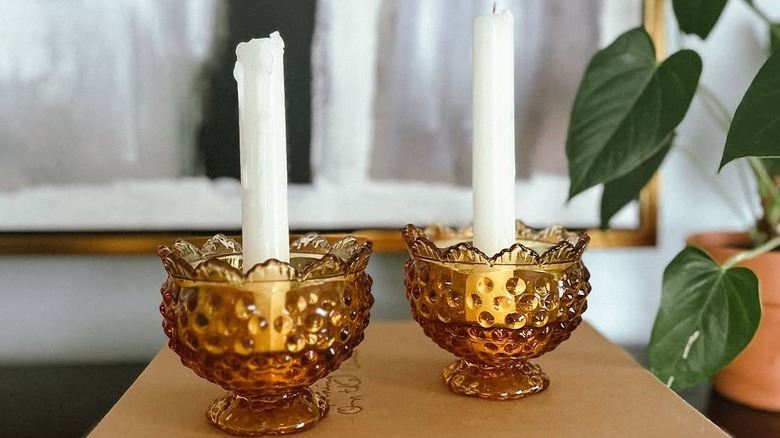
Amber glass is a timeless decor element, giving you the flexibility to use it across home design styles. It complements the earthy tones used in mid-century modern decor and can even add a soft touch to industrial-style spaces. Add warm accents by interspersing amber jars among pottery pieces on open shelves. Amber glasses can also play well as decoration in dedicated spots — bar carts, coffee table setups, and the center of the dinner table are just some examples. If you're embracing an apothecary or cottagecore aesthetic (both of which favor botanical decor), placing amber bottles and jars on a plant shelf or re-purposing them as vases for cut flowers are brilliant uses.
Even though there's versatility in decorating with the color, be aware that using lots of amber along with avocado green will situate your decor firmly in a 1960s or '70s aesthetic. There's nothing wrong with this if it's your taste, and some design experts note that the decade's style and colors are regaining popularity. If you prefer a more modern look overall, though, one way to make this choice less drastic and dated is to bring in modern pieces in those colors along with natural wood furniture for a balanced look. Using your newly acquired vintage accessories as accents against more modern elements is a great way to incorporate 1970s decor into your 2026 home.