

It's Not A Trap: Why Joanna Gaines Places Weird Boxes Around Her Garden Flowers
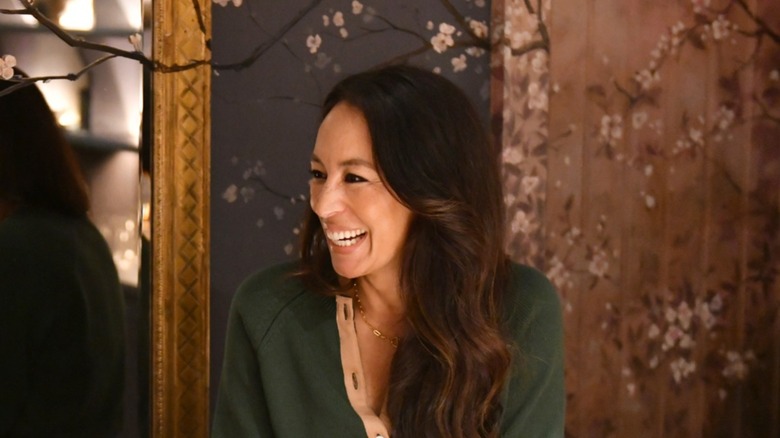
Have you seen the gorgeous flowers that Joanna Gains grows in her garden, with the weird little cardboard boxes around some of her flowers? If you haven't noticed before, rest assured, they are there, but they may not be what you think. It is common to assume that odd boxes in a garden like these are some sort of trap for pests like slugs. Instead, these tiny boxes on Joanna Gaines' flowers are actually serving a positive purpose for pollinators. They are used for a process called bee lining.
Bee lining is a traditional method used for tracking honey bees in your garden to locate their hives. The boxes often contain nectar for the bees to collect. Once a bee has filled up, it flies straight back to its colony, theoretically leading you directly to the hive. However, it's rare to follow a bee directly home, so instead you use the baits as a way to triangulate the colony's location.Bees always fly in a straight line, and they take the shortest route back. So with the first bait station, you watch the direction the bees leave. Say it's northeast. That tells you the hive lies somewhere along that line, but not how far away. Next,you move the bait box a few hundred feet away and watch the bees again. If they take off northwest, you triangulate those routes, and find the hive where those two routes intersect.
By identifying and locating honey bee colonies in your garden, you can monitor and support their growth, which is vital to the eco-system. Traditionally, bee lining was a method used to hunt bees and collect the honey. However, due to modern beekeeping practices, which allow regular production and collection of honey from domesticated bee boxes without damaging the bee population, it has become more of a hobby than a harvesting practice.
How to set up a box for bee lining
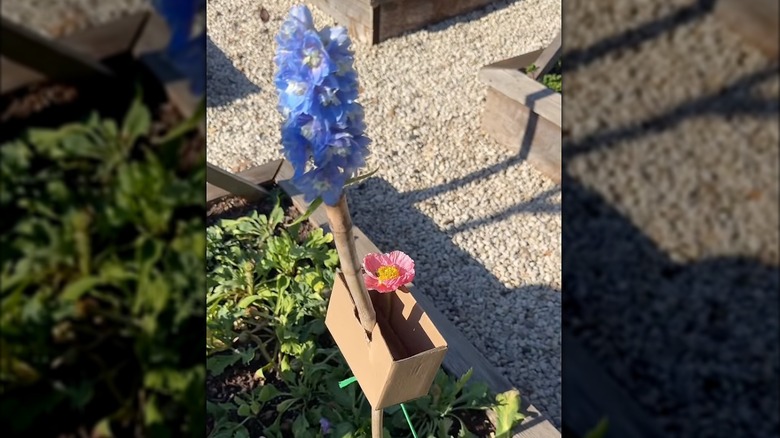
The interesting thing about the bee line boxes in Joanna Gaines' garden is that they appear to be made out of cardboard, which most likely means they aren't filled with sugar syrup like most bee line boxes. This may be because bees will avoid artificial bait in areas abundant with natural resources, like flowers. Since these boxes are set up throughout her flower garden, it seems that her son, Crew, uses real flowers to attract the bees to the boxes by mounting them on a post just above the box.
Setting up the boxes is easy, but it is important that the box itself has an opening that can be closed. Joanna Gaines and Crew mounted their box to a wood post, but it can be placed anywhere where bees congregate. After the bees congregate in the box, as Crew explains, add nectar to the box and close it. Release them after 10 minutes and track the direction they travel. You can triangulate the hive's location more accurately if you place several boxes around the garden.
Bee lining is commonly used to triangulate honey bee hives, but honey bees aren't the only types of beneficial bees you'll want in your garden If you are interested in helping the local bee population thrive, you can pair your bee lining with the benefits of having a bee house in your yard. Pairing practices like these helps attract more pollinators to your yard and promotes a more diverse population that will boost your local ecosystem.