

The Drought-Tolerant Ground Cover That Can Tolerate Poor Soil Conditions
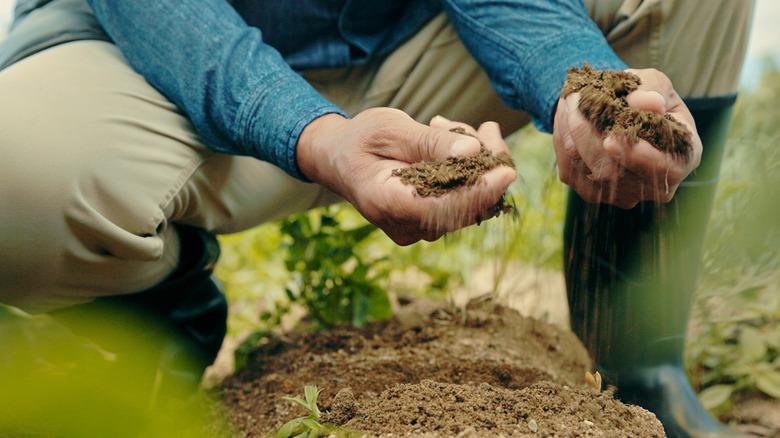
Sure, your garden is dry and your soil is far from rich, but that doesn't mean your plant selection has to suffer. There are wonderful perennials that will flourish in these harsh conditions, and your yard will become a beautiful oasis when you add them. One of the more unusual looking options for these conditions is sea holly (Eryngium planum), a drought tolerant ground cover that is perfect for yards with poor, sandy soil.
Sea holly is a gorgeous blue plant that's the perfect addition for border gardens. This low maintenance, clumping perennial reaches up to 36 inches tall and 18 inches wide. It blooms in summer, and its blue flowers have spiky-looking bracts which give them a tough and unusual appearance. It has prickly foliage and some varieties have bluish leaves. Although sea holly looks like a thistle, this native of Eurasia is actually a carrot relative. When planted, it can provide a splash of unexpected color and texture that's perfect for bringing some edge to more traditionally styled spaces.
How to grow drought-tolerant sea holly as a ground cover
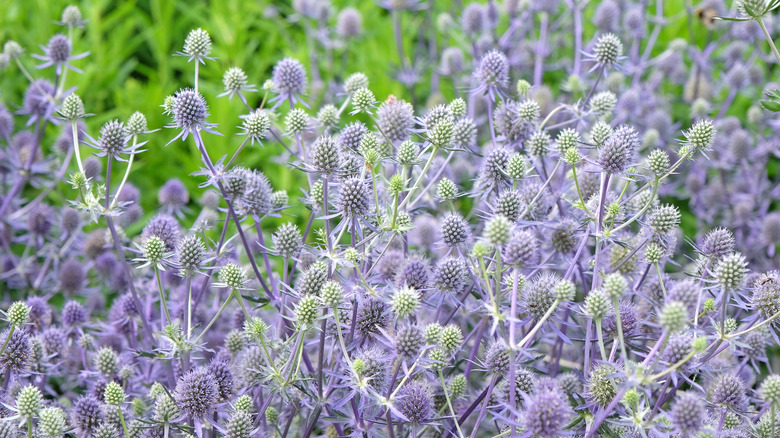
Sea holly thrives in USDA Hardiness Zones 5 to 8, but that doesn't mean all gardeners in those zones should grow it. If you have rich soil, sea holly is not for you. Leave this perennial for growers who have the type of dry, sandy soil where it will flourish. For upright plants and beautiful blooms, grow it in full sun. While this ground cover isn't aggressive, choose where you plant it carefully, as it is also one of the self-seeding flowers that will effortlessly spread in your backyard.
With its coarse texture, this plant will add visual interest to your flower beds. It will add dimension to a cottage garden, and its preference for rugged growing conditions will help it excel in rocky areas too. You can even include sea holly in drought tolerant pollinator gardens, where it will bring butterflies flocking to your yard. There are clearly plenty of uses for this intriguing plant. If you'd like a more compact variety to use as a ground cover, choose 'Blue Hobbit,' a cultivar that reaches just 12 inches tall and spreads slowly.