

Not Eastern Redbud Nor Cherry: The Fast-Growing Shade Tree For Privacy
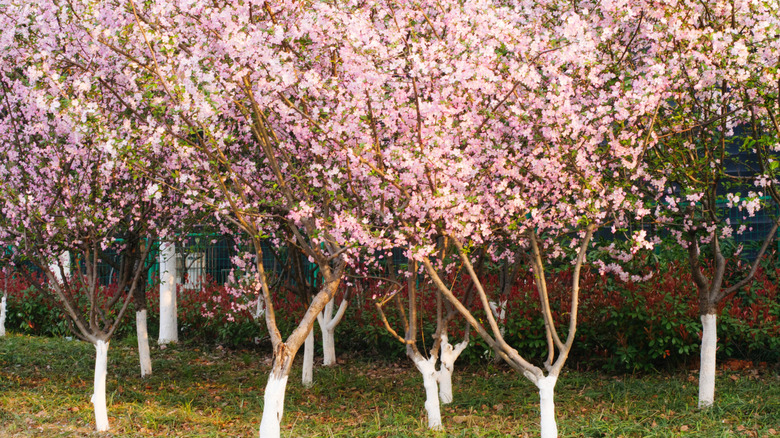
Many people adore cherry trees (Prunus spp.) and Eastern redbuds (Cercis canadensis), and it's easy to see why. When in full bloom, the soft pink blossoms of cherries and the purple-hued flowers of Eastern redbuds steal the show in a garden. What if you could have a tree that is just as eye-catching but also grows quickly, provides shade, and adds privacy? That's exactly what crabapple trees (Malus spp.) bring to the table.
Crabapples are not one species. The genus Malus contains more than 50 species and includes flowering deciduous shrubs and trees that grow between 14 and 40 feet tall. If you want a fast-growing shade tree to cool off your hot backyard, choose an appropriately sized species or cultivar. Some good options include Sargent crabapple (Malus sargentii), which reaches 8 feet tall and 15 feet wide; flowering crabapple (Malus 'Amberina'), which grows to 10 feet tall and wide; and Harvest Gold crabapple (Malus x 'Hargozam'), which can reach about 25 feet tall and wide.
Privacy plantings involve multiple trees, so plan the spacing between your trees carefully. For instance, smaller crabapples will only need about 10 feet between them, but large cultivars will need at least 25 feet. Note, too, that your newly planted crabapple seedlings won't fill in those big gaps right away. While you can plant these fast-growing trees in your yard for a natural privacy screen, they typically grow about 1 to 2 feet a year and take 10 to 20 years to reach full size. You can make sure they live long enough to reach maturity with the right care.
Provide crabapple trees with the right conditions for dense growth
If you've decided to grow crabapple trees in your yard for shade or privacy (or both), you need to consider their particular growing needs. First, you need to live and garden in USDA Plant Hardiness Zones 3 to 9, depending on the variety. Like most fruit trees, crabapple trees need a full sun site — at least 8 hours of direct sunlight daily. In a shaded spot, they'll grow weak, open branches, reducing the canopy for backyard shade or privacy. They will also produce fewer flowers and fruit, and become more susceptible to diseases like powdery mildew.
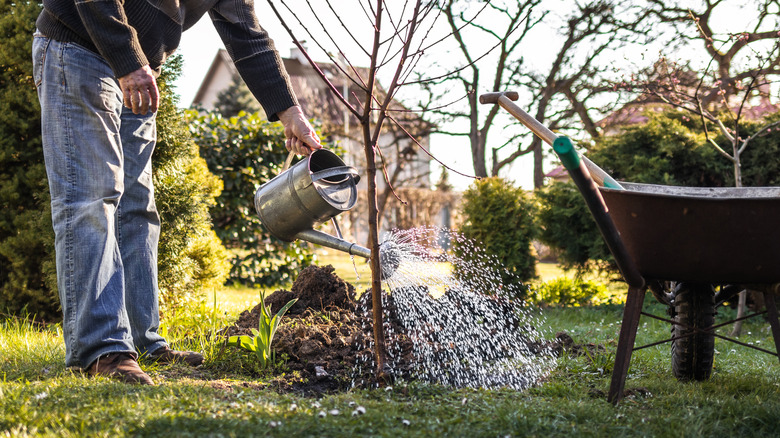
Crabapple trees prefer rich, well-drained, and slightly acidic soil with a pH of around 6.0. They will, however, do just fine in neutral soil. Mix compost into the soil at planting to improve drainage, boost fertility, and balance soil pH. Though typically very tough, crabapples do better when planted in a garden bed rather than a lawn, which has different watering and fertilization requirements.
To ensure a natural shape and abundant foliage for shade and privacy, crabapple trees need regular pruning. Plus, it reduces crowding in the canopy, which in turn increases air flow and limits disease spread. Pruning your crabapple at the wrong time is one of the common mistakes people make when pruning fruit trees. Get that pruning saw out in late winter for a stunning early spring display, before new-season growth starts. Focus on removing dead and crowded branches, and any suckers emerging from the roots. Stop after removing about 20% of the overall growth, as removing more can stress the tree and increase the risk of rot.