

Ditch Concrete For An Eco-Friendly Driveway Edge Alternative That Smells Incredible

While it's common to use artificial materials to edge a driveway, they can look harsh. Instead, a tough living border will soften the flow from hard driveway to lush lawn or garden. Catmint (Nepeta spp.) is an eco-friendly ornamental herb that smells amazing and couldn't be easier to grow. This pretty plant is short in stature, boasts blue-green leaves, and produces purple-hued flowers on long stalks starting in late spring. Catmint is a popular garden bed or pathway border plant, and works well as a ground cover with a bit of maintenance.
Despite its name, catmint is not a true mint. It grows in manageable clumps rather than spreading through underground runners. While the genus is introduced to the U.S., most catmint species are not considered invasive. One of the main perks of catmint as a driveway edger is its environmental benefits, especially compared to concrete. The raw materials used in concrete are natural, but the manufacturing process creates a lot of carbon dioxide and requires large amounts of water and energy. Plants don't have these problems.
Catmint has a few other perks for driveway borders. For one, it's tolerant of both wet and dry soils. Plus, it dies back in winter, meaning that if you plow your driveway, you don't have to worry about accidentally crushing or worse, killing, your plants. Catmint won't break or die under heavy snow, either, unlike evergreen ground covers or shrubs. After lying dormant through the cold, the plant simply pops up again good as new each spring.
What to know before using catmint as a driveway edger
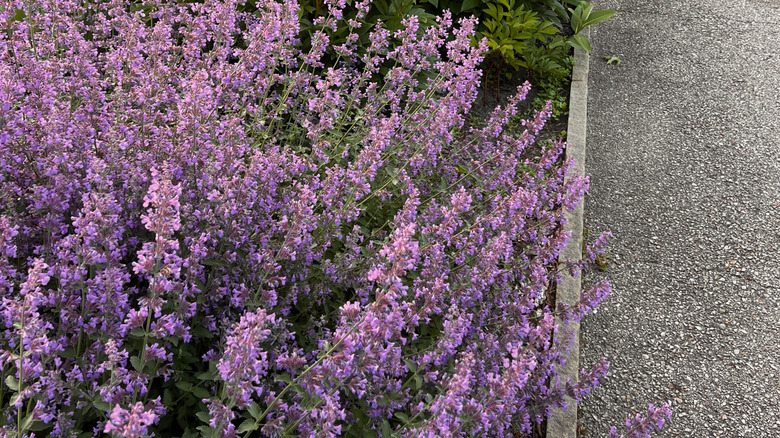
Catmint is very easy to care for. Gardeners often jump straight to lavender when they're looking for a flowering shrub to edge a driveway. Unfortunately, lavender can be finicky. Catmint is just as pretty and fragrant as lavender, but it's far less dramatic. You'll enjoy notes of sage and mint from the leaves and the blooms every time you open your car door or put down a window.
Catmint produces lots of seeds, and it will spread via seedlings outside of your driveway border if not maintained. Thankfully, some cultivars, such as 'Little Trudy' (Nepeta 'Psfike'), are more likely to stay where you want them. Another option is 'Walker's Low' (Nepeta x faassenii) — a fast-growing herb with purple flowers that makes a perfect ground cover. Both plants are sterile hybrids that don't produce seeds. While just catmint alone edges a driveway nicely, there are also reliable garden companions to plant with ground-covering catmint — such as bee balm or creeping phlox. Mixing and matching plants will create more visual interest or extend the flowering season.
Always looking for ways to attract pollinators into your garden? The edge of a driveway is often overlooked as a spot for flowering plants. Catmint doesn't just flower once. The first flush of blooms typically starts in late spring and can last for up to two months. Cut the flowers back by about half and you can expect a second flush. As a result, catmint attracts bees, butterflies, and hummingbirds through the warmer months. Plus, you'll keep the plant tidy — something that's vital for a driveway edge.
Care requirements for the catmint growing along your driveway
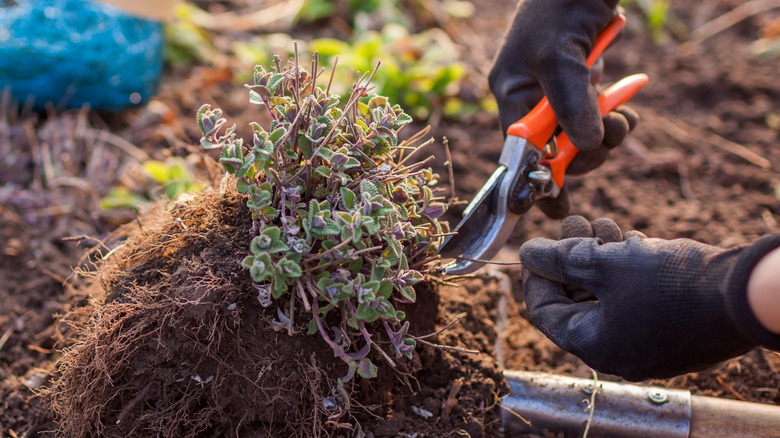
Though catmint prefers well-draining soil, it's pretty forgiving and will grow almost anywhere once established. The plant is also drought-tolerant and needs little to no watering most of the year — depending, of course, on where you live. It also doesn't need much, if any, fertilizer. However, if you want a lot of flowers, catmint needs a full sun site. If your driveway is shaded by trees or your home for much of the day, this plant might not be the right choice.
Catmint works as a driveway edging plant across most of the U.S. It can live for years in USDA Plant Hardiness Zones 3 through 8. Spring is the best time of year to plant perennial catmint in the garden — or along the edge of a driveway. Wait until any chance of frost has passed. Likewise, if you choose to plant catmint in fall, be sure to do so at least a month before the first predicted frost date. Space plants 1 to 3 feet apart to create a seamless border. Check the size of the specific species or cultivar you've bought, since size varies across varieties.
Though catmint is widely considered a set-and-forget plant, it does need occasional pruning. The upright flower and foliage stalks can sometimes flop if allowed to grow too long. Cutting back the plant when it starts getting leggy will promote flowering and keep your driveway edging compact. If hungry herbivores, such as deer, rabbits, and woodchucks, plague your front yard, they won't nibble on your catmint.