

Not Honeysuckle, Not Zinnia: The Fiery Hanging Basket Flower Hummingbirds Can't Resist
We may receive a commission on purchases made from links.
There's nothing wrong with a simple backyard, but if you have the space, why not go the extra step and make it a colorful haven for pollinators? You'll help bees, butterflies, and, of course, delightful hummingbirds. Doing so is easier than you think with the right plants. Honeysuckles and zinnias are go-to hummer attractors, thanks to their abundance of colorful, nectar-filled blooms. However, if you're looking to elevate your garden design — quite literally — with hanging flower baskets, consider growing the remarkable fountainbush (Russelia equisetiformis). It's a smart way to draw more hummingbirds into your yard.
Fountainbush, sometimes called firecracker plant, earned its common names from its willowy, cascading stems and tubular red flowers. Both attributes make it an ideal hanging basket plant or container spiller. It's native to Mexico and Guatemala and thrives in USDA Plant Hardiness Zones 9 through 11. However, you can still grow this vibrant plant in other parts of the U.S. if you overwinter it indoors. Pair a fountainbush with other gorgeous hanging basket plants that hummingbirds absolutely love to create a dramatic display of fiery blooms.
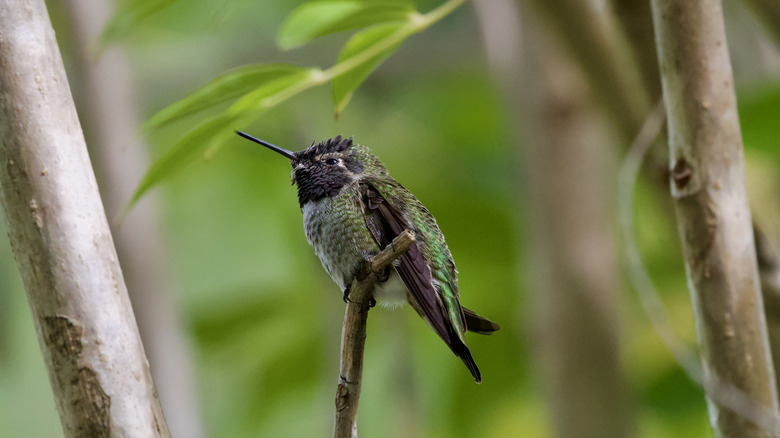
Hummingbirds are biologically hardwired to seek out tubular flowers. They've adapted curved bills and long tongues to reach deep into narrow blooms, like those a fountainbush produces, to access nectar at the base. What's more, they prefer blooms in shades of red. As you can see, the fountainbush boasts flowers that can transform your space into a hummingbird heaven. Plant one in a basket, hang it from your porch eaves, and you're practically guaranteed prime birdwatching all season.
How to grow a fountainbush that will attract hummingbirds
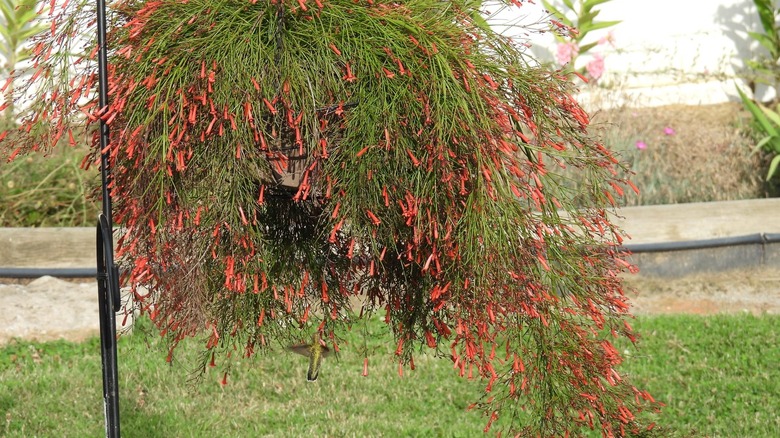
Fountainbush is a heat-loving and drought-tolerant warm-climate perennial that will return year after year if it's well taken care of. The plant is well-suited to container gardening. In most parts of the U.S., you can grow it as an annual in the summer — it's done once the first frost hits. However, you can bring the plant, basket and all, inside for the winter, hanging it in a warm, sunny room. Then, next season, when the threat of frost has passed in late spring, you can pop it outside once more.
To help make sure your potted fountainbush produces lots of nectar-rich blooms for hummingbirds, give it plenty of light. These plants are at their healthiest (and most productive) when they're hung in a spot with at least 6 hours of direct sunlight daily. Whether in the garden or in a container, fountainbush plants will grow just as well in dry soil as they do in damp soil. They even thrive along pond edges. In your hanging basket, use a sandy or loamy potting mix with added perlite. It should drain quickly but still retain medium soil moisture.
Even though the fountainbush is drought-tolerant, it will do best if watered about once a week. You can also simply water the plant whenever the soil feels dry to the touch. Remember, soil in hanging baskets dries out much faster than it does in garden beds — the footprint of a container is small and it's exposed to the elements on all sides. Check soil moisture frequently during the hottest days of the year using your finger or a Pexio PretiHom Hygrometer. You might get fewer flowers for visiting hummingbirds if you let this plant dry out too much.