

What To Do If You Find A White Mulberry Tree In Your Yard
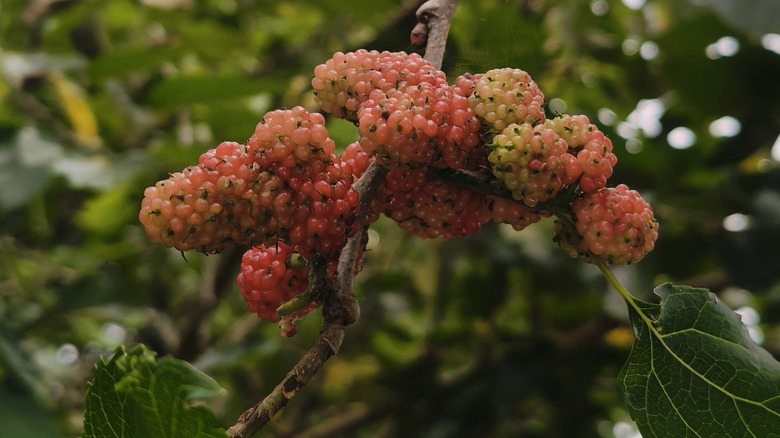
Did you know that not all mulberry bushes are safe to plant in your yard? In fact, there are some mulberry bushes that are illegal to grow, and for good reason. Not only are there big downsides to planting mulberry trees in your yard, including staining from berries and leaves, poisonous sap, and the mess the birds leave, but trees like the white mulberry tree (Morus alba L.) are invasive. They aren't technically listed as invasive everywhere in the United States, but they have been registered as invasive in at least 14 states, with laws banning them in four states. Ultimately, it's best to just avoid them altogether, especially because they can do some serious damage to native ecosystems. The problem is, as birds and animals snack on the berries, they can drop the seeds anywhere, leaving little seedlings popping up in unwanted places. So, what should you do if you find a white mulberry tree in your yard? The short answer is remove it.
If you catch it early, it can be relatively simple to remove a white mulberry tree sapling from your yard. Wait until the soil is soft, preferably during a warm season after a heavy rain. Pull the seedling out with as much of the root system as you can, or dig it out. If you didn't catch it early, and the tree has established a trunk, you will want to cut the tree down. Apply an herbicide, like glyphosate or triclopyr, immediately after removal to prevent return growth. You should not compost invasive plants. Instead, bag it up and dispose of it in the trash.
How to identify white mulberry trees
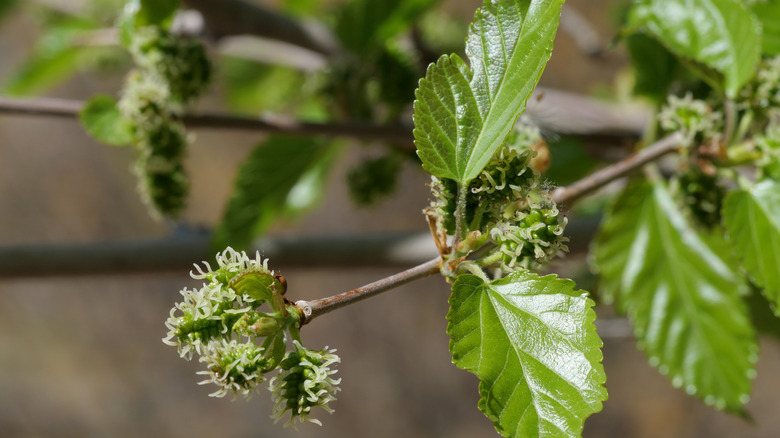
So, how do you know if you have a white mulberry tree in your yard? The exact features will depend on the growth stage of the tree. As saplings, they appear as small, vine-like plants with a few alternating heart-shaped leaves that may appear shiny with blunt teeth. Early growth appears as a small, dense shrub with green catkins dangling from the branches in the spring. In the summer, you may see purple, white, or black berries that look similar to blackberries.
If left completely alone, white mulberry trees will grow to be between 30 and 50 feet tall. It is tricky, but you can distinguish white mulberry trees from red mulberry trees by examining the leaves. White mulberry leaves are generally smaller and shinier than red mulberry leaves. The location can also be a good indicator. White mulberry trees do not usually grow in woodland areas with high-quality soil. Instead, you may notice them standing alone in areas with dry soil, like ditches and roadside, or old fields. Don't be too discouraged when removing white mulberry trees. The red mulberry tree or blackberry bushes are much better alternatives to grow instead of white mulberry trees if you still want to have a fruiting tree in your yard that won't take over.