

Not Hoya, Not Gardenia: This Fragrant Plant Brings A Tropical Touch Inside With An Easy Hack
We may receive a commission on purchases made from links.
Tropical plants are often large, colorful, and provide a sense of life and abundance to a garden. Unfortunately, depending on where you live, growing one of these outdoors permanently isn't really possible. With Meyer lemons (Citrus x limon 'Meyer'), however, you can grow them in any environment by bringing them inside when the temperature drops, before the first fall frost. The key to having the plant survive the transfer is to make the process as gradual as possible.
Like hoyas and gardenias, Meyer lemons prefer warm and humid conditions. They tend to thrive in USDA Hardiness Zones 8 to 11, known for higher temperatures and, in some cases, wetter environments. While many hoyas are simple plants, gardenias have a narrow tolerance window indoors. Meyer lemons, on the other hand, grow pretty compact, do well in containers, and produce edible fruits with a pleasant fragrance. This makes them a wonderful tropical plant to try to grow inside.
With just a bit of patience and some slight adjustments to your home, you'll find that they are a popular variety of lemon you can successfully grow indoors. However, transferring them from outdoors to indoors without any transition can shock the plant, causing it to lose leaves or even die. One of the main things you should know before growing a citrus tree indoors is how to make the transition properly, so you don't have to worry about hurting your plant while trying to protect it from the winter elements. First, acclimate the tree to the indoors for a little bit at a time, and mimic outdoor conditions as closely as you can.
How to minimize your Meyer lemon's shock after moving inside
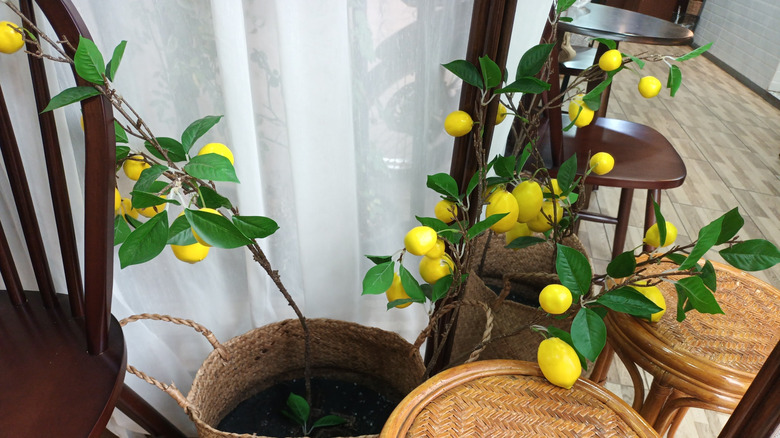
One of the biggest concerns when bringing your Meyer lemon indoors is the humidity. Citrus, including Meyer lemons, enjoys having a lot of moisture, usually 50% to 60%. Homes can reach this level on their own, but if the air in your house is drier, you will need to use a humidifier to help increase the moisture in the air. Adding other plants in the room, or using the space to air-dry clothes, can also help. You can keep an eye on the humidity level with something like this indoor hygrometer from Antonki on Amazon.
While the humidity level is one of the most important factors, it's not the only concern. The amount of sunlight and the temperature should also be as similar as possible to the outdoors, at least initially, when you bring it inside. Thankfully, since these plants like it around 50 to 80 degrees, you probably won't have to make too much of a change.
The same is true with sunlight. If your tree usually gets full sun, set it in a room where it can get that. If it's used to partial shade, stick to a place with just a few hours of direct light. Use grow lights to supplement if necessary. Finally, keep an eye on your lemon's water requirements. Overwatering your plant is one of the watering mistakes everyone makes when growing a lemon tree indoors, so ensuring the soil is actually dry before watering can help save your plant. After the last frost in the spring, you can reverse this process and gradually acclimate your Meyer lemon to the outdoors again.