

Not Honeysuckle Or Bee Balm: The Flower That Hummingbirds & Butterflies Can't Resist
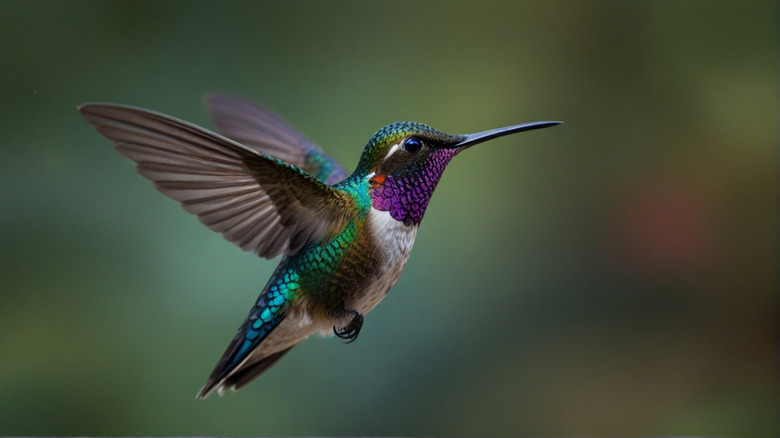
Adding a native honeysuckle plant can be a great way to draw more hummingbirds and butterflies to your yard. As can growing bee balm, which provides the color and nectar needed to make your garden a hit among pollinators. However, when it comes to designing your perfect hummingbird and butterfly haven, you may not have the ample sunlight required to support honeysuckles or bee balm. In that case, you may wish to instead add this flowering shrub that does well in shaded conditions, providing a unique foundation to start a pollinator garden.
Bottlebrush buckeye (Aesculus parviflora) is a shrub native to the southeastern United States. It produces eye-catching tubular white flowers that attract hummingbirds and butterflies, among other pollinators. The flowers of the bottlebrush buckeye provide lively appeal to your garden throughout most of the summer, appearing in June and lasting throughout July. Bottlebrush buckeye is also easy to grow. As a result, it's a top contender for beginner gardeners looking for unique but skill-appropriate plants that attract hummingbirds and butterflies to fill the shadier parts of their garden with.
When your goal is to attract as many pollinators as possible to your yard, you want to ensure you're providing an environment where those small flowers can really blossom and thrive. Brushing up on the proper care for a bottlebrush buckeye can make the difference in how successful your newest pollinator garden addition is.
How to grow bottlebrush buckeye to attract hummingbirds
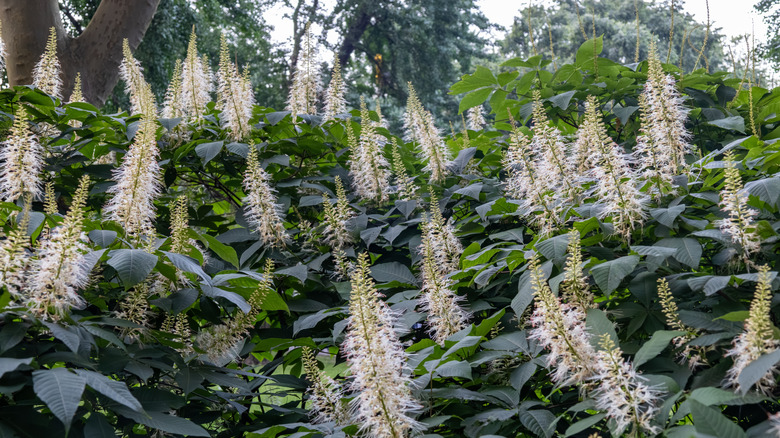
Because the bottlebrush buckeye is a woody bush that isn't typically used in containers, the first step is figuring out if you're in the right USDA Hardiness Zone to support this plant. After all, you don't want to add a bottlebrush buckeye bush to your yard just for it to fail come the colder months of winter. This plant is hardy in zones 5 through 9.
As mentioned above, bottlebrush buckeyes don't require the same full sun conditions as honeysuckle and bee balm plants. Instead, they grow well when offered shadier conditions, ranging from deep to partial shade. They also survive in dappled sunlight, which makes them great for adding hummingbird appeal in more wooded areas. While they can grow in deep shade, however, they'll produce more flowers if you choose a partial shade spot that receives some direct sunlight throughout the day (at least two hours), and more flowers often end up leading to more hummingbirds and butterflies.
One of the most important factors to consider with a bottlebrush buckeye shrub is that they are not drought-tolerant. Instead, they need soil that remains consistently moist, while being well-draining to prevent standing or pooling water. This is especially true when you first add this plant to your yard, in the time before it becomes steadily established. As a result, sticking to a regular watering routine is essential if you want to see this shrub thrive in the summer and turn your garden into a hummingbird paradise.