

It Hit Its Peak In The '60s — Now Collectors Can Only Hope To Find It At The Thrift Store
Danish teak bookshelves were once seemingly everywhere. During the 1960s, they were a go-to furniture staple in American homes with the rise of mid-century modern designs. Decades later, they're now seeing a resurgence in popularity. For many, Danish teak bookshelves are a thrift store collector's dream item to stumble upon. Their popularity today stems from several standpoints.
Some designers say they look vintage without seeming outdated, as many vintage furniture pieces can look out of place if the entire room isn't styled to a specific era. Danish teak bookshelves, however, still look good in modern homes because it's easy to use neutrals in home decor, especially when it comes to wood. They pair well with everything from minimalist décor to eclectic, lived-in styles. The floor and ceiling of furniture prices varies dramatically, but shoppers can add a statement piece to their room by checking estate sales, local online listings like Facebook Marketplace, antique malls, and thrift stores hoping to spot an original piece before another vintage furniture fan grabs it first.
A lot of collectors specifically look for modular Danish systems. Iconic companies include Cado or Royal System. Designer Poul Cadovius, in particular, is especially known for mounting shelving directly to the wall instead of sitting on the floor. Danish teak bookshelves have held up well over time, with vintage pieces feeling sturdier than newer flat-pack shelving units. These bookshelves were designed to change with a home over time with features like extra shelves, sliding cabinets, drop-down desks, or modular sections that could be rearranged later.
What to check before buying a vintage teak bookshelf
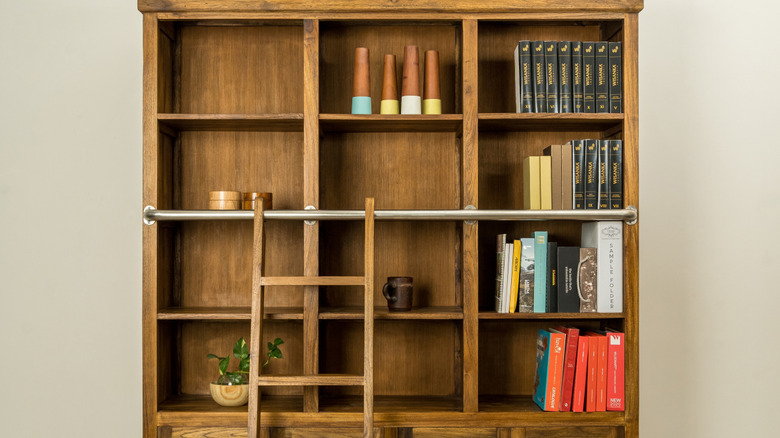
Whether it's buying Danish teak bookshelves or any other piece of furniture, the appeal of thrift store shopping means the possibility of finding items at a fraction of their true market value. Cosmetic damage is often easier to fix than major stability issues. Look for these types of blemishes before purchasing a secondhand item, and brush up on tips to make your next furniture flip more successful.
Older Danish teak shelves usually have a few details that help separate them from newer reproductions. Many originals have thinner shelves, hidden brackets, clean lines, and warm teak wood with a noticeable grain pattern. Genuine teak also tends to darken naturally over time. Some pieces still include original maker's labels or stamps tucked inside cabinets or attached to the back. Brass hardware and floating wall-mounted rails are also common signs of authentic mid-century Danish shelving.
Pay attention to the color of the teak itself, as older teak develops a darker tone over time due to years of direct sunlight that can leave some sections unevenly faded. Some furniture flippers prefer restoring the wood to make it look fresh again, while others like the worn-in appearance. There's no right answer, just a personal preference. When thrifting, be aware of other items that are better bought at the thrift store than paying full price.