

15 Perennial Companion Plants That Thrive Next To Hostas
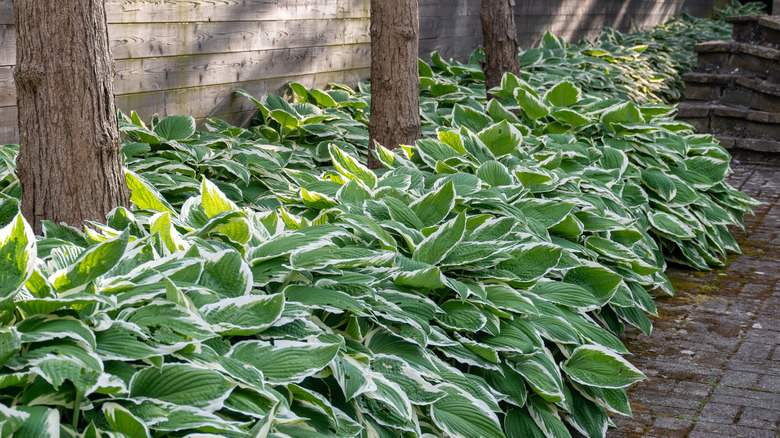
If you're on the hunt for a shade-loving beauty for your yard, the hosta (Hosta spp.) is a popular and versatile plant you should consider. These ornamental perennials are native across Asia. They're known for their clumping foliage, but virtually all hosta varieties are capable of producing vibrant trumpet or bell-shaped blooms, too. There are more than 2,000 hosta varieties with a diverse array of colors, shapes, and sizes to explore. Generally, they can be anywhere from 4 inches to 28 inches tall.
These plants are hardy in USDA zones 3 to 9. Enjoy their foliage in the spring and into the fall, with flowers emerging during summer. Foliage can be green, blue, gold, or variegated. The blooms can be white, light purple, yellow, red, or pink. Overall, these plants are fairly low-maintenance. They prefer nutrient-rich, slightly acidic soil. Your hosta will require roughly an inch of water a week. You can divide your plants every three to five years in the early spring. As resilient as these plants are, their large, tender leaves can make them a target. They tend to struggle with pests such as slugs, deer, nematodes, and voles. But they can often bounce back.
Companion plants can aid in keeping your hostas happy and healthy throughout the growing season. Certain plants have the ability to repel pests, improve soil, and stifle weeds. Other plants simply have similar care requirements and look lovely next to the hosta. These helper plants can be an excellent addition to your garden, offering added visual interest or beneficial advantages. From coral bells to lungwort, here are 15 perennial companion plants to pair with the hosta.
Azaleas
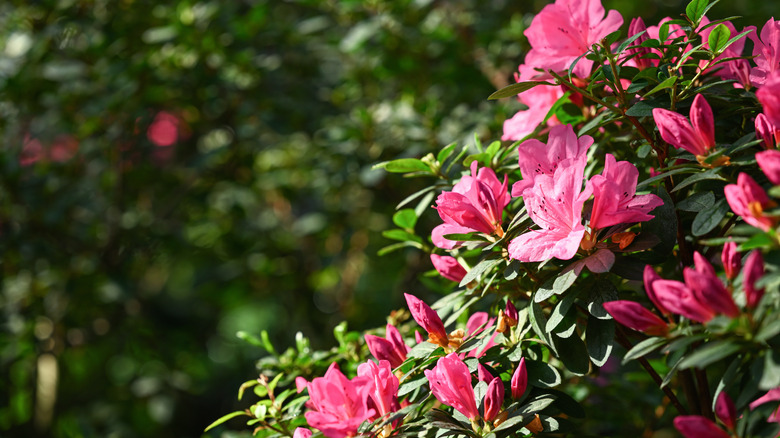
Azaleas (Rhododendron spp.) are robust flowering shrubs featuring clusters of fragrant blooms. They're hardy in zones 4 to 8. They can grow anywhere from 6 to 10 feet tall and 5 to 8 feet across. These beauties are fairly low-maintenance, with very little risk of pests or disease. Like hostas, azaleas prefer more acidic soil and dappled light, making them suitable to grow near one another. They tend to bloom in April, offering visual interest and color toward the beginning of the growing season before your hostas produce flowers.
Barrenwort
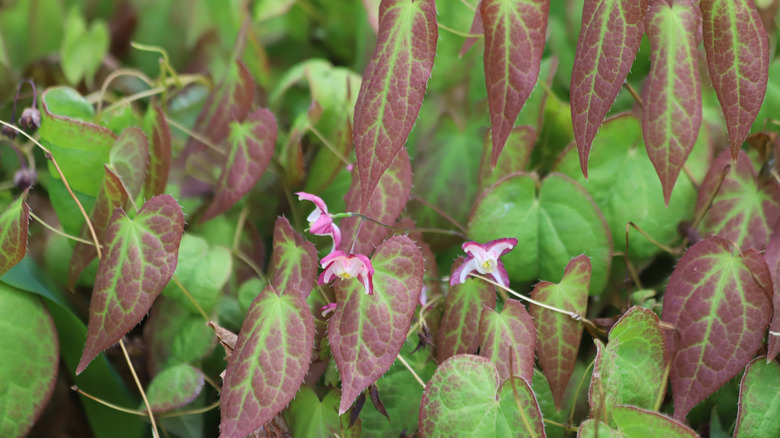
Another great option to pair with your hostas is barrenwort (Epimedium spp.). This plant is an herbaceous perennial with petite four-pointed flowers. It's suitable for growing in USDA hardiness zones 5 to 8. There are over 58 different species. Known for mounding and spreading behavior, barrenwort works well as ground cover. Its shallow roots aren't too intrusive to surrounding plants, and it will be right at home in the shade with your hostas. Just keep in mind that barrenwort must be divided every few years. You can do this when you divide your hostas.
Begonia
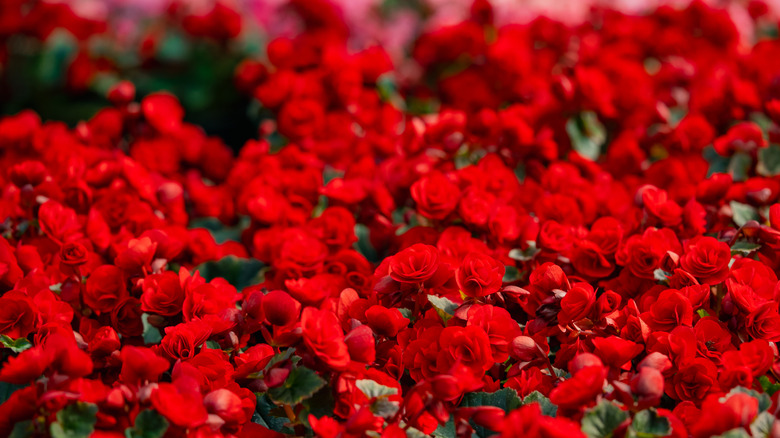
There are over 2,100 different species in the begonia (Begonia spp.) family, and they offer an abundance of beautiful colors you can incorporate in your yard. Their single or double bloom flowers come in a variety of hues, including pink, yellow, and orange. Another of this plant's perks is its leaves, which come in showy heart, star, or rounded shapes. Some are upright, while others have a trailing habit. Begonias are typically somewhere between 8 inches and 2 feet tall. Most cultivars are shade lovers, too, so they can pair well with hostas. You can even try this beginner-friendly begonia variety for beautiful fall flowers.
Woodland phlox
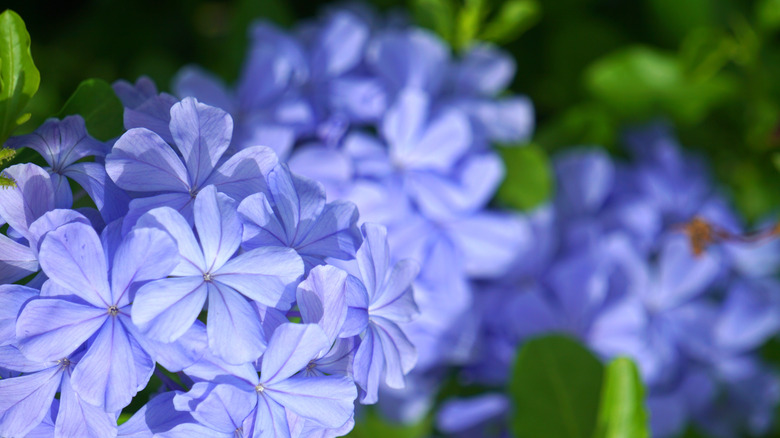
The woodland phlox (Phlox divaricata) is an herbaceous perennial wildflower native to eastern North America. They can grow anywhere from 6 to 12 inches tall. These plants feature fragrant, roughly star-shaped flowers that range from rosy pink to violet. Some varieties are also white. They bloom in the spring, persist into the summer, and come back year after year in USDA hardiness zones 3 to 8. These woodland beauties grow well in partial to full shade, preferring dappled sunlight like that under tall trees. These plants also benefit hostas by attracting pollinators.
Bleeding heart
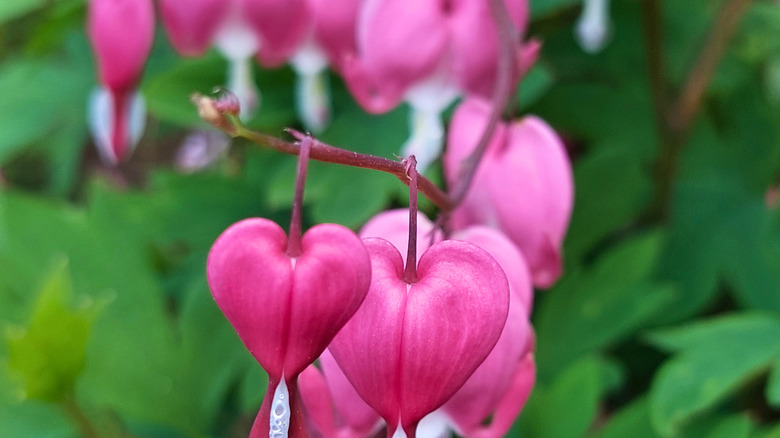
If you're a fan of interesting blooms, the bleeding heart (Dicentra spp.) may be a great hosta companion for you. This plant features stunning, heart-shaped flowers dangling from a delicate stem. They offer a brilliant display of red, pink, and white blooms in the spring, attracting pollinators and songbirds alike. Bleeding hearts grow perennially in USDA hardiness zones 3 to 9. These shade-tolerant plants play nicely with the hosta. They're also not particularly picky about soil quality, thriving in a variety of conditions. Bleeding hearts offer color and texture against the dense wall of foliage hostas tend to create.
Ferns
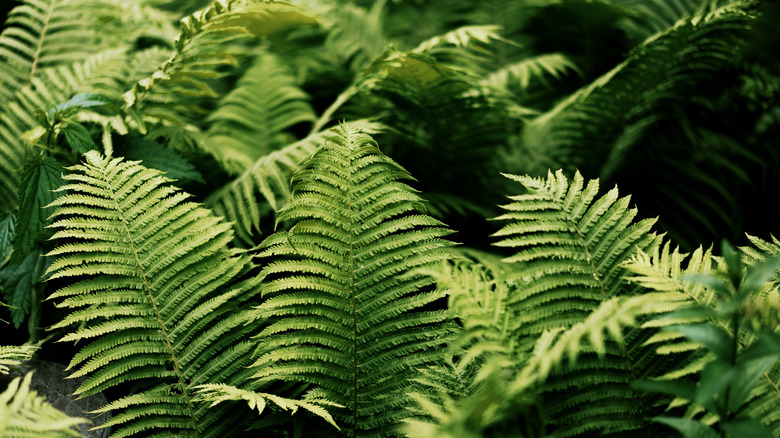
Ferns are a broad group of plants. They add delicate, feathery texture to a garden plot. These forest dwellers thrive in low-light conditions. Options like the ostrich fern or Christmas fern are popular in landscaping, but there are plenty of other varieties to choose from. This hosta companion plant boosts soil. As its leaves drop, they form a nutrient-rich mulch. Ferns also aid in preventing soil erosion and controlling weeds. Slugs tend to avoid this plant due to its thick foliage, so you can use ferns to form a defensive wall around your hostas.
Astilbes
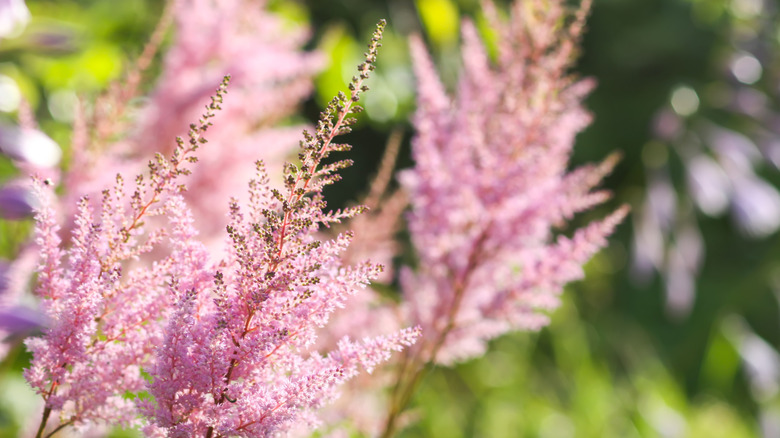
Astilbes (Astilbe spp.) are an upright plant featuring fluffy, clump-forming red, pink, or white flowers. They bloom in spring and summer. These low-maintenance perennials can be anywhere between 6 inches and 5 feet tall, creating stunning vertical interest in plots with shorter hosta plants. They will come back year after year in zones 3 to 8. Astilbes are deer- and rabbit-resistant. They prefer shade and slightly acidic soil like the hosta. However, it does benefit from light to moderate shade rather than deep shade for the best blooms.
Lungwort
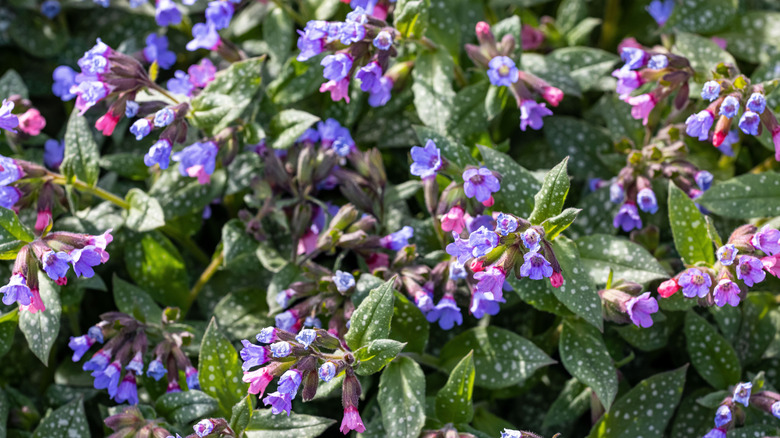
Eye-catching lungwort (Pulmonaria spp.) features speckled leaves and variegated pink, purple, blue, or white blooms in the early spring. This clumping ground cover grows about 6 to 12 inches tall. These plants come back year after year in USDA hardiness zones 3 to 9. Deer and rabbits tend to avoid lungwort due to its fuzzy leaves. Thriving in the shadier spots in your yard, lungwort grows well with hostas. This flowering perennial also adds a touch of whimsy to a cottage garden or charming contrast and a pop of color to shade or woodland gardens.
Siberian bugloss
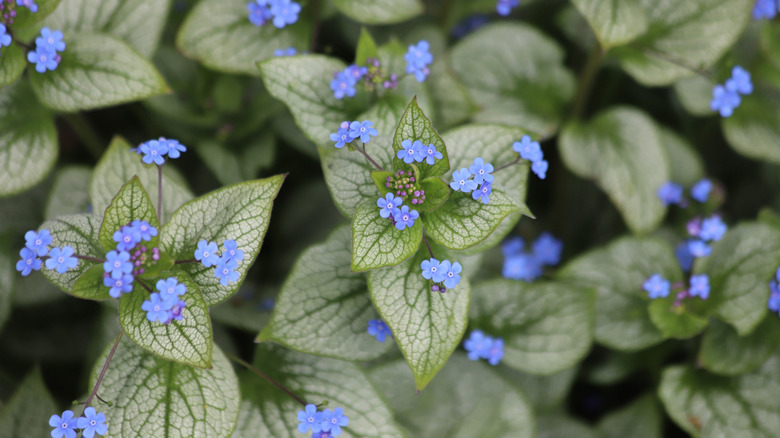
Siberian bugloss (Brunnera macrophylla) is an herbaceous perennial with dark green, heart-shaped foliage. Some cultivars feature unique, silvery variegation. These plants can be around 1.5 feet tall and 2.5 feet across. Siberian bugloss features delicate blue flowers that bloom in sprays around mid-spring. It's hardy in zones 3 to 8. This is yet another plant that loves shade like the hosta. As an added benefit, this ground cover can help suppress weeds. It would look lovely in a cottage-style garden alongside hostas, adding dimension and subtle color to the plot.
Common rue
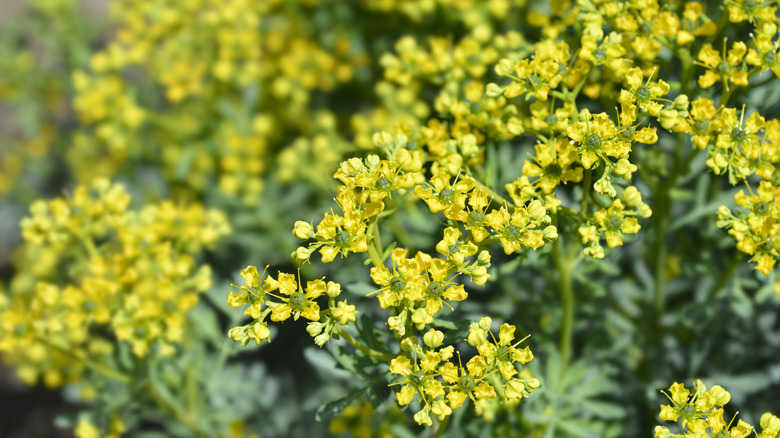
The common rue (Ruta graveolens) is an ornamental shrub growing 2 to 3 feet tall and wide. This plant comes back every year in USDA hardiness zones 4 to 10. It tolerates partial shade and acidic soil, making it compatible with the hosta. Additionally, the plant's fern-like leaves carry a strong citrusy smell that deters slugs. Common rue is also a host plant for swallowtail butterflies and parasitic wasps, which help keep whiteflies at bay. Just remember that this plant is considered poisonous. Keep children and pets away from it, and wear gloves while handling it.
Lenten rose
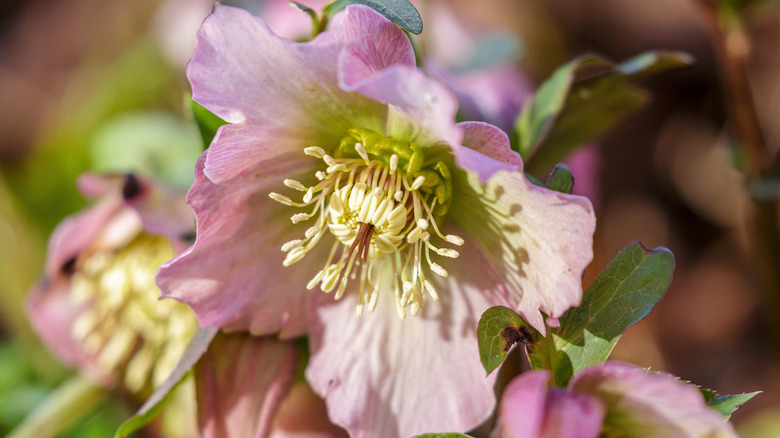
The lenten rose (Helleborus orientalis) features showy, cup-shaped flowers that bloom in the late winter into early spring. This broadleaf plant also has dark green, palm-shaped foliage. They can be evergreen in warmer climates. These plants are considered perennials in USDA hardiness zones 4 to 9 and can grow to be 1 to 1.5 feet tall. Lenten roses are another great addition to a shade garden, growing beautifully next to the hosta. It's fairly easy to care for and helps attract pollinators early in the growing season. Just trim back spent blooms to encourage new foliage growth.
Wild geranium
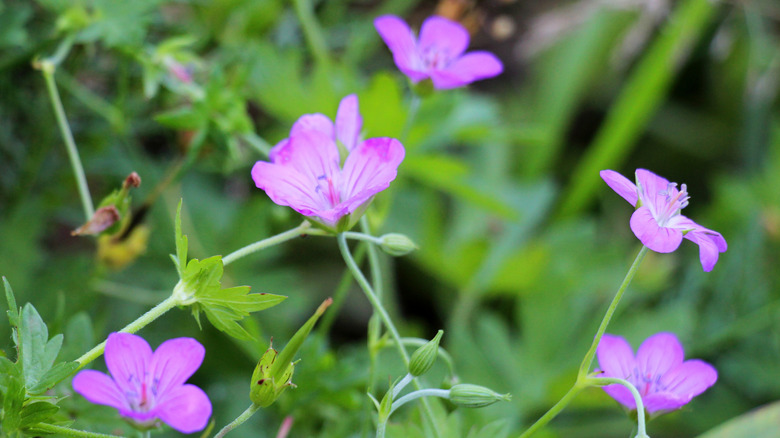
Wild geranium (Geranium maculatum) is an herbaceous perennial found in North American woodlands. It features light to dark purple, vaguely star-shaped blooms and fuzzy, lobbed leaves. These plants bloom for a month in late spring to early summer. They're hardy in zones 3 to 8. Wild geraniums grow well in partial shade, complementing hosta well. This clump-forming ground cover appeals specifically to native bees. It also has medicinal uses.
Foamflower
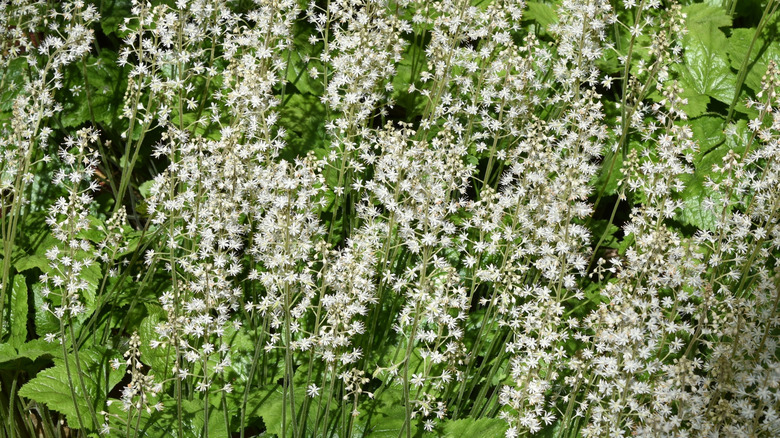
Foamflowers (Tiarella cordifolia) produce white or pinkish purple flowers from March to July. The star-shaped blooms feature long, wispy stamens. The flowers come together to form a frothy-looking spike, hence the name foamflower. This plant grows perennially in USDA hardiness zones 3 to 8. It can grow 16 inches tall. Mature plants use runners to establish large colonies of groundcover. It thrives in acidic soil and shade like the hosta plant, adding color and texture to your garden.
Coral bells
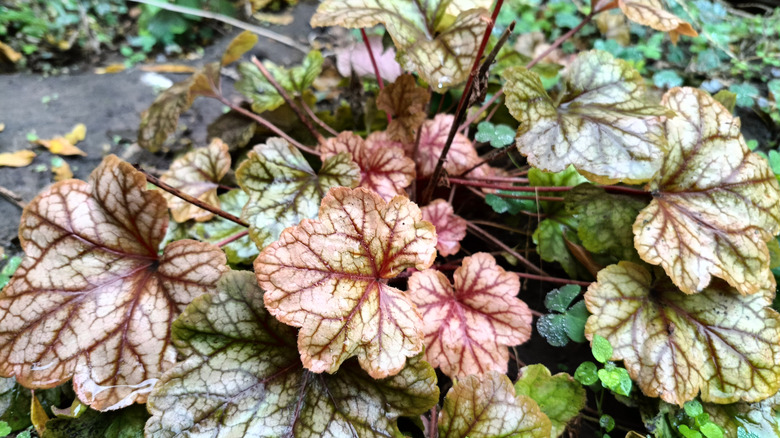
There are around 50 species of coral bells (Heuchera spp.). This vibrant groundcover features unique foliage in hues of blue, copper, pink, purple, and more. Coral bells typically feature pink or red flowers. Its bell-shaped blooms appear in the summer. They attract butterflies as well as hummingbirds. Regularly deadhead spent blooms to enjoy the coral bell flowers for longer. This plant prefers slightly acidic soil and also has the same light and watering needs as the hosta. They can be short-lived if you don't actively divide them every three to four years. Plant in USDA hardiness zones 3 to 9.
Lady's mantle
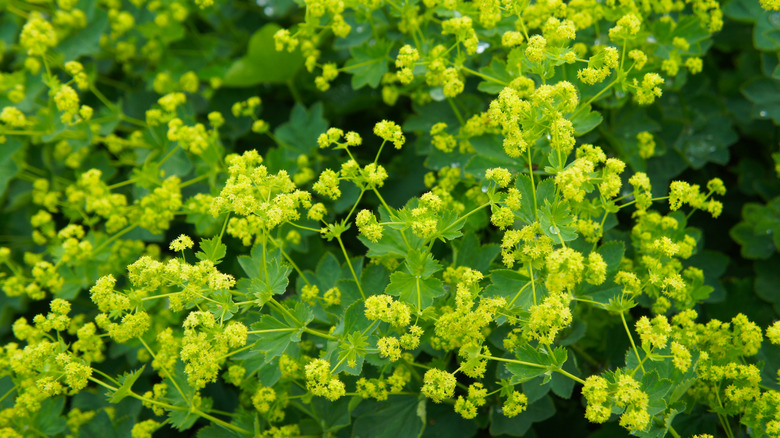
Featuring circular, lobed leaves and delicate, chartreuse flowers, lady's mantle (Alchemilla mollis) is an herbaceous perennial suitable for USDA hardiness zones 3 to 8. The foliage mounds up to 12 inches tall, but the flowers can get as tall as 18 inches. This plant tends to self-seed generously. However, you can control this behavior by deadheading spent blooms. It grows beautifully in dappled sunlight and acidic soil alongside hostas. The species is also a great line of defense against slugs, which don't tend to favor this plant.