

Not Food Scraps, Not Paper: The Bizarre Item You Could Be Adding To Your Garden Compost

Compost is great for your garden, but sometimes the materials you choose are not. Food scraps are a common compostable item, as they're something everyone has at home. However, the smell can be pretty unpleasant, especially if you are trying to compost when you don't have outdoor space. Paper is a common choice as well, but you still need other materials to get the most out of your compost. Hair is another option that's easy to use, doesn't create strong odors, and is something many households already have in abundance. Composting hair or fur might sound unusual, but it can help add nutrients to compost and eventually benefit garden soil.
In fact, the president and founder of Matter of Trust, Lisa Gautier, spoke with Food Print about how human habits have actually changed the relationship between hair and soil. "We've been vacuuming up all of our own hair and our pet fur. We've been corralling animals in with fences. We've been changing the migration routes of animals with our roads. And so, quietly over the last couple 100 years, we've been changing how much animal fiber hits the ground, and nobody thinks about it." With thousands of tons of hair shed by humans each year, that represents a significant amount of potential compost material. By taking the hair and fur around your home and composting it, you save just a little bit more waste from going to a landfill.
The benefits of adding hair to compost for your garden
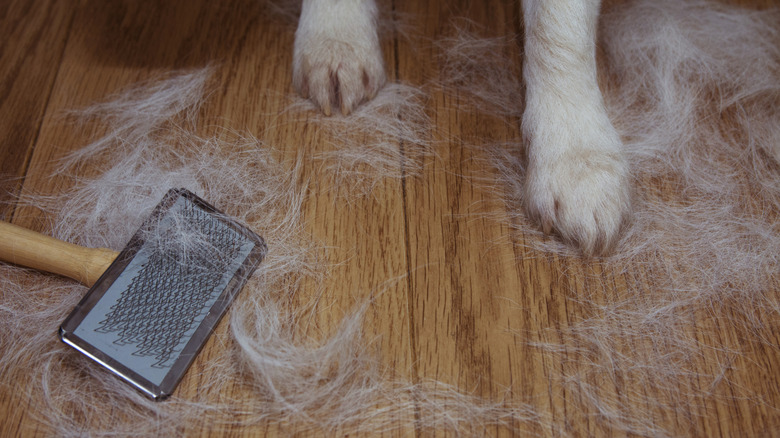
To get the perfect compost, you need a good mix of green and brown materials. Brown ingredients tend to be dry items like shredded paper, dried leaves, and twigs, and provide a bit of carbon. Green materials that give your compost pile a serious nitrogen boost include wetter, fresher items like weeds, grass, and kitchen scraps. Hair is considered a green material.
Not only can it contribute nitrogen, but some research suggests it may help soil retain moisture and improve soil structure. However, hair doesn't contribute a large amount of organic matter on its own. If possible, include other green and brown compost materials in the mix to create a good balance of items and to give yourself more matter to put in your garden.
Some gardeners also mix partially decomposed hair directly into soil. Moths, though not as loved as butterflies, are excellent pollinators. They also love fibers and can be attracted to your hair, drawing them close to your plants. While they are there, they may also stop and pollinate some of your garden. Though not fully verified, it is thought that human hair can keep certain wildlife out of your garden. It may not be worth using for the sole purpose of keeping pests away, as it isn't the most effective option, but if you're already considering composting hair, it may provide a bit of a benefit.
How to incorporate hair into your garden compost pile
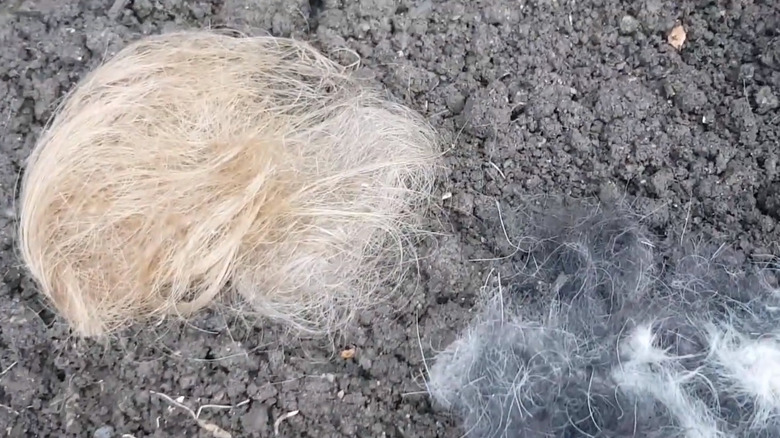
Adding hair to your compost pile is easy. You treat it like any other green material. If you cut it up or spread it out, it can decompose a little faster. In ideal conditions, it should take about a month for it to fully break down, although temperature and mixing can affect the process.
Mixing it in thoroughly helps it to break down faster. If you can, instead of leaving it in large clumps, consider cutting it into smaller pieces or pulling apart the strands before mixing so it's distributed better. Combine it with a wet compost or include it at the same time as other damp materials, as it will promote faster decomposition. Additionally, if you want it to break down sooner, a hot compost can help speed up the process.
Most hair works, whether it be from a fellow human or an animal. However, there are some kinds of hair and fur you want to avoid. Hair that has been heavily treated with dyes, bleach, or chemical products is generally best avoided in compost. Additionally, don't use hair from your pets or your family if they have pests like fleas, ticks, or lice, or have been treated for them.