

The Beautiful Flower That Can Replace Peonies — It's Hardy And Easy To Grow

If you love peonies but struggle to keep them alive in your garden, you'll be pleased to find that there are several flowers that look like peonies while being easy to grow and care for. That includes this unique flower, which takes an already popular plant and combines it with the full, luscious appearance of a peony.
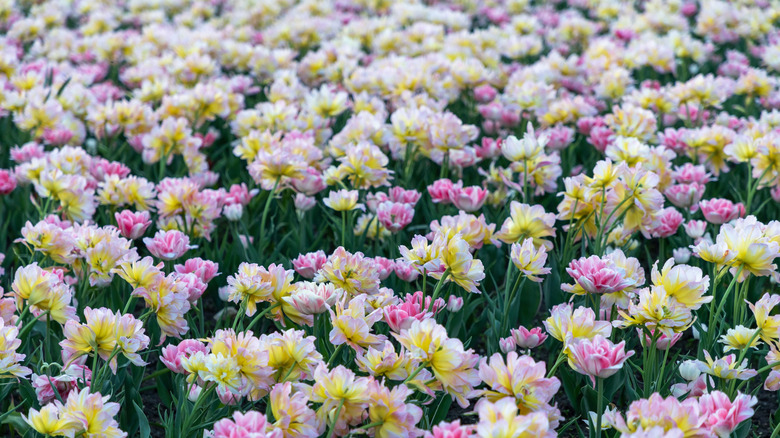
Double tulips are a type of tulip that includes more petals than average, which results in a fluffed appearance similar to that of peonies. In fact, they're also called peony-flowered tulips or peony tulips. There are two main groups of double tulips that differ based on their bloom time: double early and double late. These tulips are fairly low-maintenance while remaining hardy against most diseases. As a result, they can be a good plant for beginner gardeners who like the look of a peony but want a higher chance of success and an unexpected twist to their flower garden.
There are also many varieties of double tulips to choose from, each with a different color that allows you to turn your dream garden into a vivid reality, from orange to purple to pink. Whichever variety you end up with, there are some core specifics to familiarize yourself with if you want to grow double tulip flowers as a replacement for peonies. This includes planting requirements and day-to-day maintenance.
How to grow double tulips
While you can grow some types of tulips as perennials in the right USDA Hardiness Zones — similar to peonies, which are also perennials — double tulips are annuals. This means that if you want to enjoy them in your garden each year, you'll need to replant them each time. This does, however, give you the freedom to change up your arrangement each season, as well as save you the hassle of worrying about winterization.
While zones may not be as important with annuals like double tulips, for the best chance at seeing those blooms, you will want to choose the right location for them in your yard. This is especially true for double late tulips, which require more protection from rain and wind due to their large blooms. All double tulips require a location with full sun, or at least six hours of direct sunlight per day, but double late tulips also need shelter from the elements. Choosing the right depth for your tulip bulbs is just as important, as they'll need to be planted deeply (at least double the height of the bulb) and covered with mulch to survive winter temperature changes.
Plant double tulips in their chosen spot during the fall and water them deeply so that they can emerge bright and brilliant come spring, bringing life to your garden. If you opt for double early tulips, they'll bloom toward the start of spring, which means that you can enjoy their vibrant colors early in the season before your other tulip varieties begin to blossom. As they sprout and flower, regular watering and deadheading are all that these beauties require.