

What's The Average Lifespan Of Throw Blankets?
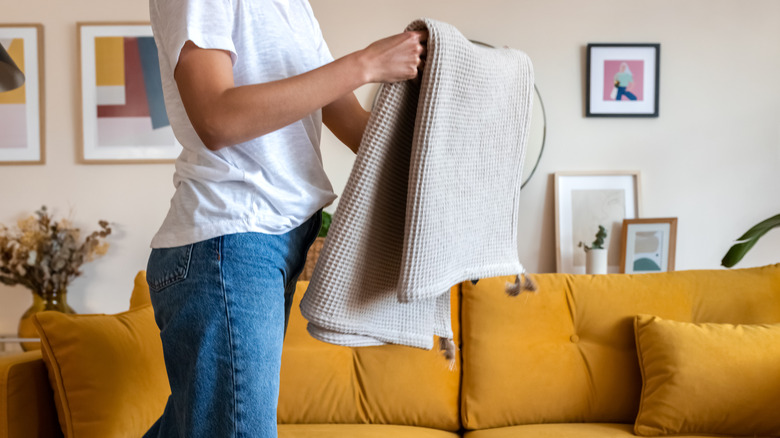
Throw blankets are staples in making your home feel warm and cozy. We use them to snuggle up and add a statement to furniture in our home, whether it's draped over the sofa or placed by the bed. Since throw blankets are part of everyday life, most people wait until they're visibly damaged before replacing them, but some warning signs appear much earlier. In that case, it's important to pay attention to the lifespan of your blankets, and that's all dependent on their material, how often they're used, and even how they're displayed and stored.
If your throw is made of fleece or 100% polyester, don't expect these to last a generation. This material is prone to pilling — seen as small, fuzzy balls on the surface of the fabric, which may harbor dust over time that can trigger skin irritations or allergies. With daily wear and tear, these synthetic throws may only last anywhere between one to two years at best before they thin out or take on strange, off-putting odors. Pure cotton throw blankets, on the other hand, are a much more natural, breathable, and comfortable material, which can last between three to five years or longer with proper care. Wool throws are the most durable of the bunch; as long as they're maintained well, they can last 15 years or more, thanks to their thick, resilient material that is also naturally hypoallergenic.
Throw blankets last longer with proper care

A blanket can stay in good shape for years as long as it's cared for consistently. Different fabrics require different types of handling and care, so always make sure to read the care label before you toss your throw blanket in the washing machine. Most of them, though, whether made of synthetic or natural fibers, are best washed with cold water and mild detergent. Air-drying is the best option afterward, but a gentle, low-heat setting on the dryer can work if the former is not an option.
Using the same throw over and over again will wear it out faster, so it's always good to have an assortment of blankets, depending on the use or season. Switching them out regularly gives each a moment of peace, taking off a few years' worth of wear on them. You can also keep throws in good condition by storing them properly; keeping them in sealed containers away from direct sunlight is one of the many smart ways to store blankets. And make sure to check their condition every once in a while, too. If you notice thinning material, a slightly off-putting odor that doesn't go away, or a scratchy texture, it may be time to replace it rather than doing another deep clean. If the blanket is simply tattered or too worn for use, consider a proper disposal. Upcycling the fabric is another sustainable option so it can stay useful for a little longer in your home.