

The Color-Changing Perennial That Deer Can't Stand But Pollinators Flock To
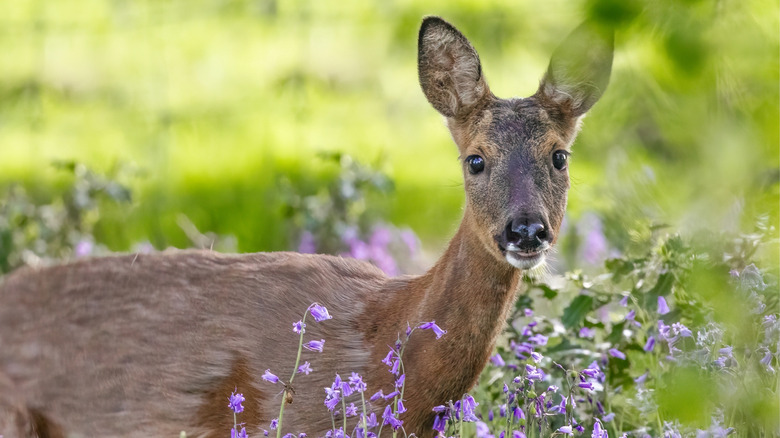
There's nothing like the pride of growing a gorgeous perennial bed full of plants you chose and arranged yourself — until a deer comes along and destroys your handiwork. There are loads of flowers that deer love to nibble on, but thankfully, those of us who live in close proximity to these beautiful animals can take advantage of growing some of the plants that keep away deer, like drumstick alliums (Allium sphaerocephalon). And while you can deter deer from your garden with these aromatic alliums, pollinators like bees will come flocking to them.
Drumstick alliums — also known as bald-head onions or simply drumsticks – are ornamental perennials that are grown from bulbs. Their deer-resistant foliage spreads to form a clump of up to 18 inches, while their distinctive flower spikes reach up to 36 inches tall. These low-maintenance plants native to Europe, northern Africa, and Asia have narrow green leaves that surround a long bloom stem. Drumstick allium flower heads are ball-shaped and change colors as they mature, turning from green to pink or bright purple, while attracting pollinators.
How to grow drumstick alliums for pollinators
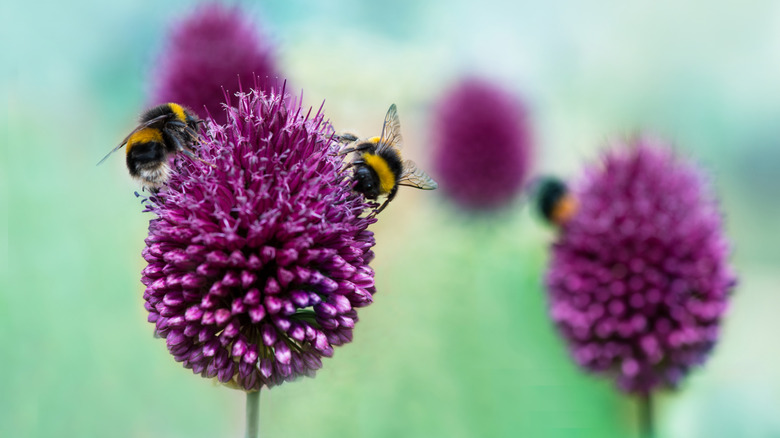
You can grow allium plants to attract pollinators in areas that are prone to passing deer without worrying about your flowers getting eaten, because as ornamental onions, they release a pungent smell when munched on that helps keep four-legged wildlife away. Just be sure you live in USDA Hardiness Zones 4 to 8, where these plants will thrive as perennials. In addition, these globular flowers must be grown in full sun, with at least six hours of direct sunlight each day. Drumstick alliums are adaptable to different soil types, including those that are moist or occasionally dry, as long as the drainage is good.
When looking around your property to find the best spot for these alliums, keep in mind that they are among the beautiful plants that grow well in gravel gardens, since they are drought-tolerant. However, since these plants are fairly flexible, there are also many other spots where you can grow color-changing drumstick alliums to attract pollinators, like borders and containers. Their eye-catching blooms will appear throughout the spring and summer. Expect to find bees and butterflies feeding from the flowers – you may even attract hummingbirds to your yard with these plants.