

Ditch Fussy Wood Siding For A Look-Alike Alternative That Lasts Longer & Boosts Curb Appeal
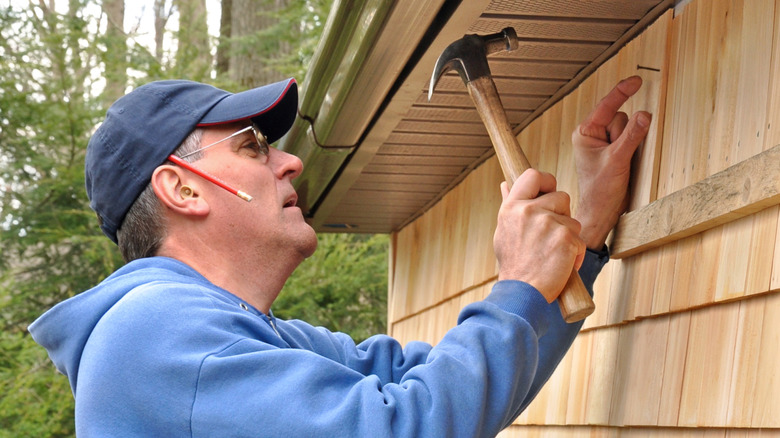
Wood siding, and in particular cedar shake siding, is an all-time classic. Generally considered a sign of good craftsmanship, each piece is unique. It looks beautiful from the time of installation, when it is a rich reddish brown, and transitions with age, developing a silver-gray patina. Unfortunately, although it is naturally pest-resistant, all wood expands and contracts with the seasons. Eventually, splitting can become an issue, as can moss and mildew. Synthetic or composite cedar shake siding is promoted as an equally attractive but more durable alternative. Let's look at the pros and any possible cons in more detail.
There are numerous types of house siding to consider, but while each has its advantages, for some styles of home they can be just too perfect. Their very uniformity is the exact opposite of the natural look provided by cedar shakes. Manufacturers of composite cedar shakes have developed ways to mimic the traditional hand-split texture and supply them in different sizes and thicknesses. As a result, they add just as much character to your home, boosting its curb appeal, while dramatically reducing the maintenance required.
There are several types of synthetic cedar shakes, and the difference can be important
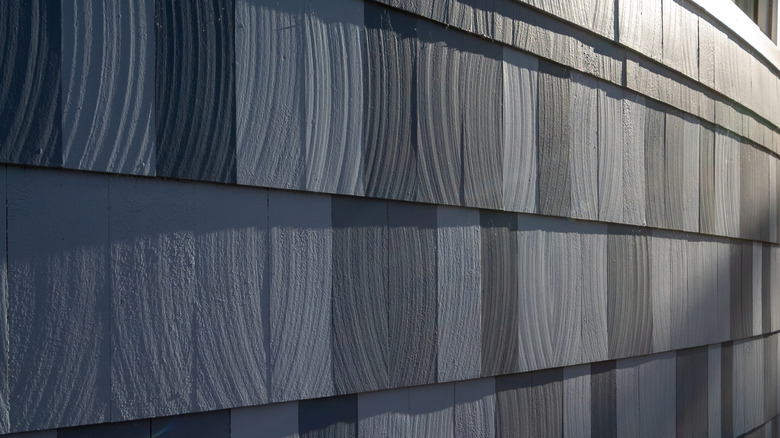
Vinyl cedar shake siding has been around for some time, and vinyl has been listed as one of the types of siding that can add most value to your home. Unfortunately, most vinyl siding is made from PVC (polyvinyl chloride), which is environmentally damaging both in its use of fossil fuels and the toxins released into the air during manufacture.
It's not all bad news. The industry has made significant strides in producing more sustainable types of plastic that are similar to PVC. Other companies are making synthetic or composite cedar shake siding (also called faux cedar) by blending recycled plastics with other eco-friendly materials. It offers the beauty of real cedar, but it won't split, fade, rot, or attract mold and mildew. Some are made in the US and carry a 50-year warranty.
It is important to check the environmental credentials of a potential supplier carefully. There are suggestions that some may not be as green as claimed. Cost is another consideration. Vinyl cedar shakes can be as little as half that of real cedar. On the other hand, the synthetic version may not offer any initial savings. However, given its durability, it should work out cheaper in the long run. If you've noticed signs that your siding is getting old, this is a long-lasting, eco-friendly alternative that is worth considering.