

Goodbye, Concrete: The Eco-Friendly Patio Alternative That Looks Good

Concrete pavers have long been a staple for patios. They are durable, affordable, and come in a variety of colors and textures. Unfortunately, concrete is about as bad for the environment as a landscaping material gets. According to an article published by Fair Planet, it is responsible for over 7% of the world's total carbon emissions, which is more than most countries. So when you're thinking about the right type of pavers for your patio, you might be looking for more eco-friendly alternatives. Composite pavers could fit the bill.
Composite pavers can be manufactured from several different materials, and contain as much as 95% recycled content. There are those composed of wood fibers, some that use a mixture of crushed glass and plastic waste, and others made from old tires. Each is made following environmentally aware production techniques and also helps reduce landfill waste.
Composite pavers come in a wide range of colors and textures (some even have different patterns on each side). They are usually unaffected by extremes of heat or cold, often provide good drainage so water doesn't puddle on the patio surface, and some feature improved traction and greater comfort underfoot.
Important factors when considering eco-friendly patio pavers
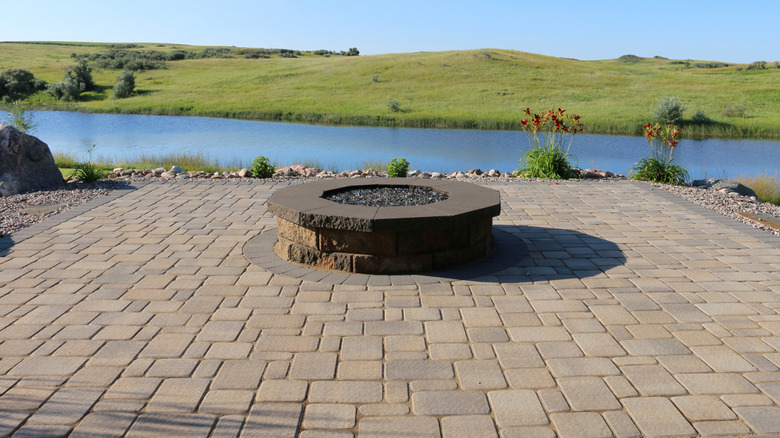
Although composite pavers are becoming more popular, availability can be an issue. While recycled plastic grids, which you fill with your preferred aggregates, can be found at popular online merchants, the same is not true of the pavers. You will need to find one of the specialist suppliers. Currently, prices are unavailable without making a specific inquiry. Concrete pavers can often be found for under $5 per square foot, whereas each of the composite options is likely to be significantly more expensive.
If you're thinking of any of the DIY paver projects that can elevate your yard, it's also important to understand that each type of composite paver has its own installation demands. Not all are installed like concrete pavers over a sand and gravel base. Some fit into a grid while others must be installed over an existing solid surface, which is great for updating but not for a new patio. Finally, there's the question of how hard-wearing they are. Each manufacturer claims its product is durable, but we couldn't get a firm answer on how long they last. Most are only designed for foot traffic. That's fine for patios, but they cannot be used for driveways.
Composite pavers are going to be an increasingly important part of the patio design trends that will impact your outdoor living. They are undoubtedly more eco-friendly than concrete. Whether they are right for you at the moment will largely depend on how you feel about minimizing your impact on the environment.