

Not Basil: This Tomato Plant Companion Grows As A Ground Cover To Block Out Weeds
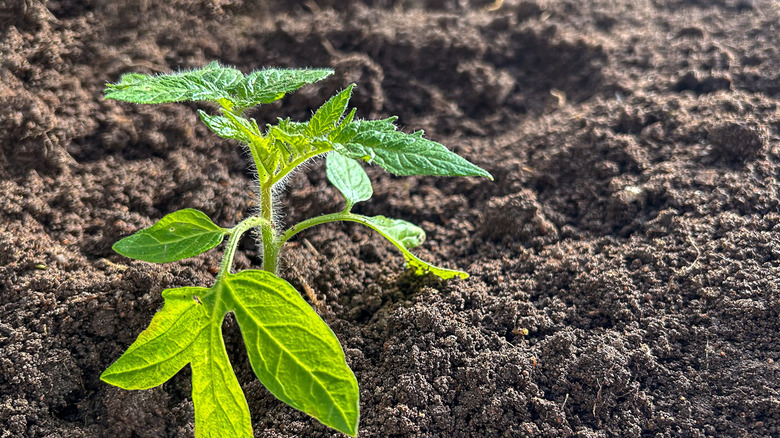
If your tomato patch looks more like a jungle than a food forest by the end of summer, it could mean you need to give your plants a little more space when you're putting them out. But with all that bare ground between them, you'll want a layer that blocks weeds and acts as living mulch. While basil is the traditional companion plant for tomatoes, if you're looking for one that can do double-duty as a ground cover, consider nasturtiums (Tropaeolum).
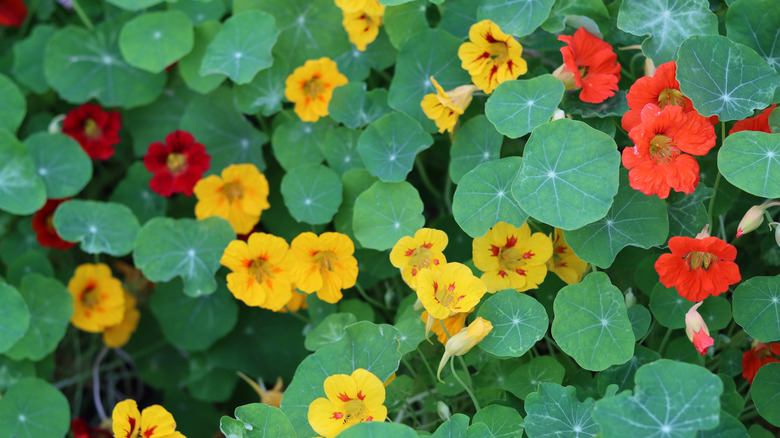
There are a lot of beautiful flowers you can plant with tomatoes, and nasturtiums are an old-time favorite. With their bright, cheery flowers and interesting foliage, they're a must-have in the garden. As a companion plant, they're most often used as a trap crop to keep pests like aphids off your plants. The large leaves and trailing habit also keep the soil cool in your tomato patch, acting as a living mulch to keep plants hydrated and block out weeds.
Since nasturtiums don't need a lot of nutrients, they won't be stealing them from your heavy-feeding tomato plants. However, when planting nasturtiums near tomatoes, leave some space between them so pests attracted to the nasturtiums are less likely to move onto tomato plants. You will also want to skip over the nasturtiums when you're fertilizing your tomatoes throughout the summer, because they won't flower if they get too much nitrogen.
How to grow nasturtiums as a weed-blocking ground cover for tomatoes
If you were growing nasturtiums as a trap crop, which is one of the more common companion planting uses for them, you would want to have them in the ground a few weeks before the tomatoes. However, that's not a companion planting mistake you need to worry about when you're using them as ground cover to block weeds. Since they aren't frost-hardy, whether you start these gorgeous flowers indoors in February or sow them directly in the garden in May, you can plant them at roughly the same time as your tomatoes.
Nasturtiums won't germinate until the soil temperatures reach about 60 to 65 degrees Fahrenheit, and after that, they take a week or two to sprout. They are large seeds, so plant them about ½-inch deep, and give them around 8 to 12 inches of space. Consider leaving some space between them and your tomato plants since they may still attract pests and act as a trap crop.
Once the nasturtiums emerge, their large round leaves can quickly shade the ground and help prevent weed seeds from germinating, so you most likely won't have to weed all summer long. As a ground cover, there are even more reasons to grow nasturtiums than simply blocking out weeds.
More about the benefits of growing nasturtiums as a ground cover for your tomatoes
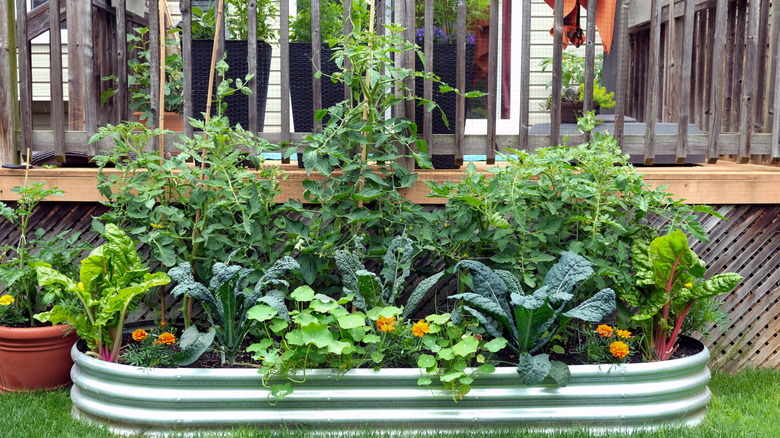
Food forests, which include layers of plants from ground covers to tree canopies, are the sustainable gardening trend that we hope to see dominate in 2026. Essentially, this approach involves growing food in layers that mimic natural ecosystems. When you're growing nasturtiums and tomatoes together, the plant roots of nasturtiums are constantly feeding the soil microbes that cycle nutrients, making them more available to plants.
Soil microbes need moisture, and mulch can help retain the conditions that allow them to thrive. You can use organic mulches like bark or straw, which also prevent evaporation, add organic matter to the soil, and feed soil microbes, but living plants do something that other mulches can't do. By leaking root exudates, they feed the soil microbes in a different way, continuously as they're growing instead of as they're breaking down. Because soil microbes can contribute to plant health and stress tolerance, a healthy soil ecosystem may help tomatoes remain more resilient against issues such as Fusarium wilt.
As a living mulch, there's a lot to love about nasturtiums. They are pretty, they trap pests, and they feed soil microbes. As a ground cover companion for tomatoes, they work well because they generally don't aggressively spread or compete heavily for nutrients.