

Don't Let Its Sweet Smell Fool You: The Pretty Herb You Don't Want Near Your Home
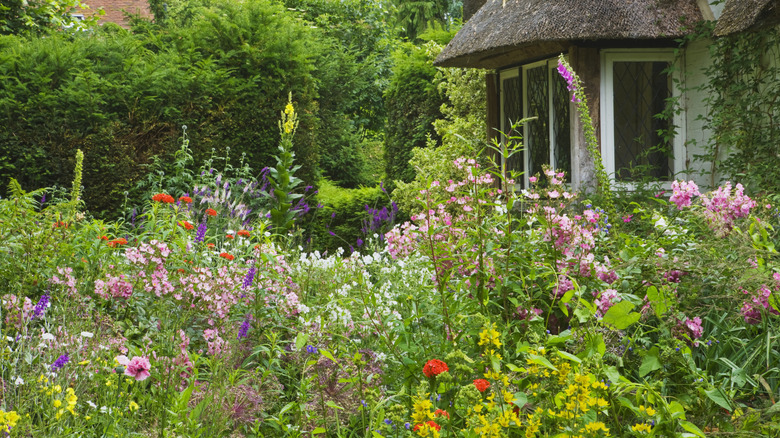
Gardens aren't just a visual feature for your yard. Instead, when you choose the right plants, you can create an entire sensory experience, even a sensory-friendly garden, from the sound of wildlife visiting your garden to a cultivating scent that floods your outdoor space. However, not every plant is suitable for a scent garden, especially when it comes to those spaces nearest to your home. Plants with their own natural fragrance can be more flammable than plants without, and this sweet-smelling and eye-catching herb is no exception.
For many people, lavender (Lavandula angustifolia) is a must-have when curating a landscape that's as beautiful as it is fragrant. However, as you're growing lavender in your garden, you may notice that it changes in texture as it matures, with green, lively stems eventually settling into flammable woody growth. As a result, you'll likely want to avoid planting lavender near your home, where it could pose a fire risk. This is especially true in dry areas where old growth may pose an even greater risk of flammability.
Fortunately, if you avoid planting lavender in the garden beds and containers closest to your home, there are still other areas it can thrive in your yard as a pretty, fragrant option that's also drought-resistant. You can also take several maintenance steps to reduce the flammability of lavender overall.
How to reduce the flammability of lavender — and where to plant it instead
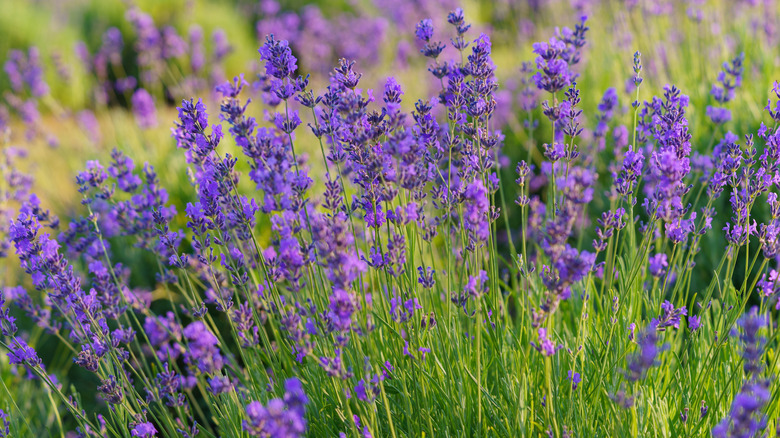
One of the biggest fire risk factors of lavender is how old growth becomes woody, and leaf litter or other dead plant matter can build up within the plant. Because of this, taking the time to prune and maintain your lavender plants will go a long way in reducing their flammability. When trimming lavender, don't want to cut into the oldest wood at its base: this is foundational growth. However, you can prune the overall silhouette of your lavender to shape and encourage new, green growth that isn't as flammable as old, woody growth. You should also take the time to remove any dead plant material from within or around your lavender plants to reduce the amount of fire hazards.
Even with the right care, it's wisest to play it safe and pick a different location in your yard to show off your lavender plants. This means planting lavender outside of what is known as Zone 0, which is any spot within 5 feet of a structure. In fact, it's usually recommended to avoid adding any plants in this area to help reduce the amount of flammable materials and help protect your home during fires. When choosing the right spot for lavender away from your home, choose a spot that receives ample sunlight. Lavender requires at least partial shade, though it also does well in full sun. You can also plant lavender in containers.