

How To Fertilize Tomato Seedlings For A Major Nutrient Boost From The Start
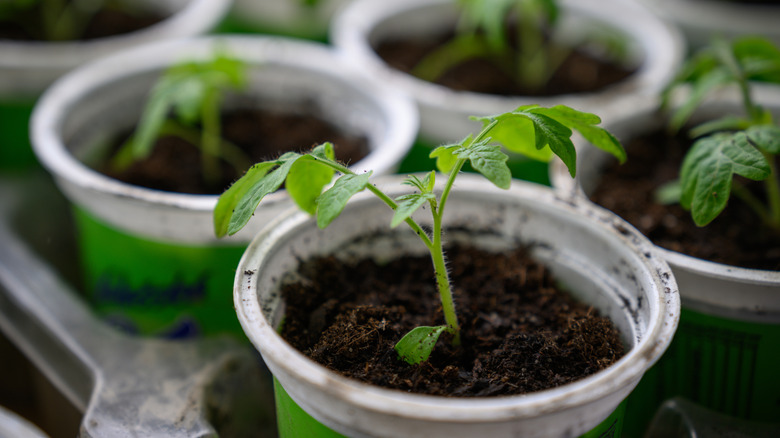
So, you embarked on your journey of growing tomatoes from seed and now they've actually sprouted. Or you've purchased some from the garden center but are waiting until your last frost date to get them planted out. You might find yourself thinking — now what? You've made it past the first hurdle by getting them to germinate or by selecting the right nursery seedlings for your growing space, but there's a long way to go to ensure healthy plants that will produce delicious fruit for your homemade bruschetta or tomato sauce.
Aside from consistent watering, adequate lighting, and occasional pot ups prior to transplanting them outdoors, a diluted fertilizer is a vital component to help transform tomato seedlings into strong, fruit-bearing plants, since it provides them with essential nutrients for root, stem, and leaf growth. However, you don't want to over-fertilize them. Although adult tomato plants require regular feedings to help them flourish, seedlings need to be eased into it.
Wait until tomato seedlings have two sets of true leaves
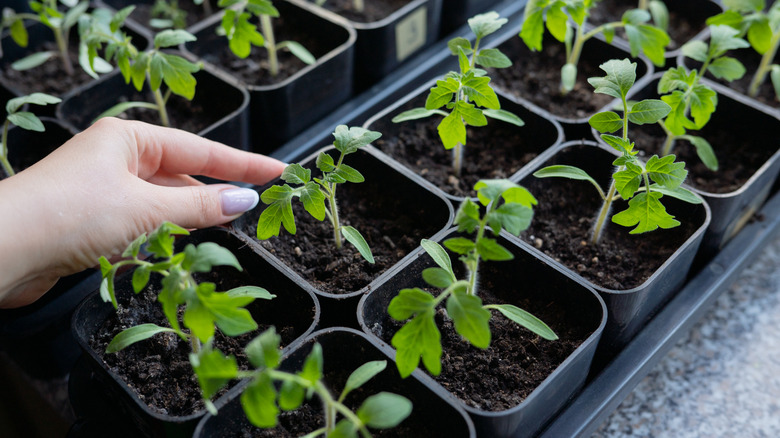
Incorporate a watered-down fertilizer once tomato seedlings have two sets of true leaves. The reason for waiting until this stage is because true leaves are a sign that the seedlings have developed a good root system. If you added fertilizer when seedlings had just emerged or when they only had one set of true leaves, they might not be strong enough, and the fertilizer might overwhelm them — especially since the first leaves (known as cotyledons) are already equipped with the first round of nutrients for the seedling. This could leave you with stunted tomato plants.
To avoid this, select a liquid fertilizer that you can easily add to a watering can, and make sure it's labeled "all-purpose" as this means it has an equal mixture of phosphorus, potassium, and nitrogen — all nutrients that are essential for healthy tomato seedlings. Only add half of the amount that the bottle suggests and fill the rest of the can with water. This will provide seedlings with just the right amount of nutrients without going overboard. Use a seed tray to bottom-water the seedlings with the diluted solution. This will ensure proper absorption and keep fertilizer from getting on the plants, which could burn their leaves. Repeat this process weekly. Be on the lookout for nutrient burn — when leaves appear crispy and discolored. This is a sign of over-fertilization. If you encounter this tomato fertilizing mistake, go over the soil with plain water to remove any lingering nutrients and give seedlings time to recover before trying again with less fertilizer.
Fertilizing established tomato seedlings and transplants
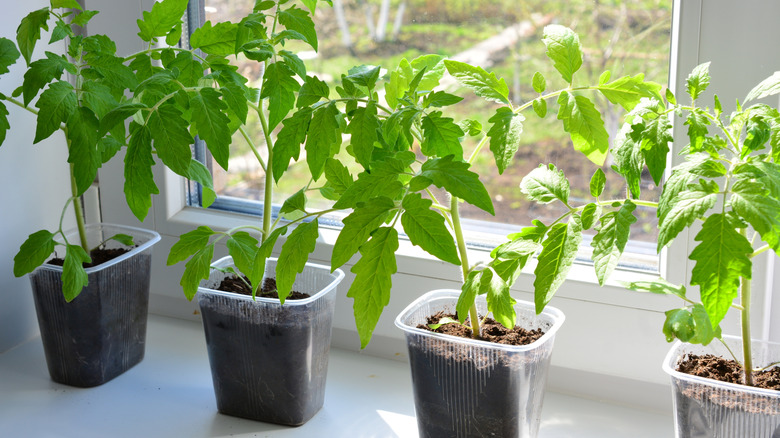
If you purchased seedlings from the nursery, chances are they're a bit more established already. However, you should apply the same diluted mixture at weekly intervals (even if they have more sets of true leaves) until you're ready to transplant them outside. This is because you don't want them to get too big or start flowering before you actually have them in the ground. It could cause stress to the plants if they start to outgrow their containers before you're ready to move them. Happy tomato plants will be able to adapt to transplanting much easier.
Moving tomato plants into bigger pots or planting them outside is a big change, so it's important to give them a second to adjust before feeding them nutrients. When potting up tomato seedlings, wait a few days before you water them with a diluted fertilizer again. This will keep them from getting shocked and stunted. However, the same rule doesn't apply when transplanting tomato seedlings into the ground. After you've tested your soil for nutrient deficiencies and properly hardened off your plants, add a granular all-purpose plant food mix to the bottom of the planting hole (as directed by the manufacturer). Cover it with a layer of soil to keep it from coming in contact with the tomato seedling's roots.