

What's The Average Lifespan Of Concrete Countertops?
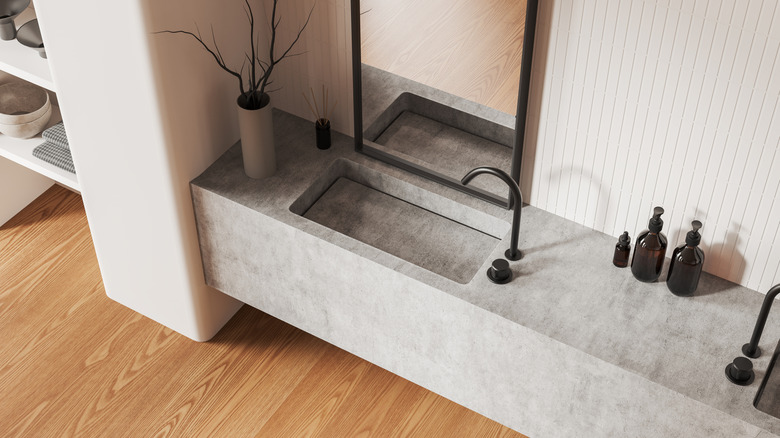
Concrete countertops have grown in popularity over recent years. They combine functionality with an edgy yet minimalist aesthetic, helping them fit into many home styles. Concrete countertops are also highly customizable and durable, which has contributed to their growing popularity. However, when you're picking the right type of countertop for your kitchen and home, a material's lifespan can make or break its spot as a top-pick. After all, while you may love certain higher-end options, fragile materials with lower lifespans may not seem worth the investment cost. Fortunately, along with their easily-incorporated visual appearance and overall functionality, one thing to know about concrete countertops before buying is that they're known for having a long lifespan. Overall, concrete countertops can potentially last up to 50 years with proper care and maintenance.
Of course, the exact lifespan of concrete countertops can depend on their composition, as some options may not include solely concrete but other additives as well to boost durability. These additives help resist many common kitchen hazards like heat, which helps your concrete survive decades of day-to-day use. With that being said, maintenance is essential for making the most of your concrete countertop. Because of this, if you're interested in a more low-maintenance material for your kitchen countertops, concrete may not be the best choice. While it is heat-resistant, without the proper sealing, concrete's also naturally porous. As a result, staining can become an issue, and preventing blemishes often requires regular sealing to keep them looking their best.
How to maximize your concrete countertop's lifespan
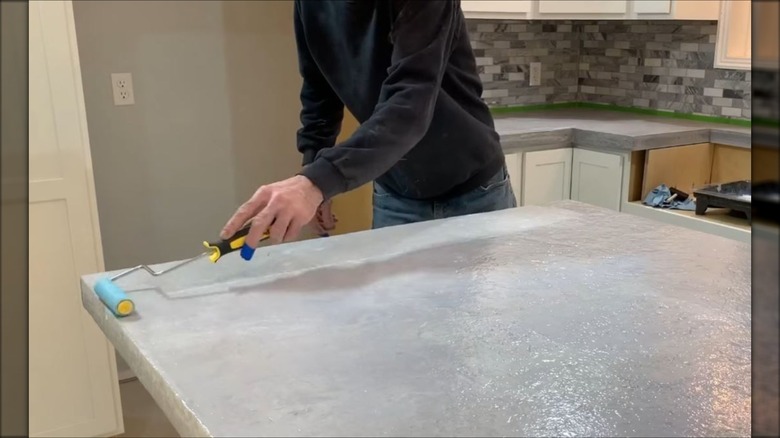
If you want to maximize your concrete countertop's lifespan to enjoy potentially half a century with it, then the key is learning how to properly clean, care, and maintain your countertop. Proper care can make the difference between a countertop reaching its potential lifespan and one showing wear much earlier.
Sealing is the first step to learn about for a long-lasting countertop. When your concrete countertops are first installed, they should be sealed. If this step is skipped, countertops remain porous, making them more vulnerable to stains and scratches. There are several sealant options that are commonly used, including epoxy, polyurethane, and acrylic. Each has its own advantages and drawbacks, and the right choice often depends on how the countertop will be used as well as appearance preferences, since some sealants, such as epoxy, can provide color options. Depending on the sealant type and level of use, reapplication may be needed periodically for the best results.
You'll also want to ensure your countertop is protected each day. This means cleaning it properly with products intended for concrete surfaces in mind, as well as investing in protective measures. Although the counters themselves are heat-resistant, the sealant may not be, and using trivets to prevent direct heat can often save you the hassle of a damaged sealant or countertop that may impact functionality later down the road.